CM Bhajan Lal Hits Congress Over Emergency, Democratic Record
Synopsis
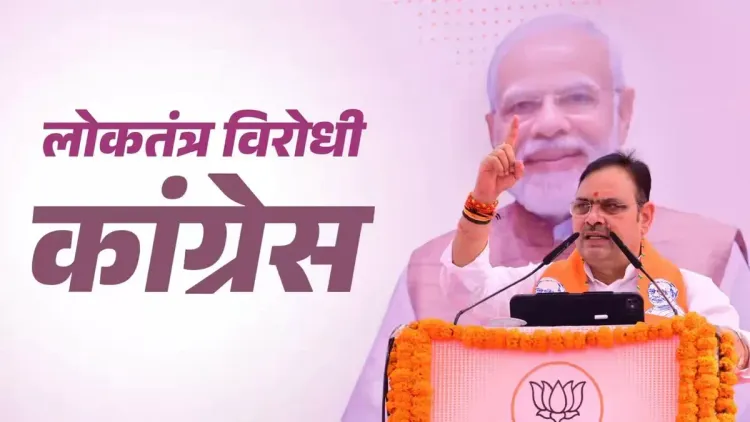
Rajasthan Chief Minister Bhajan Lal Sharma attacked Congress on 5 November 2026, accusing the party of assaulting democracy from the 1975 Emergency to the present, continuing a well-established BJP strategy of using the Emergency as a litmus test for Congress's democratic credentials.
Key Takeaways
CM Bhajan Lal Sharma posted a sharp attack on Congress on 5 November 2026 , accusing the party of repeatedly crushing democratic values.
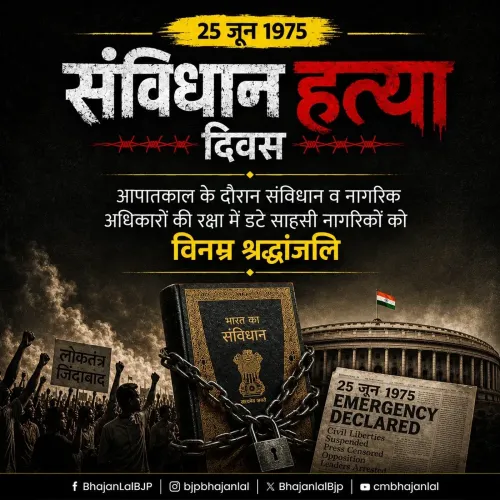
Sharma invoked the 1975 Emergency — declared by Prime Minister Indira Gandhi and lasting until March 1977 — as the defining example of Congress's anti-democratic record.
The Emergency suspended civil liberties, curbed press freedom, and imprisoned political opponents for 21 months .
The BJP's use of Emergency-era history as a political counter-argument against Congress is a recurring pattern across national and state leadership.
Sharma became Rajasthan Chief Minister in December 2023 after the BJP's victory in state assembly elections.
Congress has not yet publicly responded to this specific post.
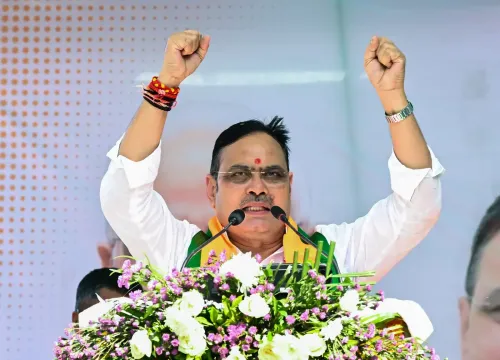
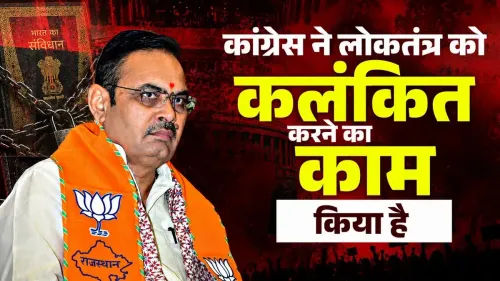
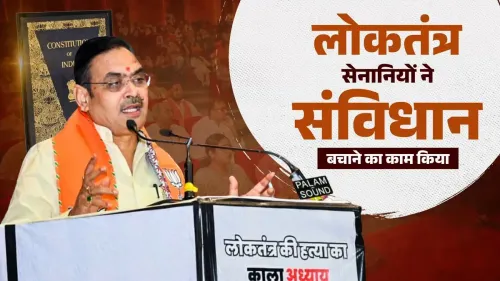
Fifty-one years after the lights went out on Indian democracy, the 1975 Emergency is back at the centre of the political arena — this time invoked by Rajasthan Chief Minister Bhajan Lal Sharma, who on Thursday, 5 November 2026, launched a pointed broadside at the Indian National Congress, accusing the party of repeatedly strangling democratic values from the Emergency era to the present day.
Posting in Hindi on X, CM Sharma wrote: 'Loktantra ki duhai dene wali Congress ka itihas hi loktantra par praharon se bhara pada hai' — 'The history of Congress, which invokes the name of democracy, is itself filled with assaults on democracy. From the Emergency to today, Congress has repeatedly worked to throttle democratic values and crush the will of the people.'The Emergency shadow that never fully lifts
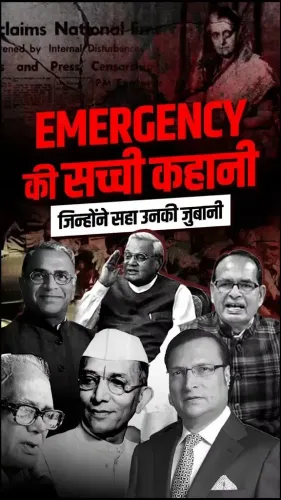
The Emergency of June 1975 remains the most contested chapter in Congress's long history. Declared by Prime Minister Indira Gandhi and lasting until March 1977, it suspended civil liberties, muzzled the press, and imprisoned political opponents wholesale. For the BJP and its allies, the episode has never been a closed file — it is a recurring exhibit in the case against Congress's democratic credentials.
What makes the reference durable is its factual bedrock. The Emergency is not an allegation; it is a documented constitutional episode that the Supreme Court, historians, and successive parliamentary debates have all examined. That anchoring gives BJP leaders a durable rhetorical weapon that lands differently from most political attacks.
A pattern bigger than one post
Sharma's post is not an isolated volley. Across the BJP's national and state leadership, citing the Emergency has become a standard counter-move whenever Congress positions itself as a defender of democratic norms. The argument runs as a straight line: a party that imposed 21 months of authoritarian rule cannot claim the democratic high ground today.
Congress, for its part, has consistently sought to contextualise the Emergency — pointing to the political circumstances of 1975 and to its own record of peaceful transfers of power — but the debate rarely reaches a clean resolution. Each revival keeps the wound visible for a new generation of voters.
Rajasthan's voice in a national argument
As Chief Minister of a state the BJP wrested from Congress in the December 2023 assembly elections, Bhajan Lal Sharma carries particular political weight when he joins this debate. Rajasthan was itself a theatre of Emergency-era politics, and Sharma's platform amplifies what is, at its core, a national argument about which party can legitimately claim to be democracy's guardian.
The timing — November 2026, with state and national electoral cycles never far from the horizon — means that every such post is also a mobilisation signal to the party's base, reminding supporters of the ideological distance between the two parties.
Whether Congress responds in kind or lets the charge pass unanswered will tell its own story about where the opposition believes this debate is most and least useful to fight.
Point of View
In this case democracy. The 1975 Emergency functions as the BJP's most durable instrument against Congress because it is historically verifiable and emotionally resonant with voters old enough to remember it. By framing this as a pattern 'from the Emergency to today,' Sharma deliberately refuses to let the episode be archived as ancient history. The long-term risk for Congress is that each new generation of BJP leaders re-litigating 1975 keeps the party perpetually on the defensive about its foundational democratic identity.
NationPress
5 Nov 2026
Frequently Asked Questions
What did Rajasthan CM Bhajan Lal Sharma say about Congress?
On 5 November 2026, CM Sharma posted that Congress, despite claiming to defend democracy, has a history filled with attacks on democratic values — from the 1975 Emergency to the present day.
What was the 1975 Emergency in India?
The Emergency was declared by Prime Minister Indira Gandhi in June 1975 and lasted until March 1977. During this period, civil liberties were suspended, the press was censored, and political opponents were jailed.
Why do BJP leaders frequently cite the Emergency against Congress?
The Emergency is a documented historical event that BJP leaders use to challenge Congress's self-portrayal as a defender of democracy, arguing it is evidence of the party's willingness to suppress democratic rights when in power.
Who is Bhajan Lal Sharma?
Bhajan Lal Sharma is a BJP politician who has served as Chief Minister of Rajasthan since December 2023, when his party won the state assembly elections.
Has Congress responded to Bhajan Lal Sharma's post?
No public response from Congress to this specific post has been reported yet. Historically, Congress has sought to contextualise the Emergency rather than defend it outright.