CM Bhajan Lal Extends Rural Job Days to 125 Under New Scheme
Synopsis
Rajasthan CM Bhajan Lal Sharma announced the state's VB-G RAM G scheme will extend annual rural employment guarantees from 100 to 125 days, while a 60-day work pause during crop sowing and harvesting will protect agricultural labour availability.
Key Takeaways
Rajasthan Chief Minister Bhajan Lal Sharma announced an enhancement to the state's rural employment guarantee on 2 July 2026 .
The VB-G RAM G scheme raises guaranteed annual workdays from 100 to 125 days , a 25-day increase over the national MGNREGA floor.
A 60-day work pause during crop sowing and harvesting seasons is built into the scheme to balance the needs of farmers and rural labourers.
The national MGNREGA framework, enacted in 2005 , guarantees a minimum of 100 days of rural wage employment; Rajasthan's move goes beyond this baseline.
Implementation guidelines, wage structures for the additional days, and state budget allocations are yet to be formally detailed.
The model could influence other BJP-governed states looking to differentiate rural welfare delivery.
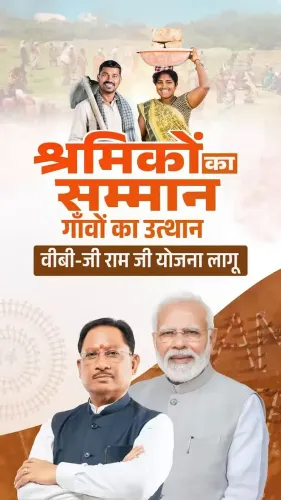
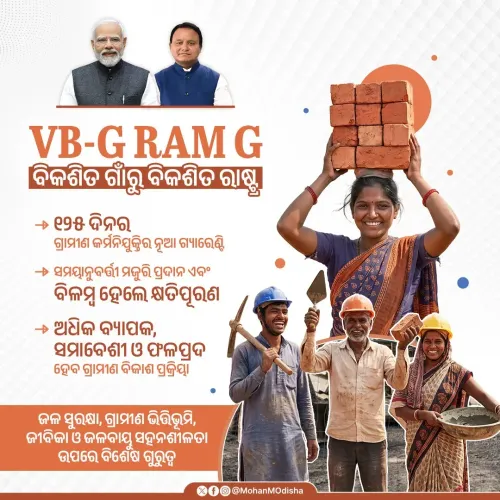
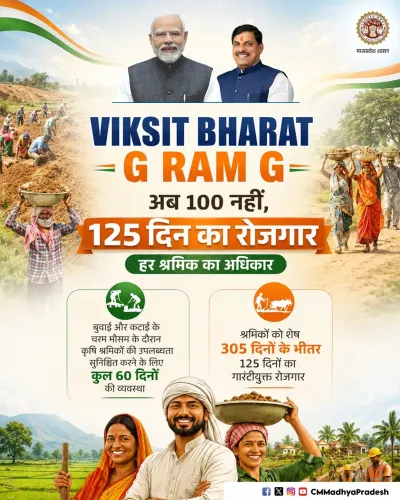
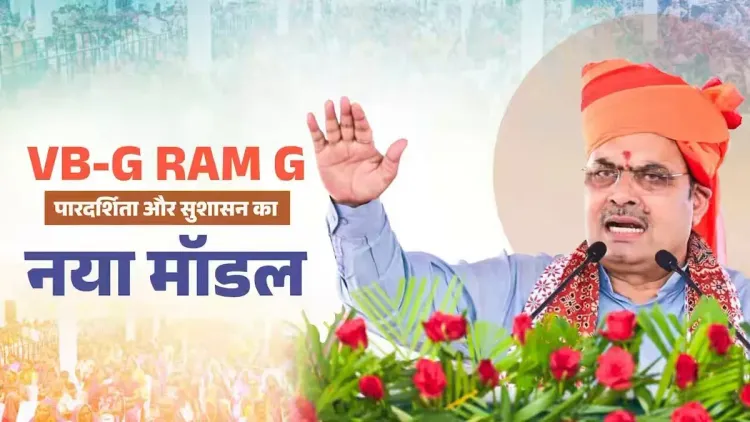
Rajasthan Chief Minister Bhajan Lal Sharma announced on Thursday, 2 July 2026 that the state government is strengthening rural employment guarantees through the 'VB-G RAM G' scheme, raising the annual guaranteed workdays from 100 to 125 days and introducing a 60-day work pause during crop sowing and harvesting seasons.
Posting on X, Sharma stated: 'हमारी सरकार VB-G RAM G योजना के माध्यम से ग्रामीण क्षेत्रों में रोजगार की गारंटी को और सुदृढ़ कर रही है' — 'Our government is further strengthening the employment guarantee in rural areas through the VB-G RAM G scheme.' He added that annual employment has been raised from 100 days to 125 days, and a 60-day work break during crop sowing and harvesting has been built into the framework to balance the interests of both farmers and labourers.
Context
The announcement builds on the foundation of the Mahatma Gandhi National Rural Employment Guarantee Act (MGNREGA), enacted by the central government in 2005, which guarantees a minimum of 100 days of wage employment annually to rural households across India. Rajasthan, with a large agrarian population, has historically been one of the higher-demand states under the scheme. Chief Minister Sharma, who assumed office in December 2023, has positioned rural welfare as a central plank of his administration.
Policy Backdrop
State governments in India retain the authority to introduce supplementary provisions atop the national MGNREGA framework, including enhanced workdays and localised scheduling. Rajasthan's move to extend the guarantee to 125 days per year represents a 25-day increase over the national floor. The accompanying 60-day agricultural work pause — timed to coincide with crop sowing and harvesting — is designed to prevent a clash between government work programmes and peak farm-labour demand, ensuring that rural workers remain available for agricultural activities during critical seasons.
BJP-governed states have periodically used such state-level top-ups to signal differentiated welfare delivery, particularly ahead of local body elections or as part of broader rural outreach strategies.
Stakeholders and Impact
Rural labourers in Rajasthan stand to gain the most directly, with access to 25 additional guaranteed workdays and the associated wages each year. Farmers, who often compete with MGNREGA for seasonal labour, benefit from the structured 60-day pause that keeps workers available during sowing and harvest windows. The move is expected to reduce the well-documented tension between scheme implementation and agricultural labour availability that has been reported across several states.
The scheme's expanded scope will also have implications for Rajasthan's state budget, as additional workdays require corresponding fund allocations and administrative capacity at the district and gram panchayat level.
What's Next
Attention will now turn to the release of formal implementation guidelines — including the wage rates applicable to the additional 25 days, the mechanism for scheduling the 60-day agricultural break, and the budgetary provisions to sustain the expanded commitment. Assembly discussions on monitoring and grievance redressal for the VB-G RAM G scheme are also expected to follow. If the model proves effective, it could serve as a template for other BJP-governed states seeking to enhance rural employment delivery beyond the national baseline.
Point of View
The BJP government in Rajasthan positions itself as a proactive rural welfare actor rather than a passive implementer of central schemes. The 60-day agricultural break is a notably pragmatic addition, addressing a structural friction between government work programmes and farm-labour demand that has long undermined MGNREGA's effectiveness during peak seasons. The move fits a broader pattern of BJP-governed states using state-level top-ups to build rural credibility, particularly in agrarian states where farmer and labourer interests must be managed simultaneously. Whether the scheme delivers on its promise will depend heavily on the budget allocations and administrative machinery that follow.
NationPress
2 Jul 2026
Frequently Asked Questions
What is the VB-G RAM G scheme in Rajasthan?
The VB-G RAM G scheme is a Rajasthan state government rural employment initiative announced by CM Bhajan Lal Sharma that extends the annual guaranteed workdays for rural households from 100 to 125 days, building on the national MGNREGA framework.
How many days of employment does Rajasthan now guarantee under the new scheme?
Rajasthan now guarantees 125 days of annual rural employment under the VB-G RAM G scheme, up from the national MGNREGA floor of 100 days — an increase of 25 days.
What is the 60-day work break in the Rajasthan rural employment scheme?
The scheme includes a 60-day work pause timed to coincide with crop sowing and harvesting seasons, ensuring rural labourers remain available for agricultural work during these critical periods and preventing conflict between government employment programmes and farm-labour demand.
What is MGNREGA and how does Rajasthan's scheme differ?
MGNREGA, enacted in 2005, guarantees at least 100 days of wage employment annually to rural households across India. Rajasthan's VB-G RAM G scheme goes beyond this by offering 125 days and adding a structured agricultural work break, which is a state-level enhancement to the national baseline.
Who announced the VB-G RAM G scheme and when?
Rajasthan Chief Minister Bhajan Lal Sharma announced the scheme on 2 July 2026 via a post on X, highlighting the extended workdays and the 60-day agricultural break as measures to strengthen rural employment guarantees.