CM Bhagwant Mann: Punjab Has 40-Day Coal Stock, 90% Homes Get Zero Bills
Synopsis
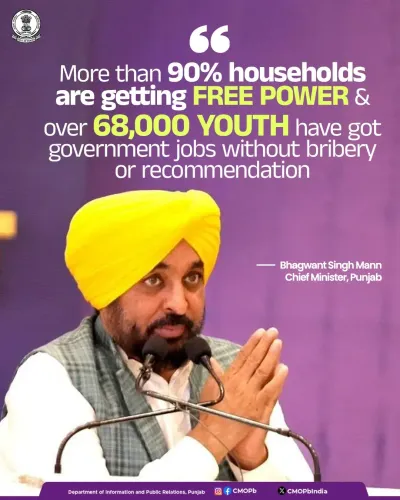
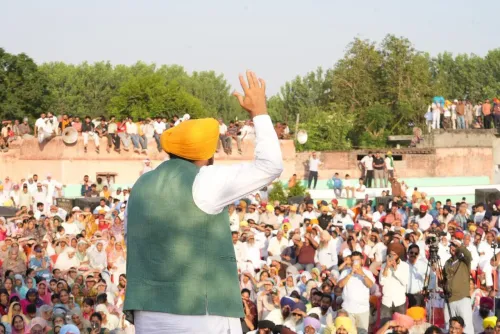
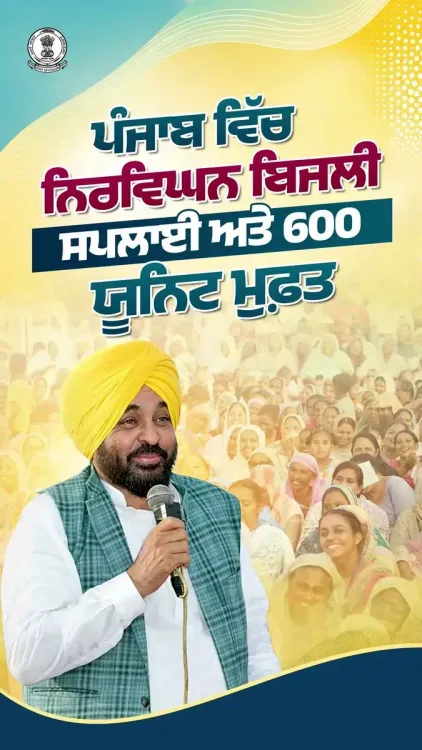
Chief Minister Bhagwant Mann, speaking at a public outreach event in Moga on 2 July 2026, announced that Punjab holds a 40-day coal reserve for uninterrupted power and that nearly 90 per cent of households are receiving zero electricity bills under the state's 300-unit free power scheme.
Key Takeaways
CM Bhagwant Mann made the announcement at a lok milni public meeting in Moga on 2 July 2026 .
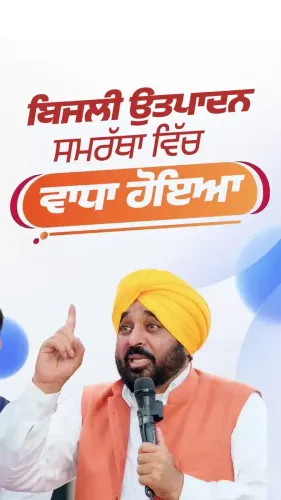
Punjab currently holds a 40-day coal stock to ensure uninterrupted thermal power generation.
The state's 300-unit free electricity scheme has been operational since the AAP government took office in March 2022 .
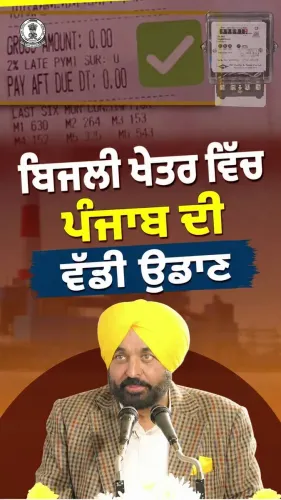
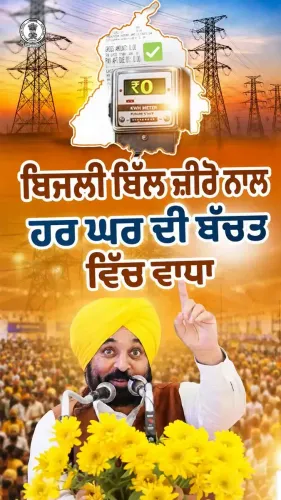
Approximately 90 per cent of Punjab households are receiving electricity bills of zero under the scheme.
The scheme mirrors the free power model implemented in Delhi under the same ruling party.
Sustainability of the subsidy will depend on future state budget allocations and power utility finances.
The Chief Minister's Office of Punjab announced on Thursday, 2 July 2026 that Chief Minister Bhagwant Mann, speaking at a public outreach event (lok milni) in Moga, declared that the state holds a 40-day coal reserve to ensure uninterrupted power supply, and that nearly 90 per cent of households are receiving zero electricity bills under the state's free power scheme.
Context
Addressing residents directly at the lok milni (public meeting) in Moga district, CM Mann stated that 300 units of free electricity are being supplied every month to families across Punjab. He underlined that the coal stockpile currently stands at a level sufficient to sustain thermal power generation for 40 days without interruption. The post, shared by the official CMO Punjab handle, was published at 4:03 PM IST on 2 July 2026.
Policy Backdrop
The Aam Aadmi Party (AAP) government in Punjab launched the 300-unit free domestic electricity scheme shortly after assuming office in March 2022, mirroring a similar model previously implemented in Delhi under the same party. The scheme targets residential consumers, with the state exchequer absorbing the subsidy cost through the power distribution utility. Punjab's approach is part of a broader pattern across several Indian states that have rolled out household power subsidies to reduce the cost of living for ordinary families.
Thermal power generation in Punjab — as across much of India — depends heavily on seasonal coal supply chains. Adequate coal reserves are critical ahead of peak demand periods, particularly during summer months when agricultural and domestic consumption spikes. Announcing a 40-day buffer stock is intended to signal grid stability to consumers and businesses alike.
Stakeholders and Impact
The primary beneficiaries of the scheme are residential electricity consumers across Punjab's households. According to the Chief Minister's statement, approximately 90 per cent of homes in the state are currently receiving electricity bills of zero, meaning their monthly consumption falls within the 300-unit free threshold. For families in districts such as Moga, where agricultural incomes can be seasonal and variable, the elimination of monthly electricity bills represents a tangible reduction in household expenditure.
Power utility finances and state budget allocations remain a key concern for long-term sustainability of such schemes. The announcement of a substantial coal reserve also reassures industrial and commercial consumers who depend on stable grid supply for operations.
What's Next
The government's ability to sustain both the free electricity subsidy and the coal buffer will be tested in upcoming state budget cycles and power utility financial reviews. Observers will watch whether Punjab State Power Corporation Limited (PSPCL) can maintain grid reliability through the high-demand months while keeping the zero-bill promise intact for the majority of households. The CM's continued district-level outreach through lok milni events suggests the administration intends to keep welfare delivery visible at the grassroots ahead of future electoral cycles.
Point of View
Directly replicating the Delhi playbook. Announcing a 40-day coal buffer signals administrative preparedness, though the long-term fiscal burden on Punjab's power utility remains the central stress point critics will scrutinise. The district-level lok milni format itself reflects a deliberate strategy of keeping welfare optics close to the ground.
NationPress
2 Jul 2026
Frequently Asked Questions
What is the Punjab 300 units free electricity scheme?
The Punjab government's 300-unit free electricity scheme provides up to 300 units of power at no cost to residential households every month. It was launched by the AAP government after it came to power in March 2022.
How many Punjab households get zero electricity bills?
According to CM Bhagwant Mann's statement on 2 July 2026, approximately 90 per cent of households in Punjab are currently receiving zero electricity bills, meaning their monthly usage stays within the 300-unit free limit.
Why did CM Mann announce Punjab's coal stock at Moga?
Mann made the announcement at a public outreach event in Moga to reassure residents that Punjab has a 40-day coal reserve, ensuring uninterrupted thermal power supply to homes and businesses.
What is a lok milni in Punjab politics?
A lok milni is a public meeting format used by the Punjab government where citizens can directly interact with the Chief Minister or other officials to raise grievances and receive updates on welfare schemes.
Is Punjab's free electricity scheme financially sustainable?
The long-term sustainability of the scheme depends on state budget allocations and the financial health of Punjab's power distribution utility. Experts and observers continue to watch utility balance sheets and annual budget presentations for signals on the scheme's future.