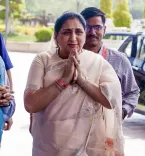
Dr. Jitendra Singh hails Jaipur e-Governance awards, 1.66L panchayat entries

Synopsis
At the Jaipur National Conference on e-Governance, Union Minister Dr. Jitendra Singh highlighted record participation of over 1.66 lakh Gram Panchayat applications for the National Awards for e-Governance, themed around AI-enabled and data-driven governance under the Viksit Bharat 2047 vision.
Key Takeaways
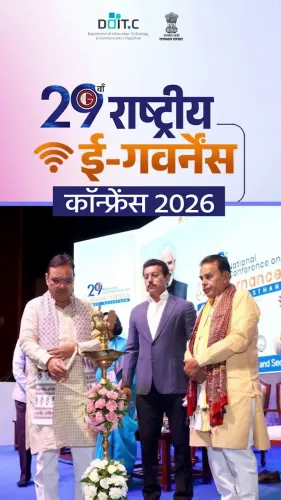
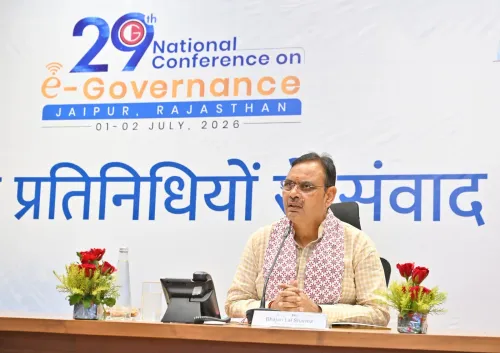
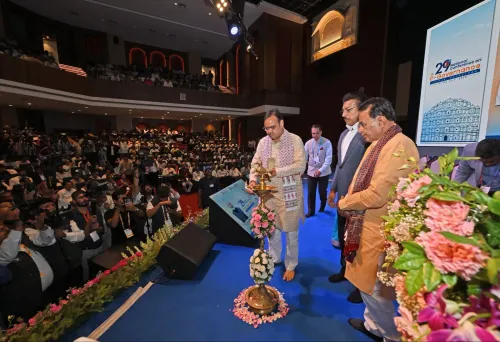
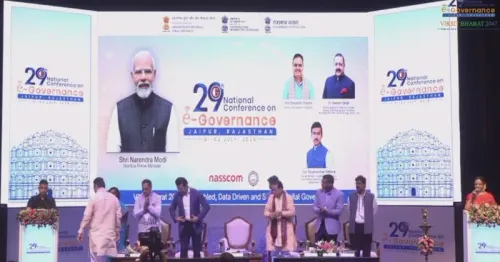
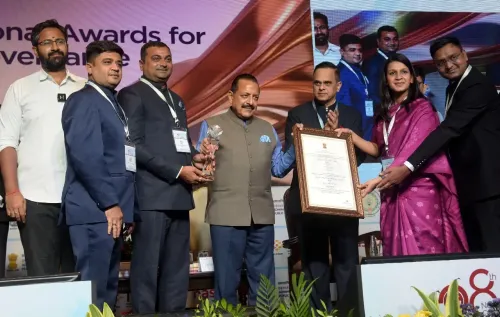
The National Awards for e-Governance were conferred at the Jaipur Conference organised by DARPG on 2 July 2026 .
This year's theme was 'Viksit Bharat 2047: AI-enabled, Data-driven and Secure Digital Governance' .
The conference received more than 1.66 lakh applications from Gram Panchayats — described as record participation.
Jitendra Singh attributed grassroots digital adoption to the Digital India programme launched by PM Narendra Modi in 2015.
The high panchayat participation signals deepening digital penetration beyond urban centres to village-level governance.
The conference theme explicitly links AI and cybersecurity to India's long-term Viksit Bharat 2047 development roadmap.
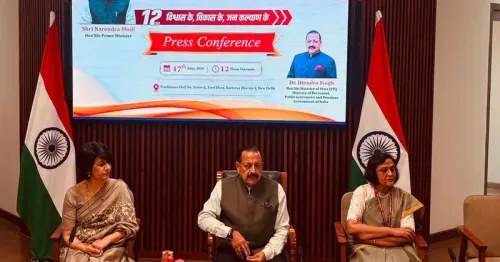
Union Minister of State (Independent Charge) for Science and Technology Dr. Jitendra Singh on Thursday, 2 July 2026 highlighted the National Awards for e-Governance conferred at the Jaipur Conference, noting that the event drew record participation with more than 1.66 lakh applications from Gram Panchayats across India.
Context
The Jaipur Conference, organised under the National Conference on e-Governance (NCeG) framework by the Department of Administrative Reforms and Public Grievances (DARPG), this year carried the theme 'Viksit Bharat 2047: AI-enabled, Data-driven and Secure Digital Governance' — directly linking annual e-governance recognition to India's long-term development roadmap. Dr. Singh described the nominations as reflecting 'the collective spirit of villages embracing technology for better service delivery, citizen empowerment and inclusive growth.'
The minister credited the scale of grassroots participation to the Digital India programme, calling it 'a true testimony to the success story of Digital India, spearheaded by PM Narendra Modi.' The volume of panchayat-level entries signals a notable shift from urban-centric e-governance adoption toward village-level digital engagement.
Policy Backdrop
The National Awards for e-Governance are annual honours instituted to recognise excellence and innovation in government digital service delivery. They sit within the broader National e-Governance Plan (NeGP), approved in 2006, which established the architecture for making government services electronically accessible to citizens.
The Digital India programme, launched in July 2015 by Prime Minister Modi, accelerated this push, extending connectivity and digital services beyond metropolitan centres to semi-urban and rural areas. The explicit inclusion of artificial intelligence, data analytics, and cybersecurity in this year's conference theme marks an evolution in the government's e-governance vocabulary, aligning routine administrative reform with the Viksit Bharat 2047 vision of a fully developed India by the centenary of independence.
Stakeholders and Impact
Gram Panchayats — the foundational tier of the Panchayati Raj system — are the primary stakeholders highlighted by this participation figure. Their engagement at this scale suggests that digital literacy and connectivity infrastructure have reached a level where village-level institutions can actively compete in national governance awards.
Rural citizens stand to benefit most directly: higher panchayat participation in e-governance initiatives typically correlates with improved local service delivery, from land records and welfare scheme access to grievance redressal. The conference theme's focus on secure digital governance also reflects growing attention to data protection at the grassroots level.
What's Next
The government is expected to release guidelines and best-practice frameworks emerging from the Jaipur Conference for wider adoption by Panchayati Raj institutions nationwide. Policymakers and state governments will be watching whether the AI and data-governance frameworks discussed at the conference translate into concrete toolkits for village administrators.
As India advances toward 2047, the integration of AI-enabled tools into the lowest rungs of governance will be a key metric of whether the Viksit Bharat vision achieves genuinely inclusive digital transformation — or remains concentrated in urban and semi-urban pockets.
Point of View
The government is signalling that e-governance is no longer a standalone reform but a pillar of its long-term nation-building narrative. The emphasis on village-level applications also serves a strategic purpose ahead of state election cycles, where rural digital service delivery increasingly shapes voter perception. Whether the volume of applications translates into measurable on-ground improvements in panchayat service delivery will be the harder test that follows the awards.
NationPress
2 Jul 2026
Frequently Asked Questions
What is the National Conference on e-Governance (NCeG)?
The National Conference on e-Governance is an annual event organised by the Department of Administrative Reforms and Public Grievances (DARPG) to recognise excellence in digital governance and set policy direction for e-governance in India.
What was the theme of the 2026 Jaipur e-Governance Conference?
The theme was 'Viksit Bharat 2047: AI-enabled, Data-driven and Secure Digital Governance,' linking digital governance reform to India's vision of becoming a developed nation by 2047.
How many Gram Panchayats applied for the National Awards for e-Governance in 2026?
More than 1.66 lakh applications were received from Gram Panchayats across India, described by Union Minister Dr. Jitendra Singh as record participation.
What is the Digital India programme?
Digital India is a flagship programme launched by Prime Minister Narendra Modi in July 2015 to transform India into a digitally empowered society by expanding internet access, digital literacy, and electronic government services.
What is Viksit Bharat 2047?
Viksit Bharat 2047 is the Indian government's national vision to make India a fully developed country by 2047, the centenary of its independence, covering economic, social, and governance dimensions.