Giriraj Singh backs VB-G RAM G rural jobs scheme
Synopsis
Union Textiles Minister Giriraj Singh on 1 July 2026 endorsed the VB-G RAM G scheme, which extends rural employment guarantees to 125 days annually, introduces a 60-day agricultural-season pause, and uses AI-based monitoring — framing it as a step toward self-reliant villages under PM Modi's Viksit Bharat 2047 vision.
Key Takeaways
VB-G RAM G is a new rural employment scheme endorsed by Union Textiles Minister Giriraj Singh on 1 July 2026 .
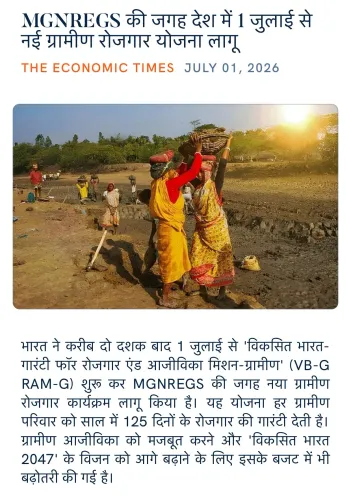
The scheme promises 125 days of guaranteed wage employment per year to eligible rural households, up from the 100 days under MGNREGA.
A 60-day work pause during the agricultural season is built in to ensure farm labour availability during sowing and harvest periods.
AI-based monitoring is proposed to improve transparency and reduce leakages in scheme delivery.
The initiative is framed as part of the Viksit Bharat 2047 vision for self-reliant, developed villages.
Formal gazette notifications, budgetary allocations, and parliamentary scrutiny of AI infrastructure will be key milestones to watch.
Union Textiles Minister Giriraj Singh on Wednesday, 1 July 2026 endorsed a new rural employment initiative called VB-G RAM G, describing it as a significant step toward self-reliant villages under Prime Minister Narendra Modi's leadership. The scheme reportedly guarantees eligible rural households 125 days of employment per year, an expansion over existing norms, and incorporates AI-based monitoring to improve transparency.
Context
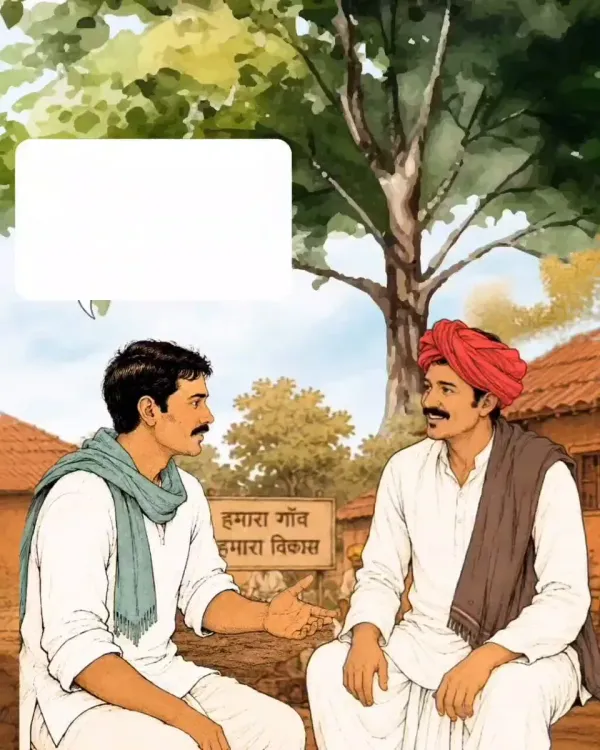
Posting on X in Hindi, Singh wrote: 'पात्र ग्रामीण परिवारों को अब हर वर्ष 125 दिनों के रोजगार की गारंटी मिलेगी' — 'Eligible rural families will now receive a guarantee of 125 days of employment every year.' He also highlighted a provision for a 60-day work pause during the agricultural season, designed so that wage-employment does not conflict with farm labour demand cycles. The minister framed the initiative as advancing 'employment, development and self-reliant villages.'
Policy Backdrop
India's foundational rural employment law, the Mahatma Gandhi National Rural Employment Guarantee Act (MGNREGA), enacted in 2005, guarantees up to 100 days of wage employment per rural household per year. Successive administrations have periodically reviewed and augmented those norms — for instance, allowing additional days during droughts or natural calamities. The VB-G RAM G scheme, as described by Singh, would extend the annual guarantee to 125 days, a meaningful increase for households dependent on government-assured work. The scheme name and the exact parameters cited in the post align with the government's broader Viksit Bharat 2047 vision, which targets a developed, self-reliant India by the centenary of independence, with rural infrastructure and livelihoods as key pillars.
The integration of AI-based monitoring into rural welfare delivery reflects the current administration's stated approach of using digital tools to reduce leakages and improve accountability in social schemes — a trend visible across programmes from direct benefit transfers to gig-worker registrations.
Stakeholders and Impact
The primary beneficiaries, as stated in the post, are eligible rural families — a category broadly understood to include agricultural labourers and other rural poor households registered under employment guarantee frameworks. The 60-day agricultural-season pause is particularly notable for farm labourers, as it signals an attempt to synchronise government wage work with private farm demand, preventing labour shortages during sowing and harvest. If implemented at scale, a jump from 100 to 125 guaranteed days could meaningfully supplement incomes in districts where alternative employment is scarce, especially in states like Bihar — Singh's own Lok Sabha constituency of Begusarai falls in a region with high dependence on rural wage labour.
What's Next
Formal gazette notifications detailing the VB-G RAM G scheme guidelines, eligibility criteria, and wage rates will be the first markers to watch. Budgetary allocations — either in a supplementary demand or the next Union Budget — will indicate the fiscal commitment behind the announcement. Parliamentary questions and committee scrutiny are likely to probe the rollout of AI-based surveillance mechanisms, including data privacy safeguards and infrastructure readiness in remote villages. The scheme's alignment with the Viksit Bharat 2047 framework also means it is likely to feature in the government's broader rural development communications in the months ahead.
Point of View
If operationalised, would mark the most significant statutory augmentation of MGNREGA-style entitlements since the original 2005 legislation. The addition of AI-based monitoring is a double-edged political proposition: it strengthens the government's anti-leakage narrative but also invites scrutiny over digital infrastructure gaps in remote areas. Framing the scheme under the Viksit Bharat 2047 banner ties a welfare measure to an aspirational national identity — a recurring communication strategy of the current administration.
NationPress
30 Sept 2026
Frequently Asked Questions
What is the VB-G RAM G scheme?
VB-G RAM G is a rural employment initiative endorsed by Union Minister Giriraj Singh on 1 July 2026, said to guarantee eligible rural households 125 days of wage employment per year, with AI-based monitoring and a 60-day pause during the agricultural season.
How is VB-G RAM G different from MGNREGA?
MGNREGA, enacted in 2005, guarantees up to 100 days of employment per rural household per year. VB-G RAM G, as described in Singh's post, would extend that guarantee to 125 days and add AI-based monitoring and a seasonal work-pause provision.
What is the 60-day agricultural work pause in VB-G RAM G?
The scheme includes a 60-day pause in government-assigned work during the agricultural season so that rural labourers remain available for farm work during sowing and harvest, preventing a conflict between public employment and private farm demand.
What is Viksit Bharat 2047?
Viksit Bharat 2047 is the Government of India's official vision for a fully developed nation by 2047, the centenary of independence, with rural infrastructure, self-reliance, and inclusive growth as central goals.
Who will benefit from the VB-G RAM G scheme?
The scheme targets eligible rural families, broadly understood to include agricultural labourers and rural poor households registered under employment guarantee frameworks across India.