CM Bhajan Lal eyes panchayat polls after BJP's civic sweep
Synopsis
Rajasthan CM Bhajan Lal Sharma met BJP workers in Jhalawar on 29 September 2026, hailed the party's recent municipal-election sweep as proof of booth-level strength, and directed the organisation to replicate that energy across every village and hamlet ahead of the upcoming panchayat elections.
Key Takeaways
CM Bhajan Lal Sharma held a strategy meeting with BJP workers in Jhalawar on 29 September 2026 .
BJP's recent municipal-election victory was cited as evidence of grassroots organisational strength and public trust.
BJP National Vice President Vasundhara Raje was present, signalling top-level party unity ahead of rural polls.
The CM called on workers to extend booth-level activity to every village, hamlet, and home for the upcoming panchayat elections.
The 'double engine government' narrative — linking central and state BJP governance — was the core message used to motivate workers.
Panchayat elections are the next electoral target for BJP Rajasthan following its return to power in December 2023 .
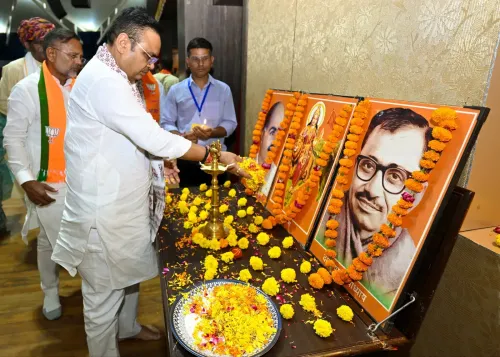
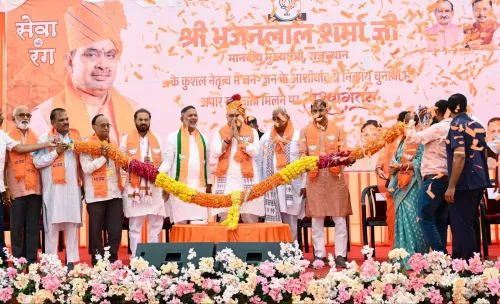
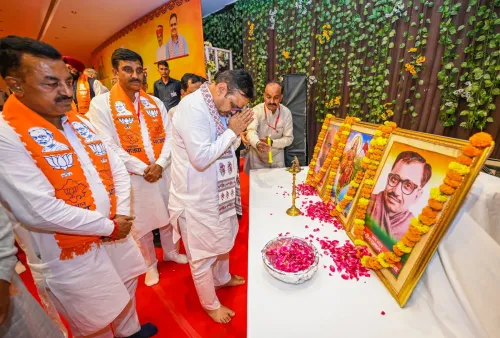
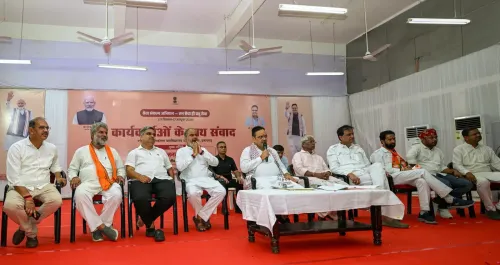
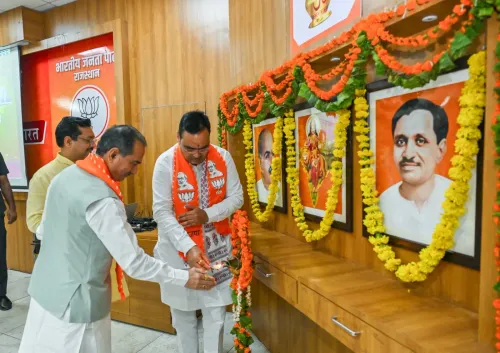
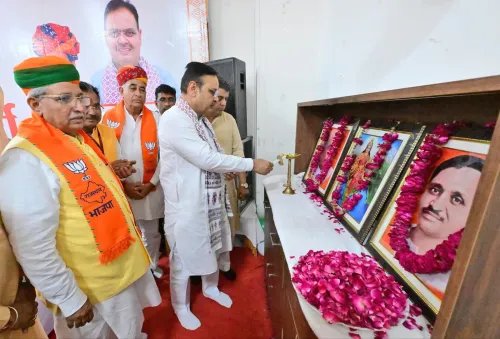
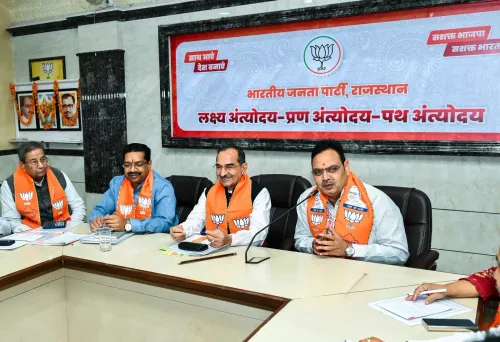
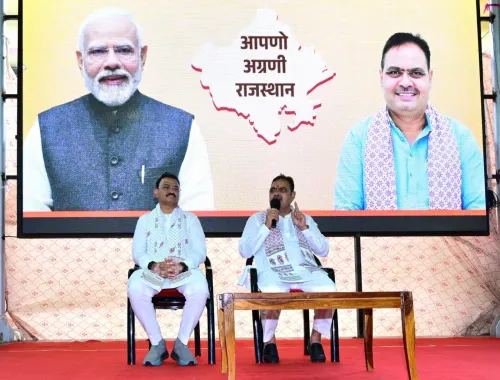
Fresh off what the party is calling a historic victory in Rajasthan's municipal elections, Rajasthan Chief Minister Bhajan Lal Sharma travelled to the sacred soil of Jhalawar on Tuesday, 29 September 2026 to huddle with grassroots workers and chart the BJP's next electoral move — the approaching panchayat elections.
The Jhalawar meeting: what was on the table
Speaking to energised party workers, Sharma credited their 'tireless labour' and booth-level discipline for the recent civic-poll triumph, calling it a direct proof of the organisation's strength at the ground level. Former Rajasthan Chief Minister and BJP National Vice President Vasundhara Raje was also present at the gathering, lending the meeting considerable organisational weight. Other elected representatives attended alongside her.
Sharma framed the party workers as a bridge — his phrase was 'setu ki tarah' (like a bridge) — carrying the 'double engine government's' welfare policies to the last person in society. The meeting was as much a morale exercise as a strategy session, with the CM publicly acknowledging that ordinary workers, not just leaders, built the win.
From civic seats to every gram panchayat
The pivot is now firmly toward the panchayat elections. Sharma's directive to workers was explicit: maintain the same unprecedented enthusiasm, strengthen booth-level activity, and reach 'har gaon, har dhani aur har ghar' — every village, every hamlet, every home. The goal, he said, is to sustain the momentum of development and set a new record of victory.
The 'double engine' framing — linking Prime Minister Narendra Modi's central government schemes to BJP Rajasthan's state-level delivery — has been the party's consistent messaging anchor since it returned to power in December 2023. Sharma's Jhalawar outreach is a textbook deployment of that narrative: convert a civic-election win into booth-ready infrastructure before the next ballot.
Vasundhara Raje's presence and its organisational signal
Raje's attendance is worth noting. As BJP National Vice President and the most prominent face of the party in Rajasthan through two earlier stints as Chief Minister (2003–2008 and 2013–2018), her visible alignment with Sharma at a field-level workers' meeting projects unity ahead of a rural electoral cycle where factional cohesion will matter enormously.
Panchayat elections in Rajasthan are hyper-local contests where ground organisation and candidate selection often matter more than top-line state or national messaging. The party that banks votes at the booth level consistently tends to dominate — and today's Jhalawar session is the BJP signalling it is not waiting for the election calendar to be announced before it starts preparing.
Point of View
Visible unity between the CM and the former two-time CM carries outsized messaging value at the grassroots. The 'double engine' framing also quietly reinforces Sharma's positioning as the credible conduit between the Centre's flagship schemes and rural Rajasthan — a narrative that will be central to panchayat-level candidate pitches. Watch the candidate-selection process closely: that is where organisational loyalty and internal power equations will actually be tested.
NationPress
29 Sept 2026
Frequently Asked Questions
Why did CM Bhajan Lal Sharma visit Jhalawar?
Sharma visited Jhalawar on 29 September 2026 to meet BJP workers, review the party's recent municipal-election victory, and outline strategy for the upcoming panchayat elections.
What is the 'double engine government' that CM Sharma mentioned?
The term refers to the BJP's messaging that having the same party in power at both the central government (under PM Narendra Modi) and the state government (under CM Sharma) accelerates the delivery of welfare schemes and development projects to citizens.
Who is Vasundhara Raje and why was her presence significant?
Vasundhara Raje is a former two-term Chief Minister of Rajasthan (2003–2008 and 2013–2018) who now serves as BJP National Vice President. Her attendance at the workers' meeting alongside CM Sharma signals organisational unity ahead of a critical rural electoral cycle.
When are the next panchayat elections in Rajasthan?
An exact date had not been officially announced as of CM Sharma's meeting on 29 September 2026. The CM's directive to workers suggests the BJP is beginning ground-level mobilisation in advance of the formal announcement.
How did BJP perform in the recent Rajasthan municipal elections?
CM Sharma described the result as a 'historic victory,' attributing it to workers' hard work and strong public trust. Specific seat tallies from the municipal elections could not be independently verified.