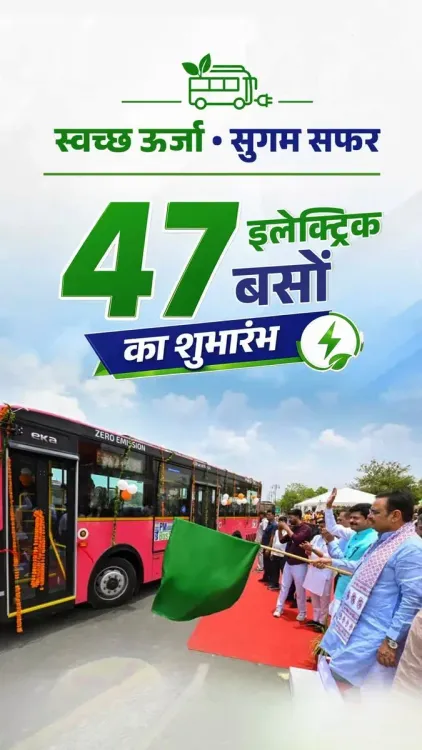
CM Bhajan Lal Flags Off Rajasthan Roadways Electric Buses
Synopsis
Rajasthan Chief Minister Bhajan Lal Sharma flagged off RSRTC electric buses in Jaipur on 20 June 2026, advancing the state's clean-energy public transport agenda under the 'Vikasit Rajasthan' vision and aligned with central schemes including PM e-Bus Sewa and the Rajasthan EV Policy.
Key Takeaways
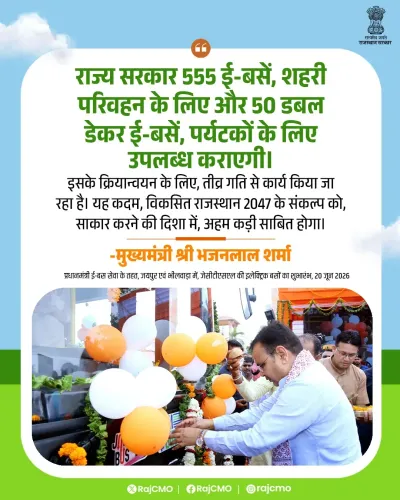
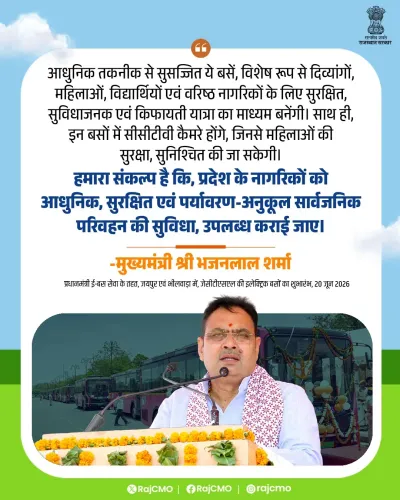
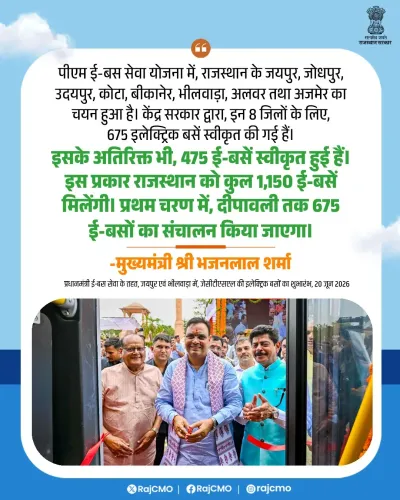
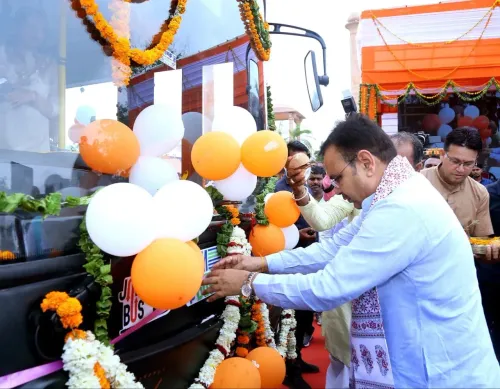
CM Bhajan Lal Sharma flagged off Rajasthan Roadways electric buses from Jaipur on 20 June 2026 .
The initiative is framed under the state's 'Vikasit Rajasthan' sustainable infrastructure vision.
Rajasthan's EV Policy (2022) provides the state-level regulatory framework for fleet electrification.
The Union government's PM e-Bus Sewa scheme (2023) approved 10,000 electric buses for states including Rajasthan.
The FAME India scheme , launched in 2015 and extended as FAME-II, underpins central subsidies for electric bus procurement.
Key next steps include charging station deployment timelines and performance audits of the new fleet.
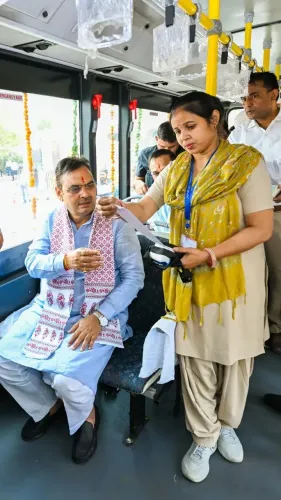
Rajasthan Chief Minister Bhajan Lal Sharma on Saturday, 20 June 2026, flagged off a fleet of electric buses under Rajasthan State Road Transport Corporation (RSRTC) from Jaipur, marking a significant step in the state's push toward clean public transport. The initiative is part of the government's 'Vikasit Rajasthan' vision, aimed at delivering modern, safe and sustainable connectivity to residents across the state.
Context
Posting in Hindi on X (formerly Twitter), CM Sharma announced: 'Aaj Jaipur mein Rajasthan Roadways ki electric buses ko hari jhandi dikhaakar ravana kiya' ['Today in Jaipur, I flagged off Rajasthan Roadways electric buses']. He added that the buses would provide residents with 'better, safer and modern travel facilities' while strengthening connectivity across the state. The CM described the clean-energy initiative as a driver of green development and a pillar of 'Vikasit Rajasthan' — the state government's sustainable infrastructure branding.
The flagging-off ceremony in Jaipur, the state capital and a key transport hub, signals the formal induction of electric vehicles into the RSRTC fleet for intra-state public transport operations.
Policy Backdrop
Rajasthan notified its Electric Vehicle Policy in 2022, creating a framework to incentivise EV adoption, build charging infrastructure and electrify public transport fleets. The policy set the regulatory groundwork for transitions like the one announced on Saturday.
At the central level, the Union government's PM e-Bus Sewa scheme, approved in 2023, earmarked 10,000 electric buses for deployment across states, with Rajasthan among the beneficiaries. This initiative builds on the earlier FAME India scheme (launched 2015, extended as FAME-II), which provided central subsidies to states for procuring electric buses and promoting clean public transport.
The Rajasthan move aligns with India's broader national electric mobility transition, targeting net-zero emissions by 2070. Multiple states have pursued e-bus rollouts under central funding, and Rajasthan's latest step reflects a convergence of state policy ambition and central programme support.
Stakeholders and Impact
The primary beneficiaries are public transport commuters and urban residents of Rajasthan who depend on RSRTC services for daily travel. Electric buses are expected to reduce passenger exposure to pollutants, lower noise levels on city routes and provide a more modern travel experience compared to ageing diesel fleets.
The shift to electric also carries environmental implications for Jaipur and other cities on RSRTC routes, where vehicular pollution is a persistent concern. By reducing dependence on fossil fuels, the fleet electrification contributes to the state's air quality and climate commitments. Local economies along key bus corridors may also benefit from improved and more reliable public transport links.
What's Next
Attention will now turn to the phased rollout of additional buses, the deployment timeline for charging stations at RSRTC depots and terminals, and performance audits of the inducted electric fleet. The pace of charging infrastructure expansion will be a critical determinant of whether the electric buses can operate reliably across both urban and inter-district routes.
As Rajasthan positions itself within India's electric mobility transition, the coming months will test whether the 'Vikasit Rajasthan' green development agenda translates from ceremony into measurable improvements in public transport quality and environmental outcomes.
Point of View
The event reinforces the 'Vikasit Rajasthan' branding that has been central to his government's public communication since December 2023. The move also reflects a broader national consensus — cutting across party lines — on electric public transport as a low-controversy, high-visibility policy win. The real test, however, will come in execution: how quickly charging infrastructure scales and whether commuters experience a tangible service improvement.
NationPress
20 Jun 2026
Frequently Asked Questions
What electric buses did CM Bhajan Lal Sharma flag off in Jaipur?
CM Bhajan Lal Sharma flagged off Rajasthan State Road Transport Corporation (RSRTC) electric buses in Jaipur on 20 June 2026, as part of the state's push to modernise public transport with clean energy vehicles.
What is the PM e-Bus Sewa scheme and does Rajasthan benefit from it?
The PM e-Bus Sewa scheme, approved by the Union government in 2023, provides for the deployment of 10,000 electric buses across Indian states, with Rajasthan among the identified beneficiaries.
What is Rajasthan's EV Policy?
Rajasthan notified its Electric Vehicle Policy in 2022 to incentivise EV adoption, promote charging infrastructure development and support the electrification of public transport fleets like RSRTC.
What is 'Vikasit Rajasthan'?
'Vikasit Rajasthan' is the Bhajan Lal Sharma government's branding framework for sustainable infrastructure and development initiatives in the state, under which the electric bus rollout has been positioned.
How does the Rajasthan electric bus launch connect to India's climate goals?
The RSRTC fleet electrification is part of India's national transition to electric mobility aimed at reducing urban pollution and fossil fuel dependence in state-run transport, in line with India's net-zero target by 2070.