PM Modi Targets Congress, Left, TMC on Paschim Banga Diwas
Synopsis
On Paschim Banga Diwas, Prime Minister Narendra Modi accused Congress, the Left Front, and Trinamool Congress of driving West Bengal into backwardness through decades of misrule, calling on citizens to pledge against repeating those governance failures ahead of the 2026 state elections.
Key Takeaways
Prime Minister Narendra Modi posted a sharp critique of West Bengal 's governance on Paschim Banga Diwas, 20 June 2026 .
He blamed three successive political formations — Congress , the Left Front , and Trinamool Congress — for the state's prolonged economic backwardness.
The Left Front governed West Bengal for 34 consecutive years from 1977 to 2011 ; TMC has held power since 2011 .
West Bengal assembly elections are due in 2026 , giving the post clear electoral significance.
The BJP has been the principal opposition in the state since the 2019 Lok Sabha elections.
Central initiatives such as PM Gati Shakti have been positioned as alternatives to state-level governance gaps in eastern India.
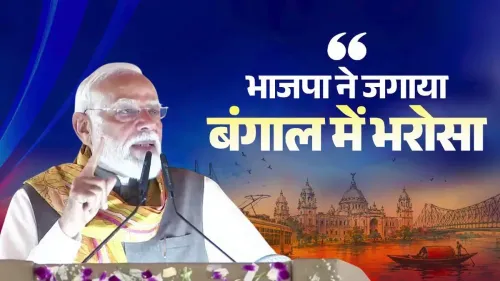
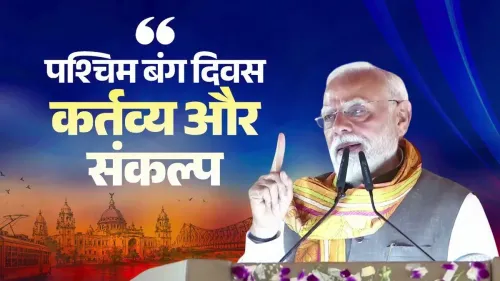
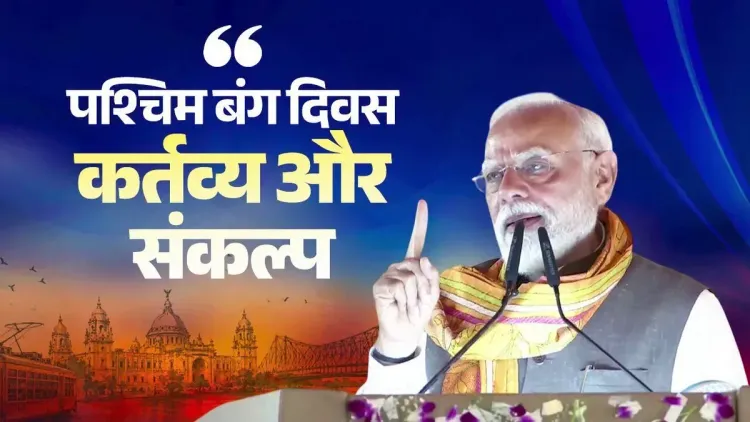
Prime Minister Narendra Modi used Paschim Banga Diwas (West Bengal Day) on Saturday, 20 June 2026 to deliver a sharp political indictment of the state's governance history, arguing that decades of rule by the Indian National Congress, the Left Front, and the Trinamool Congress had pushed a once-promising West Bengal into persistent backwardness.
Posting in Hindi on X, Modi wrote: 'Jo Bengal Bharat ke vikas ka netritva kar sakta tha, wo Congress, Left aur TMC ke dashakon ke kushasan mein lagatar pichhdata chala gaya.' ('The Bengal that could have led India's development kept falling behind through decades of misrule by Congress, Left, and TMC.')
He called on citizens to mark the occasion with a resolve: 'Today, on Paschim Banga Diwas, let us pledge that those mistakes of history will not be repeated.'
Context
West Bengal carries one of India's most layered political histories. Congress governed the state for roughly three decades after independence before the Left Front, led by the Communist Party of India (Marxist), swept to power in 1977. The Left Front's uninterrupted 34-year tenure — one of the longest consecutive runs by any elected government in a democracy — ended in 2011 when Trinamool Congress under Mamata Banerjee won a landslide majority.
TMC retained power in the 2016 and 2021 assembly elections, consolidating its hold even as the Bharatiya Janata Party emerged as the principal opposition. West Bengal assembly elections are due in 2026, making the political temperature around this post particularly significant.
Policy Backdrop
West Bengal was historically one of India's industrial anchors, with Kolkata serving as a hub for jute, textiles, and manufacturing. Economists have long noted that the state's share of national industrial output declined relative to faster-growing western and southern states over several decades, a trend attributed variously to labour militancy, policy choices, and underinvestment in infrastructure.
The Left Front government did pursue significant land reforms — notably Operation Barga — that reshaped rural West Bengal, but critics argue its later years saw industrial stagnation. Since 2014, the central government has promoted connectivity initiatives such as PM Gati Shakti and industrial corridor projects intended to boost eastern India, including West Bengal.
Stakeholders and Impact
The message is directed squarely at West Bengal's approximately 7.3 crore registered voters ahead of the state assembly polls. BJP has been working to consolidate gains made in the 2019 and 2024 Lok Sabha elections, when it won a significant share of seats in the state.
Industrial investors and business chambers in the state have repeatedly flagged concerns about ease of doing business, law and order, and infrastructure gaps — themes the BJP has woven into its state-level campaign. TMC and the remaining Left formations are expected to contest the framing vigorously, pointing to welfare schemes and social indices under their respective tenures.
What's Next
With West Bengal assembly elections on the horizon in 2026, Modi's post signals that the BJP's campaign will lean heavily on a multi-decade governance critique spanning all three parties that have held state power. The party is expected to accelerate announcements of central projects in the state to reinforce its development contrast.
Whether voters in West Bengal — who have consistently returned non-BJP governments at the state level even as they split their Lok Sabha votes — respond to this historical framing will be a defining test of the party's eastward expansion strategy.
Point of View
Rather than a rally or press conference, reflects the party's disciplined use of social media to set the terms of debate without a rebuttal platform. Coming with the 2026 assembly polls approaching, the post also serves as an early frame-setter, attempting to make governance history — rather than incumbent TMC's record alone — the central electoral question. Whether this multi-party blame architecture resonates in a state with strong regional identity and deep Left cultural roots remains the critical unknown.
NationPress
21 Jun 2026
Frequently Asked Questions
What is Paschim Banga Diwas and why is it celebrated?
Paschim Banga Diwas, or West Bengal Day, marks a significant date in the state's history. The occasion is observed to commemorate West Bengal's identity and heritage, and political leaders across parties typically use it to make statements about the state's past and future.
What did PM Modi say about West Bengal on Paschim Banga Diwas 2026?
PM Modi posted in Hindi on X saying that West Bengal, which could have led India's development, kept falling behind due to decades of misrule by Congress, the Left, and TMC. He called on citizens to pledge that those historical mistakes would not be repeated.
How long did the Left Front rule West Bengal?
The Left Front, led by the Communist Party of India (Marxist), governed West Bengal continuously for 34 years from 1977 to 2011 — one of the longest uninterrupted tenures of any elected government in a democracy.
When are the next West Bengal assembly elections?
West Bengal assembly elections are scheduled for 2026, making PM Modi's Paschim Banga Diwas post particularly significant as an early campaign signal from the BJP.
Why is BJP focusing on West Bengal's governance history in its campaign?
BJP has positioned itself as the principal opposition in West Bengal since the 2019 Lok Sabha elections and seeks to expand its state-level presence. By critiquing all three parties that have previously governed the state, it aims to present itself as the only alternative untainted by the state's governance record.