PM Modi slams Congress, Left, TMC on West Bengal Day
Synopsis
On West Bengal Day, Prime Minister Narendra Modi posted in Bengali accusing Congress, the Left Front, and TMC of decades of misrule that derailed the state's development potential, calling on citizens to ensure history's mistakes are not repeated — a message that sharpens BJP's pre-election narrative in the state.
Key Takeaways
PM Modi posted in Bengali on West Bengal Day, 20 June 2026 , targeting three parties — Congress , Left Front , and TMC — for the state's decline.
He argued that West Bengal had the potential to lead India 's development but was held back by 'decades of misrule.' The Left Front governed West Bengal from 1977 to 2011 ; TMC has held power since 2011 .
The post aligns with BJP 's long-running campaign strategy to frame West Bengal 's economic trajectory as a consequence of non-BJP governance.
West Bengal assembly elections are due in 2026 , raising the political stakes of such messaging.
The choice of Bengali as the language of the post signals a direct appeal to the state's electorate ahead of polls.
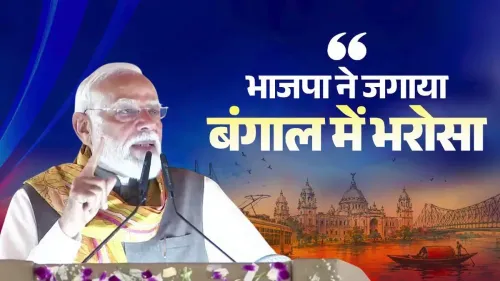
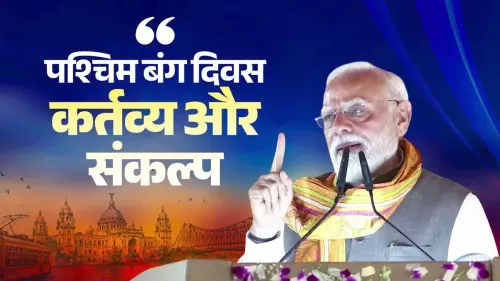
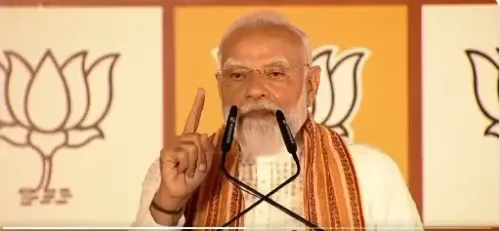
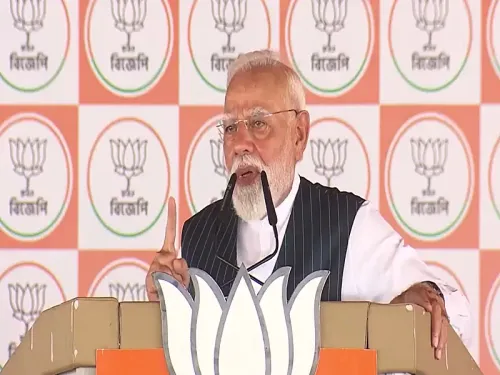
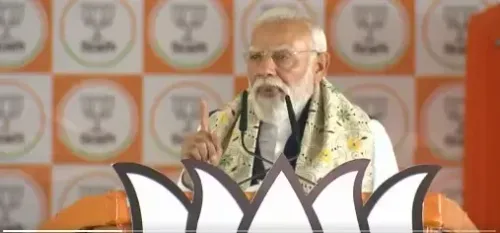
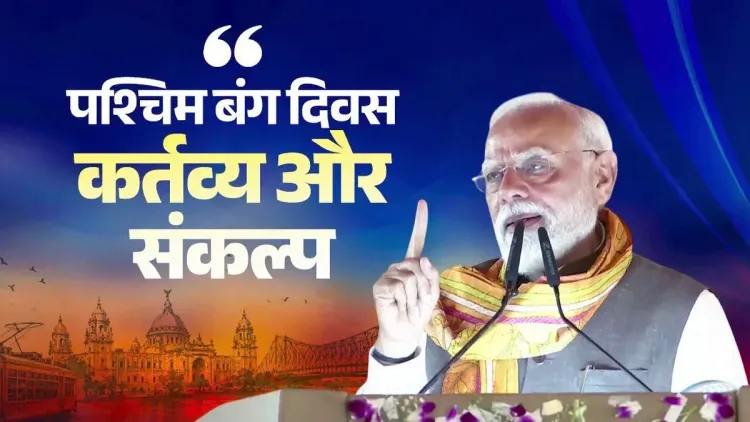
Prime Minister Narendra Modi used West Bengal Day on Saturday, 20 June 2026, to launch a sharp political attack on the three parties that have governed West Bengal over the past several decades, arguing that prolonged misrule by Congress, the Left Front, and the Trinamool Congress (TMC) has pushed a once-leading state into sustained decline.
Posting in Bengali on X, Modi wrote: 'যে বাংলা ভারতের উন্নয়নে নেতৃত্ব দিতে পারত, তা কংগ্রেস, বামফ্রন্ট এবং টিএমসি-র দশকের পর দশক ধরে চলা অপশাসনের কারণে ক্রমাগত পিছিয়ে পড়েছে।' ('The Bengal that could have led India's development has been continuously falling behind due to decades of misrule by Congress, the Left Front, and TMC.') He called on readers to resolve, on West Bengal Day, that 'the mistakes of history will not be repeated.'
Context
West Bengal was historically one of India's foremost industrial and cultural centres, home to major manufacturing hubs and a vibrant intellectual tradition. Over the latter half of the twentieth century, however, the state's share of national industrial output and investment declined markedly relative to other large states.
Modi's post frames this trajectory as a direct consequence of political choices made by successive non-BJP governments, a line of argument the party has consistently advanced in West Bengal since its national rise in 2014.
Policy Backdrop
The Left Front, led by the CPI(M), governed West Bengal uninterrupted from 1977 to 2011 — one of the longest unbroken runs for any elected government in a major Indian state. While its early land-reform programmes drew wide attention, the administration faced mounting criticism in its later years for industrial stagnation and resistance to large-scale private investment.
The Trinamool Congress under Chief Minister Mamata Banerjee ended that era in the 2011 assembly elections, promising better governance. BJP campaigns in the state since 2014 have repeatedly cited unresolved economic and law-and-order concerns as evidence that the change of government did not translate into the promised turnaround.
Stakeholders and Impact
The statement speaks directly to West Bengal's residents, particularly younger voters and industrial investors who have watched the state lose ground to peers in eastern and southern India. For the BJP, positioning itself as the agent of revival in the east is central to its national expansion strategy.
Both the Left Front and TMC are likely to contest the characterisation. TMC has previously pointed to welfare schemes and social indicators as evidence of progress under its administration, while Left Front leaders have defended the land-reform legacy of the 1977–2011 period.
What's Next
West Bengal assembly elections are due in 2026, making the political temperature in the state unusually high. Modi's Bengali-language post — addressed directly to the state's electorate in their own language — signals that the BJP's campaign messaging around governance and historical accountability will intensify in the months ahead.
Whether the party can convert this narrative into electoral gains will depend on organisational strength on the ground and whether central scheme announcements specifically targeting West Bengal follow. The coming weeks are likely to see further statements and events designed to consolidate anti-incumbency sentiment in the state.
Point of View
Using the occasion to consolidate anti-incumbency sentiment against three distinct political adversaries in a single message. By naming Congress, the Left Front, and TMC together, the BJP attempts to deny each party the space to deflect blame onto the others — a rhetorical device that has worked to the party's advantage in other states. The choice of Bengali signals cultural outreach beyond Hindi-belt optics, reflecting lessons from the party's growing but still-contested foothold in the state. With assembly elections due in 2026, expect this governance-failure framing to anchor the BJP's Bengal campaign as it seeks to translate urban and semi-urban discontent into seats.
NationPress
19 Sept 2026
Frequently Asked Questions
What is West Bengal Day and why is it celebrated on 20 June?
West Bengal Day marks the state's foundation, observed on 20 June . The exact official status of the occasion is subject to varying accounts; PM Modi used the date in 2026 to call for political renewal in the state.
What did PM Modi say about West Bengal on West Bengal Day 2026?
PM Modi posted in Bengali saying that West Bengal , which could have led India 's development, has continuously fallen behind due to decades of misrule by Congress , the Left Front , and TMC , and urged citizens to resolve not to repeat those mistakes.
How long did the Left Front rule West Bengal?
The Left Front , led by the CPI(M) , governed West Bengal continuously from 1977 to 2011 — a period of 34 years — before being defeated by Trinamool Congress in the assembly elections.
When are the next West Bengal assembly elections?
West Bengal assembly elections are due in 2026 , which is why political messaging around the state's governance record has been intensifying.
Why did PM Modi post in Bengali on X?
PM Modi posting in Bengali is seen as a direct cultural and electoral outreach to West Bengal 's electorate, a key battleground state where the BJP has been working to expand its presence since 2014 .