CM Bhajan Lal hails CWG flag handover to India for 2030 Games

Synopsis
Rajasthan CM Bhajan Lal Sharma welcomed the Commonwealth Games flag handover to India after CWG 2026 in Glasgow, calling it a historic moment for 140 crore Indians and declaring the start of Ahmedabad's CWG 2030 journey under PM Modi's leadership.
Key Takeaways
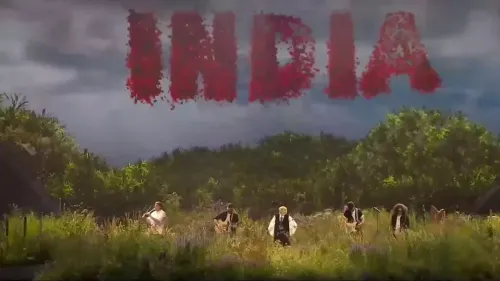
The Commonwealth Games flag was handed over to India at the close of CWG 2026 in Glasgow .
Ahmedabad is set to host the 2030 Commonwealth Games , marking India's second CWG hosting after Delhi 2010.
Rajasthan CM Bhajan Lal Sharma called the handover a historic moment of pride and resolve for 140 crore Indians .
Sharma credited PM Narendra Modi's leadership for elevating India's sports infrastructure and global hosting credibility.
The Khelo India programme (launched 2017) has been a key policy plank building India's grassroots sports and facility base.
India's CWG 2030 hosting will be closely watched for progress on venue construction and organisational readiness in Ahmedabad.
The Commonwealth Games flag has landed in Indian hands — and with it, the weight of a nation's sporting ambition. Rajasthan Chief Minister Bhajan Lal Sharma on Monday, August 3, 2026, marked the historic handover of the Commonwealth Games flag to India following the conclusion of CWG 2026 in Glasgow, calling it a moment of pride, faith, and resolve for 140 crore Indians — and the formal dawn of Ahmedabad's CWG 2030 journey.
The flag passes east — and history follows
The flag handover ceremony at the close of a Commonwealth Games is more than protocol. It is the moment a host city steps from the wings onto the world stage. With the flag now in Indian custody, Ahmedabad inherits both the honour and the immense organisational challenge of staging the 2030 Commonwealth Games — only the second time India will host the event after Delhi's CWG 2010.
Sharma wrote that the handover marks 'garv, vishwas aur naye sankalp ka aitihasik kshan' — 'a historic moment of pride, faith, and new resolve' — for the country, and declared that the CWG 2030 journey has formally begun.
Modi's sports infrastructure push behind the bid
Prime Minister Narendra Modi drew direct credit in Sharma's post, which described his leadership as 'visionary and inspiring' in raising India's standards of sports infrastructure, governance, and world-class event organisation. The framing connects the Ahmedabad hosting win to a deliberate national policy arc: India has spent the better part of a decade positioning itself as a credible host for marquee global events.
That arc includes the Khelo India programme, launched in 2017, which channelled central funding into grassroots sports development and facility upgrades across states. Successive investments in stadiums, athlete pipelines, and sports science have been cited by the government as evidence that India can not only compete internationally but run the show itself.
Ahmedabad's moment — and what it must deliver
Hosting a Commonwealth Games demands infrastructure at scale: multi-sport venues, athlete villages, transport corridors, and broadcast-ready facilities — all to international federation standards. Ahmedabad, already home to the world's largest cricket stadium, will need to demonstrate that its capacity extends well beyond bat and ball.
Sharma expressed full confidence that CWG 2030 will become 'an unprecedented celebration of India's sporting talent, organisational excellence, and cultural splendour.' The next four years will test whether that confidence is matched by concrete delivery on the ground.
For Indian athletes, the promise is tangible: a home Games is a rare gift — familiar conditions, roaring crowds, and the kind of emotional fuel that can push performance beyond expectation. The flag has been handed over. The clock has started.
Point of View
Framing the moment through the lens of PM Modi's 'visionary leadership,' reflects how the BJP links national sporting prestige directly to its governance narrative ahead of state and national electoral cycles. The Khelo India programme gives that narrative a policy spine, but the real test will be whether Ahmedabad's infrastructure delivery matches the political rhetoric. India's credibility as a repeat Commonwealth Games host — and as a candidate for even larger events — now rides on the next four years.
NationPress
3 Aug 2026
Frequently Asked Questions
Where will the 2030 Commonwealth Games be held?
The 2030 Commonwealth Games are set to be held in Ahmedabad, India , following the handover of the Commonwealth Games flag to India after the conclusion of CWG 2026 in Glasgow.
What did CM Bhajan Lal Sharma say about CWG 2030?
Rajasthan CM Bhajan Lal Sharma called the CWG flag handover to India a 'historic moment of pride, faith, and new resolve' for 140 crore Indians, and expressed confidence that CWG 2030 will showcase India's sporting talent, organisational excellence, and cultural splendour.
Has India hosted the Commonwealth Games before?
Yes. India hosted the Commonwealth Games for the first time in Delhi in 2010 . The 2030 edition in Ahmedabad will be the country's second time hosting the event.
What is the Khelo India programme?
The Khelo India programme was launched in 2017 by the central government to strengthen grassroots sports development and upgrade sports infrastructure across India, forming a key part of the country's push to host major international events.
When was the CWG flag handed over to India?
The Commonwealth Games flag was handed over to India at the closing ceremony of CWG 2026 in Glasgow , an event welcomed by Indian leaders including CM Bhajan Lal Sharma on August 3, 2026 .