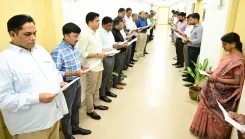
CM Bhajan Lal hails GSLV-F18 launch, salutes ISRO
Synopsis
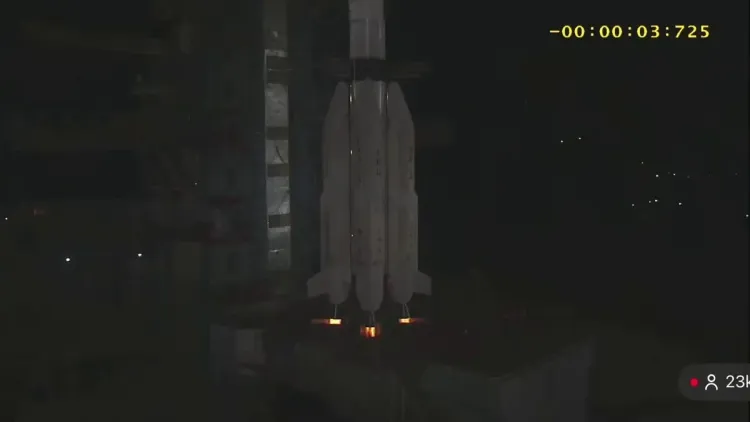
Rajasthan Chief Minister Bhajan Lal Sharma praised ISRO's successful GSLV-F18 launch on 31 October 2026, crediting PM Modi's leadership and congratulating the scientists and engineers who powered the mission.
Key Takeaways
GSLV-F18 was successfully launched, marking another milestone for India's space programme.
Rajasthan CM Bhajan Lal Sharma extended congratulations to ISRO scientists, engineers and all mission personnel.
CM Sharma credited PM Narendra Modi's leadership for ISRO's continuous record-setting pace.
ISRO's previous landmark was Chandrayaan-3 's historic lunar south pole landing in August 2023 .
The GSLV series carries heavier payloads to higher orbits, underpinning India's satellite self-reliance.
Each successful GSLV flight builds momentum and engineering confidence for the Gaganyaan crewed spaceflight programme.
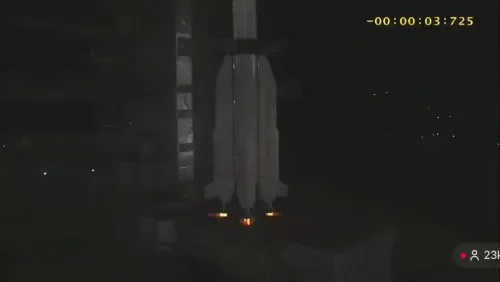
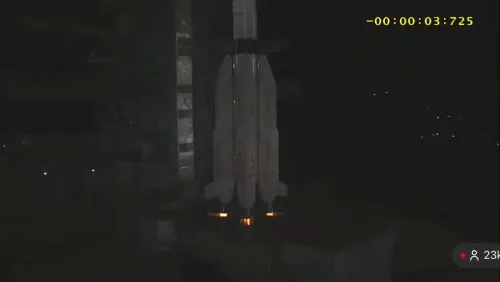
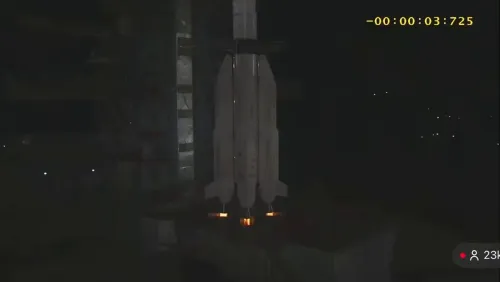
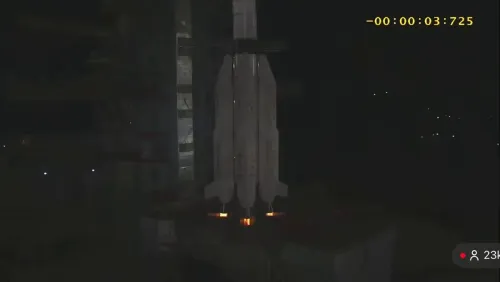
India's space programme cleared another milestone on Saturday, 31 October 2026, when the GSLV-F18 rocket lifted off successfully — and Rajasthan Chief Minister Bhajan Lal Sharma was among the first voices to mark the moment, congratulating every scientist, engineer and mission worker who made it happen.
Writing in Hindi on X, CM Sharma declared that India had once again demonstrated its 'scientific excellence and technological capability' in space. 'अंतरिक्ष के क्षेत्र में भारत ने एक बार फिर अपनी वैज्ञानिक उत्कृष्टता और तकनीकी सामर्थ्य का परिचय दिया है' — ('India has once again showcased its scientific excellence and technological prowess in the field of space') — he wrote, adding that the country's space journey is now 'moving towards new heights' with the successful launch of GSLV-F18.
ISRO's steady climb: from Chandrayaan-3 to GSLV-F18
ISRO — the Indian Space Research Organisation — has been on a remarkable run. Its crowning recent moment came in August 2023, when Chandrayaan-3 achieved a soft landing near the lunar south pole, making India only the fourth country in history to land on the Moon and the first to reach its southern polar region. That triumph reset global expectations of what Indian science could deliver on a fraction of Western mission budgets.
GSLV — the Geosynchronous Satellite Launch Vehicle — is the workhorse that carries heavier communication and earth-observation payloads into higher orbits. Each successful GSLV flight extends India's ability to deploy its own satellites without dependence on foreign launchers, a strategic priority that successive governments have underlined. The F18 mission adds another data point to that record of indigenous capability.
Modi's space vision and the road to Gaganyaan
CM Sharma specifically credited Prime Minister Narendra Modi's 'visionary leadership' for ISRO's unbroken momentum, noting that the organisation is 'continuously setting new records and enhancing India's glory on the global stage.' The political framing reflects a broader BJP narrative that aligns space success with national ambition — but the underlying engineering achievements give it real grounding.
The bigger prize on ISRO's horizon is Gaganyaan, India's first crewed spaceflight programme. Unmanned test flights have been building toward the moment India puts its own astronauts — Gaganauts — into orbit. Every clean GSLV mission strengthens the confidence and the data bank that a crewed flight demands. GSLV-F18 is, in that sense, not just a launch — it is a rehearsal for history.
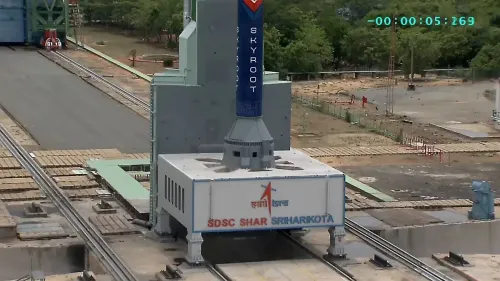
From a chief minister in Jaipur saluting scientists in Sriharikota, to a billion-plus people tracking the feed — India's space story has become a shared national event. The scientists own the launch pad; the nation owns the pride.
Point of View
High-cadence launch calendar. For BJP leaders like CM Sharma, celebrating ISRO milestones is also a deliberate act of political narrative-building, linking the party's governance record to a symbol of national pride that cuts across caste, language and region. The deeper significance, however, lies in the engineering compounding: every clean GSLV flight de-risks the Gaganyaan crewed mission and moves India closer to an exclusive club of human spaceflight nations. Whether the political credit-claiming accelerates or merely accompanies that technical march is the question analysts will keep asking.
NationPress
31 Oct 2026
Frequently Asked Questions
What is GSLV-F18 and why does it matter?
GSLV-F18 is a mission of India's Geosynchronous Satellite Launch Vehicle series, designed to place heavier communication and earth-observation satellites into higher orbits. Its success strengthens India's ability to deploy strategic satellites without relying on foreign launchers.
Why did Rajasthan CM Bhajan Lal Sharma comment on an ISRO launch?
As a senior BJP leader and state chief minister, Sharma joined national leaders in publicly celebrating ISRO's achievement, crediting PM Modi's vision and congratulating the scientists and engineers involved.
What was ISRO's last major milestone before GSLV-F18?
ISRO's most celebrated recent achievement was the Chandrayaan-3 soft landing near the lunar south pole in August 2023, making India the first country to land at that location on the Moon.
How does GSLV-F18 connect to the Gaganyaan mission?
Each successful GSLV launch builds the engineering data and institutional confidence that India's first crewed Gaganyaan spaceflight requires, as the programme depends on proven, reliable launch vehicles.
Who is Bhajan Lal Sharma?
Bhajan Lal Sharma is the Chief Minister of Rajasthan and a BJP leader who assumed office in December 2023.