Shekhawat Hails GSLV-F18 Launch, Credits Modi's Vision
Synopsis
Union Minister Gajendra Singh Shekhawat praised ISRO scientists and credited PM Modi's leadership after the successful launch of GSLV-F18, framing it as further evidence of India's growing space capabilities and technological self-reliance.
Key Takeaways
GSLV-F18 was successfully launched, with Union Minister Gajendra Singh Shekhawat publicly congratulating the ISRO team on 31 October 2026 .
Shekhawat credited PM Narendra Modi's scientific temperament and leadership for elevating India's identity in space research.
ISRO , established in 1969 , has built a full stack of launch vehicles including the GSLV series for placing heavy payloads in geostationary orbit.
India's space milestones include the low-cost Mangalyaan Mars mission ( 2013-14 ) and the Chandrayaan-2 lunar orbiter ( 2019 ).
The Modi government created IN-SPACe to allow private-sector participation in India's space economy for the first time.
The Gaganyaan human spaceflight programme remains the next major mission on ISRO's horizon.
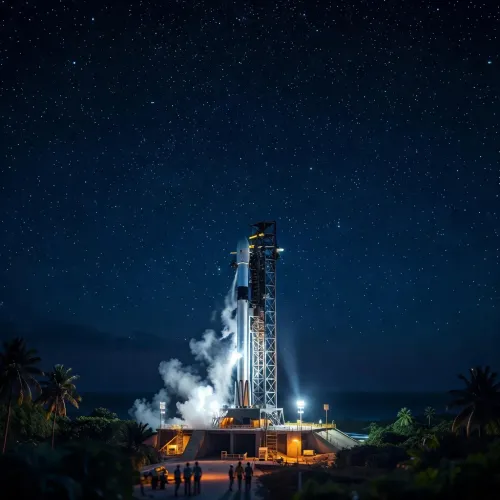
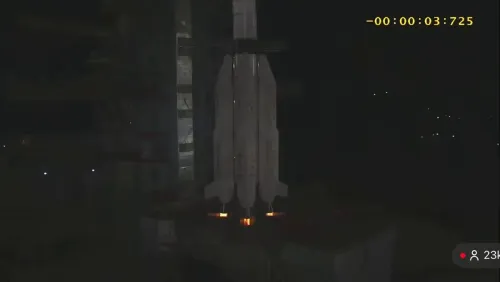
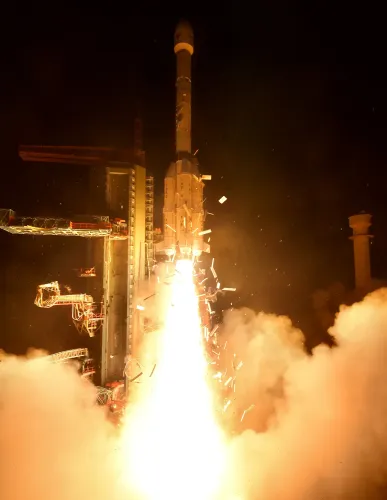
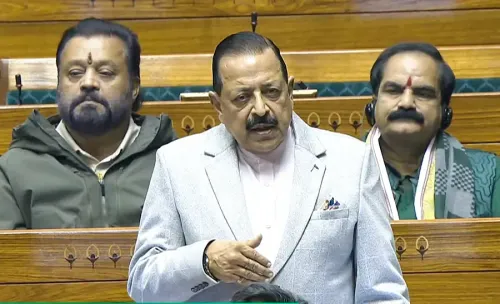
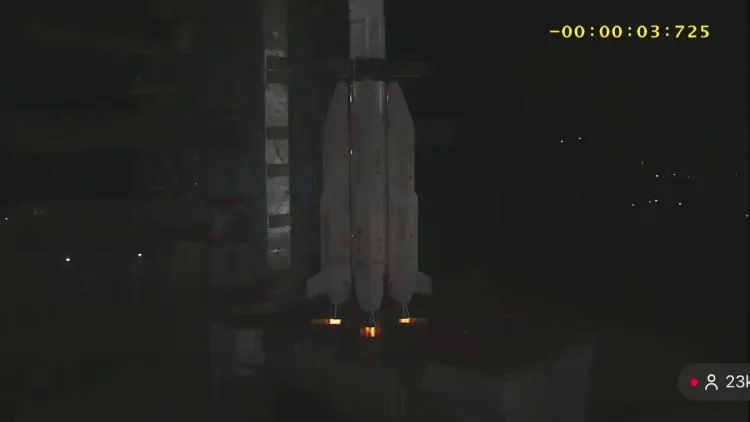
Another rocket. Another milestone. Union Culture and Tourism Minister Gajendra Singh Shekhawat on Saturday, 31 October 2026 congratulated ISRO and its entire scientific team on the successful launch of GSLV-F18, calling it fresh proof of India's steadily expanding capabilities in space science.
Posting on X, Shekhawat wrote: 'भारत की अंतरिक्ष विज्ञान के क्षेत्र में निरंतर बढ़ती क्षमताओं का एक और प्रमाण GSLV-F18 का सफल प्रक्षेपण है' — 'The successful launch of GSLV-F18 is yet another proof of India's ever-growing capabilities in space science.' He added that the nation's scientists are 'setting new dimensions every day,' and credited Prime Minister Narendra Modi's scientific temperament and leadership for giving India a new identity in space research.
GSLV-F18 and the arc of India's launch-vehicle story
ISRO, established in 1969, has spent more than five decades building the launch-vehicle stack that makes missions like this possible. The Geosynchronous Satellite Launch Vehicle — the GSLV family — was developed to place heavier payloads into geostationary transfer orbits, reducing India's dependence on foreign rockets for communication and weather satellites. Each successive flight in the series has refined the cryogenic upper stage, a technology India mastered indigenously after years of development.
The political salience of a successful GSLV launch is hard to overstate. Space capability has long functioned in Indian policy discourse as a shorthand for technological self-reliance — the same instinct that drove Mangalyaan in 2013-14 to Mars on a shoestring budget that stunned the world, and that powered Chandrayaan-2's ambitious lunar orbiter in 2019.
Modi government's space push: from ISRO to IN-SPACe
Under Prime Minister Modi, space has received both higher budgetary attention and structural reform. The creation of IN-SPACe — the Indian National Space Promotion and Authorisation Centre — opened the sector to private players for the first time, a move described by policymakers as the single biggest liberalisation of Indian space policy since independence. The Gaganyaan human spaceflight programme, India's bid to send astronauts to orbit, remains the flagship mission on the horizon, drawing the sharpest international attention.
Shekhawat's congratulatory post reflects a pattern visible across the BJP's senior leadership: treating each ISRO success as a national moment that validates the government's broader push for 'Aatmanirbhar Bharat' — a self-reliant India — in high-technology sectors. The message specifically tags both @narendramodi and @isro, making the political-institutional link explicit.
For ISRO's scientists and engineers, the applause from across government is more than ceremonial — it signals continued political will behind the agency's ambitious pipeline, from navigation satellites to deep-space exploration. India's space story is no longer just about what it can launch. It is about what it intends to do next.
Point of View
Shekhawat reinforces the political-institutional bond the party has cultivated with the space agency. Longer term, the real test will be whether India's expanding launch cadence translates into a commercially competitive space economy, or remains largely a state-led prestige enterprise. The pending Gaganyaan mission and the maturing IN-SPACe framework will reveal which direction the programme is truly headed.
NationPress
31 Oct 2026
Frequently Asked Questions
What is GSLV-F18 and what does it carry?
GSLV-F18 is a mission in ISRO's Geosynchronous Satellite Launch Vehicle series, designed to place heavy satellites into geostationary transfer orbit. Specific payload details for this particular flight have not been confirmed in publicly available information.
Why did Minister Shekhawat comment on an ISRO launch?
As a senior Union Cabinet minister and BJP leader, Gajendra Singh Shekhawat congratulated ISRO to celebrate a national technological achievement, which is a common practice among government ministers after significant space missions.
What is India's GSLV rocket programme?
The Geosynchronous Satellite Launch Vehicle (GSLV) is ISRO's workhorse for heavier payloads, featuring an indigenously developed cryogenic upper stage. It reduces India's reliance on foreign launch services for communication and weather satellites.
What is Gaganyaan and when will it launch?
Gaganyaan is India's first human spaceflight programme, aiming to send Indian astronauts to low Earth orbit. It is ISRO's most ambitious upcoming mission and continues to draw global attention, though a confirmed launch date remains pending.
What is IN-SPACe and how does it change India's space sector?
IN-SPACe, the Indian National Space Promotion and Authorisation Centre, was created under the Modi government to allow private companies to participate in India's space economy — a landmark policy shift opening a sector previously exclusive to ISRO.