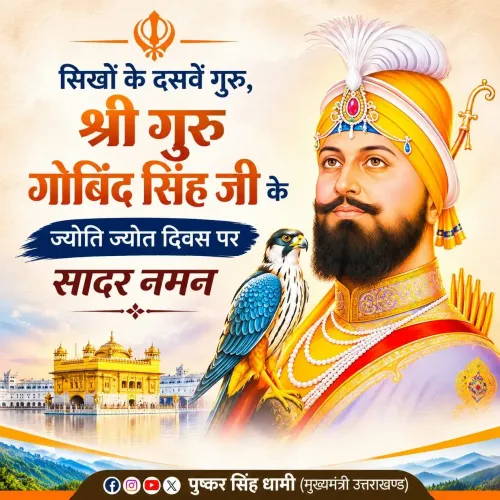
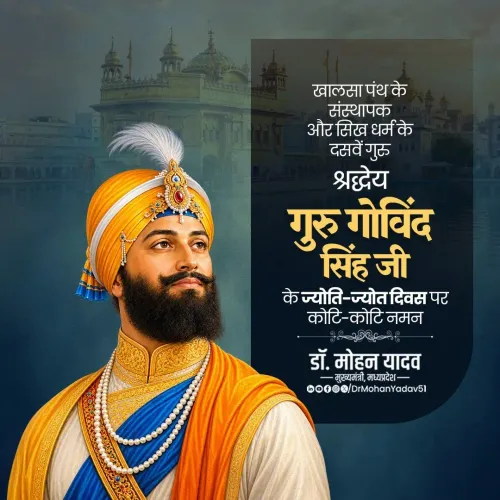
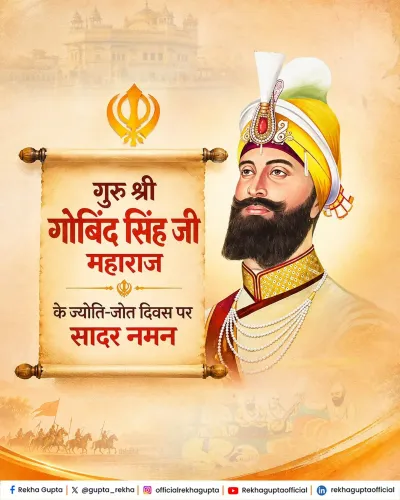
CM Bhajan Lal pays tribute to Guru Gobind Singh on Jyoti-Jot Divas
Synopsis
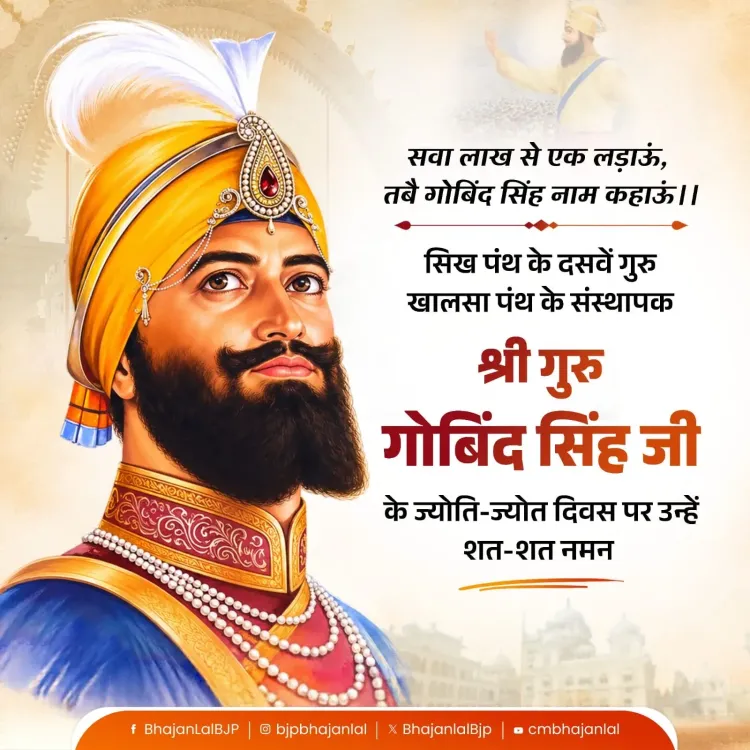
Rajasthan Chief Minister Bhajan Lal Sharma on 14 November 2026 paid tribute to Guru Gobind Singh Ji on his Jyoti-Jot Divas, honouring the tenth Sikh Guru and Khalsa Panth founder's lifelong sacrifice against tyranny and injustice.
Key Takeaways
Rajasthan CM Bhajan Lal Sharma posted a tribute on 14 November 2026 marking the Jyoti-Jot Divas of Guru Gobind Singh Ji.
Guru Gobind Singh was the tenth Guru of Sikhism and founded the Khalsa Panth in 1699 at Anandpur Sahib .
The Khalsa Panth established a martial, egalitarian brotherhood committed to resisting oppression and defending dharma.
Guru Gobind Singh passed authority to the Guru Granth Sahib before his death in 1708 , shaping Sikhism's decentralised character.
Tributes to Sikh Gurus on key anniversaries are a consistent feature of Indian political outreach across party lines.
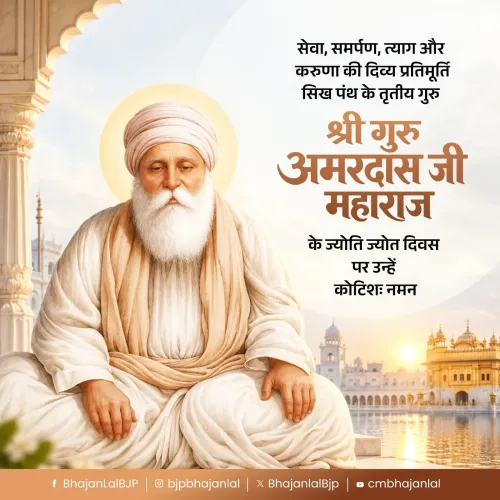
A warrior-saint who gave everything — family, followers, and finally his own life — to defend faith and justice: Rajasthan Chief Minister Bhajan Lal Sharma marked the Jyoti-Jot Divas (ascension anniversary) of Guru Gobind Singh Ji, the tenth Sikh Guru, with a heartfelt tribute on Saturday, 14 November 2026, saluting a legacy that continues to shape India's moral and martial imagination.
In his post, CM Sharma wrote: 'Crores of salutations to revered Shri Guru Gobind Singh Ji on his Jyoti-Jot Divas — he who sacrificed everything for dharma, humanity, and the defence of the nation, the tenth Guru of Sikhism and founder of the Khalsa Panth. His indomitable courage, sacrifice, and sacred ideals in the face of injustice and tyranny will continue to inspire all of humanity for ages to come.'
Who was Guru Gobind Singh — and why does he still resonate?
Guru Gobind Singh, born in 1666, became the tenth and final living Guru of Sikhism. In 1699, at Anandpur Sahib, he founded the Khalsa Panth — the initiated Sikh brotherhood bound by the five Ks and a martial code designed to resist oppression and uphold righteousness. The Khalsa was not merely a religious order; it was a declaration that injustice would be met with principled, organised resistance.
Guru Gobind Singh's life was defined by irreversible personal loss — his four sons, his mother, and thousands of followers gave their lives in the struggle against Mughal tyranny. He himself passed away in 1708. His teachings vested perpetual spiritual authority not in any single successor but in the Guru Granth Sahib, the holy scripture, and in the collective Khalsa — a decision that cemented Sikhism's democratic, egalitarian character.
Bhajan Lal Sharma's tribute and Rajasthan's Sikh community
For CM Sharma, the tribute carries both spiritual and political weight. Rajasthan's BJP government has consistently engaged with the Sikh community, whose presence spans districts from Ganganagar and Hanumangarh in the north — areas with deep Punjabi Sikh roots — to urban centres like Jaipur. Acknowledging Guru Gobind Singh's Jyoti-Jot Divas is part of a broader pattern of outreach that cuts across party lines, with elected leaders at both state and central levels marking major Sikh Guru anniversaries with public statements.
The themes CM Sharma highlighted — courage against tyranny, sacrifice for a larger cause, and ideals that transcend any one era — are precisely the ones that have made Guru Gobind Singh a touchstone figure in India's national narrative, cited by leaders from every ideological tradition.
Guru Gobind Singh's message was unambiguous: injustice answered with organised, principled courage. That idea, more than three centuries old, shows no sign of fading.
Point of View
Reflecting the community's historical weight in national defence and social reform narratives. For CM Sharma and the BJP government in Rajasthan, acknowledging Guru Gobind Singh's Jyoti-Jot Divas is part of a deliberate cultural outreach strategy, particularly relevant in districts along the Rajasthan-Punjab border. The choice of language — sacrifice, courage against tyranny, ideals for all humanity — frames the tribute within a wider nationalist idiom that resonates across communities. Tracking similar messages from central ministers and opposition leaders around major Sikh observances offers a useful barometer of competitive political signalling toward the Sikh electorate.
NationPress
14 Nov 2026
Frequently Asked Questions
What is Jyoti-Jot Divas of Guru Gobind Singh?
Jyoti-Jot Divas marks the death anniversary of Guru Gobind Singh, the tenth and final living Guru of Sikhism, who passed away in 1708. 'Jyoti-Jot samana' in Sikh tradition means the merging of one's light with the eternal divine light.
Who founded the Khalsa Panth and when?
Guru Gobind Singh founded the Khalsa Panth in 1699 at Anandpur Sahib. It is the initiated Sikh community bound by a martial code and the five Ks, established to defend dharma and resist tyranny.
Why did Bhajan Lal Sharma pay tribute to Guru Gobind Singh?
Rajasthan CM Bhajan Lal Sharma posted his tribute on 14 November 2026, the Jyoti-Jot Divas, honouring Guru Gobind Singh's sacrifice for faith, humanity, and national defence — a practice common among Indian elected leaders on major Sikh Guru anniversaries.
What is the significance of Guru Gobind Singh for India?
Guru Gobind Singh is revered for his resistance against Mughal oppression, his founding of the Khalsa Panth, and his decision to vest perpetual Sikh authority in the Guru Granth Sahib. His ideals of courage, sacrifice, and justice are cited across India's religious and national traditions.
Does Rajasthan have a significant Sikh population?
Yes, Rajasthan has a notable Sikh community concentrated especially in northern districts like Ganganagar and Hanumangarh, areas historically settled by Punjabi Sikh farmers, making Sikh Guru anniversaries politically and culturally significant for state leaders.