CM Bhajan Lal: Rajasthan adds 10 lakh cooperative members
Synopsis
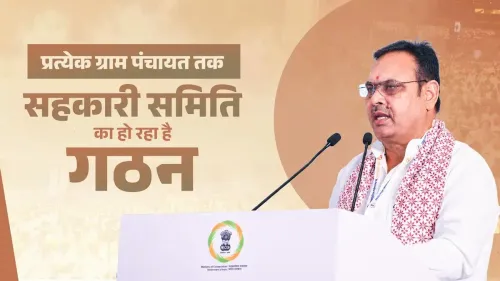
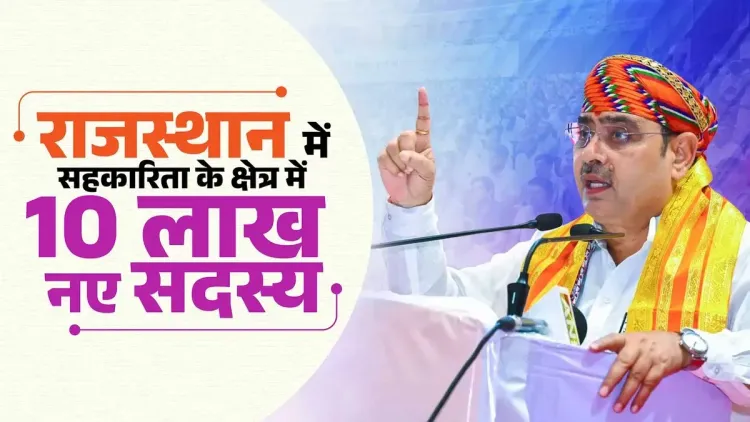
Rajasthan Chief Minister Bhajan Lal Sharma announced that his government has added over 10 lakh new members to the state's cooperative sector, citing transparency reforms and contrasting the achievement with alleged irregularities under the previous Congress administration.
Key Takeaways
Rajasthan CM Bhajan Lal Sharma announced the addition of over 10 lakh new cooperative members under his government.
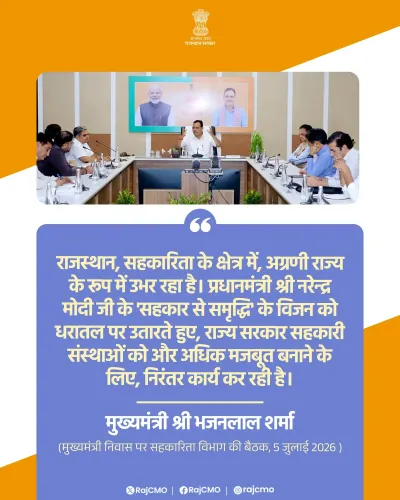
The drive is framed around the BJP's national slogan 'Sahakar se samridhi' (Prosperity through cooperation).
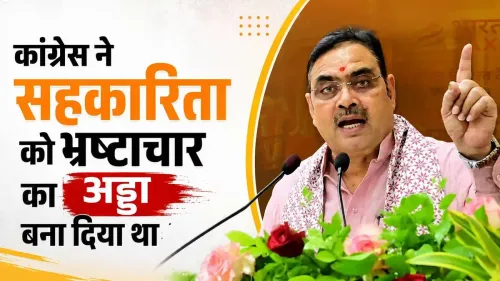
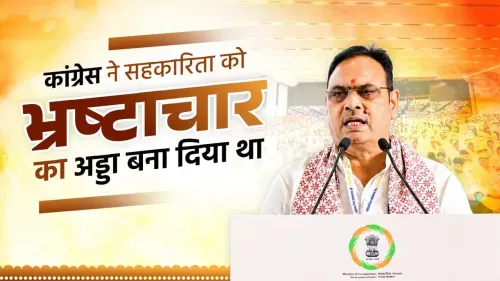
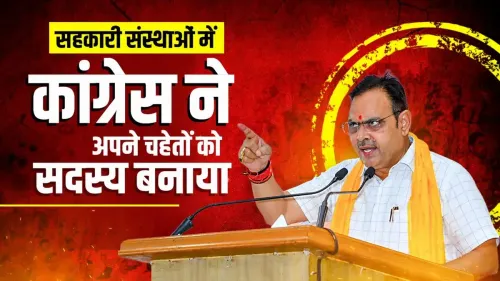
The post explicitly contrasts current performance with 'neglect and irregularities' of the previous Congress-led government .
The Ministry of Cooperation , created in July 2021 , provides the central policy framework underpinning state-level cooperative reforms.
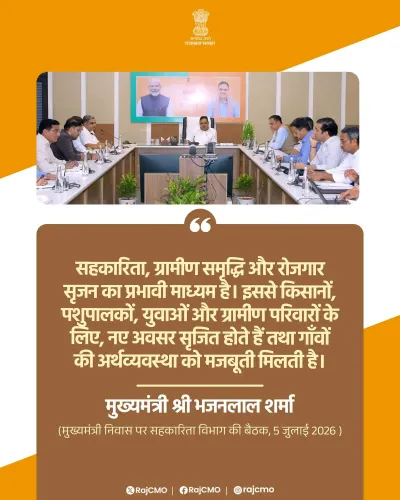
Rajasthan's large rural and agricultural population makes cooperative access a direct lever for farmer income and credit security.
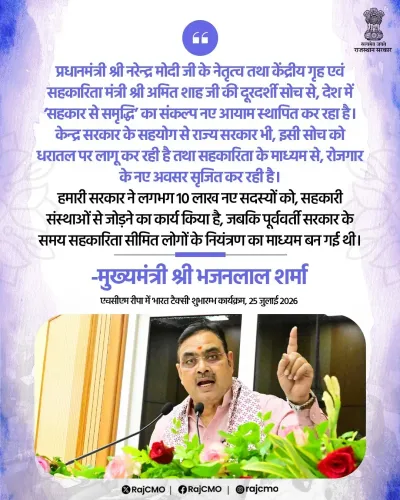
A record enrolment drive in Rajasthan's cooperative sector has added over 10 lakh new members, Rajasthan Chief Minister Bhajan Lal Sharma announced on Sunday, 2 August 2026 — framing the milestone as a direct rebuke of what he called years of neglect and irregularities under previous administrations.
In his post, the Chief Minister wrote: 'Sahakar se samridhi' ('Prosperity through cooperation') — a phrase that doubles as a national BJP policy slogan and a state-level promise. 'Our government has done the historic work of adding a record more than 10 lakh new members in the cooperative sector in Rajasthan, bringing transparency and momentum,' he said, adding that every eligible citizen and farmer is now being empowered and made self-reliant through the cooperative network.
Why cooperatives matter for Rajasthan's farmers
Rajasthan is a vast, predominantly rural state where cooperative societies serve as the primary channel for agricultural credit, input supply, and marketing for millions of small and marginal farmers. Historically, thin membership rolls and allegations of mismanagement have limited the sector's reach — leaving large sections of the rural population outside the formal cooperative net.
The Ministry of Cooperation, created by the Government of India in July 2021, gave the cooperative movement a dedicated central push for the first time in decades. State governments aligned with the BJP have since used that momentum to drive membership expansion and audit reforms, positioning cooperatives as a vehicle for last-mile rural economic empowerment.
BJP's contrast politics with the previous Congress government
Sharma's post is pointed in its political framing. The explicit reference to 'the neglect and irregularities of previous governments' is a direct contrast with the Congress-led administration that governed Rajasthan until the December 2023 assembly elections, which the BJP won before Sharma was sworn in as Chief Minister. The cooperative sector — long associated with patronage networks — has been a recurring fault line between the two parties in the state.
The 10-lakh membership figure, if sustained, would represent a significant structural shift: more farmers and rural citizens with access to cooperative credit and services means less dependence on informal moneylenders and private traders — a tangible economic argument the BJP will carry into future electoral cycles.
What the membership surge signals for rural Rajasthan
Expanding cooperative rolls is only the first step. The real test lies in whether new members can access timely credit, quality inputs, and fair procurement prices through these societies. State budget allocations for cooperative infrastructure and any new membership or lending targets announced in the coming assembly session will be the clearest indicator of how far this drive translates from enrolment into economic impact.
For now, Rajasthan's cooperative sector is being held up as a model of what the 'sahakar se samridhi' vision looks like on the ground — and the Chief Minister is making sure the numbers are heard.
Point of View
With the newly created Ministry of Cooperation providing central cover for state-level drives. By leading with a specific membership number, Sharma is doing something politically deliberate: converting an administrative metric into an electoral asset ahead of future cycles. The contrast with the previous Congress administration also signals that the cooperative sector will remain a contested political space in Rajasthan — one where transparency claims and counter-claims will be tested against ground-level farmer experience. The real credibility test comes when these enrolled members begin accessing credit and services, not just holding membership cards.
NationPress
2 Aug 2026
Frequently Asked Questions
What did Rajasthan CM Bhajan Lal Sharma announce about cooperatives?
CM Bhajan Lal Sharma announced that his government has added over 10 lakh new members to Rajasthan's cooperative sector, calling it a historic achievement in bringing transparency and momentum to the sector.
What is 'Sahakar se samridhi'?
'Sahakar se samridhi' means 'Prosperity through cooperation' in Hindi. It is a BJP policy slogan associated with the national push to expand and strengthen the cooperative movement, including through the Ministry of Cooperation created in July 2021.
When did Bhajan Lal Sharma become Chief Minister of Rajasthan?
Bhajan Lal Sharma became Chief Minister of Rajasthan in December 2023 after the BJP won the state assembly elections.
Why are cooperatives important for Rajasthan farmers?
Cooperative societies are a primary source of agricultural credit, input supply, and marketing support for small and marginal farmers in Rajasthan. Expanding membership means more farmers can access formal financial services instead of relying on informal moneylenders.
What is the Ministry of Cooperation and when was it set up?
The Ministry of Cooperation is a central government ministry created in July 2021 to give dedicated policy focus to India's cooperative sector and drive reforms in credit, marketing, and membership across states.