CM Bhajan Lal Sharma Breaks Ground for Jaipur Metro Phase-2
Synopsis
Rajasthan CM Bhajan Lal Sharma broke ground for Jaipur Metro Phase-2 at the Sitapura depot site on 22 July 2026, marking the formal launch of an extension aimed at bringing fast and safe rail connectivity to lakhs of residents in the capital's underserved southern zones.
Key Takeaways
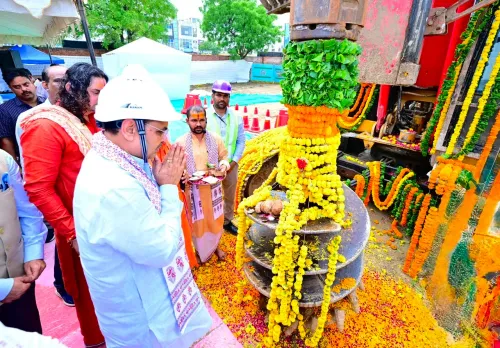
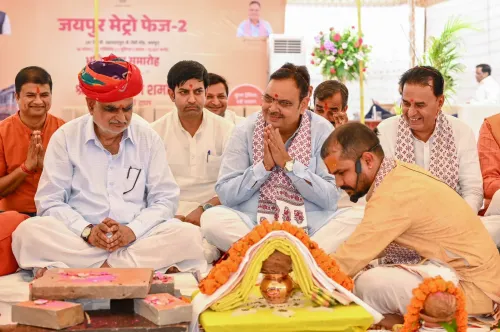
Bhajan Lal Sharma performed the bhoomi pujan for Jaipur Metro Phase-2 on 22 July 2026 .
The ceremony was held at the metro depot site in Sitapura , southern Jaipur.
Jaipur Metro Phase-1 (Mansarovar–Chandpole) has been operational since 2015 ; Phase-2 extends the network to underserved southern corridors.
A detailed project report for Phase-2 was approved by the Rajasthan government in 2019 .
The project aligns with central urban schemes including AMRUT and the Smart Cities Mission .
Next milestones include central funding approvals, revised timelines, and civil contract awards.
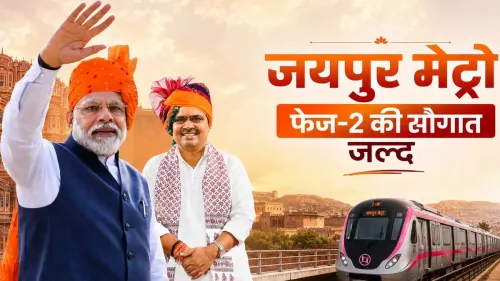
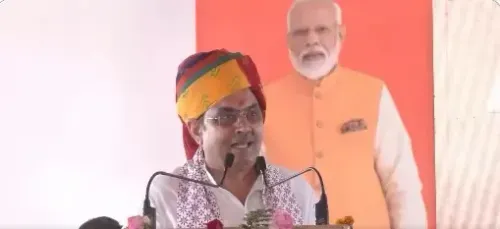
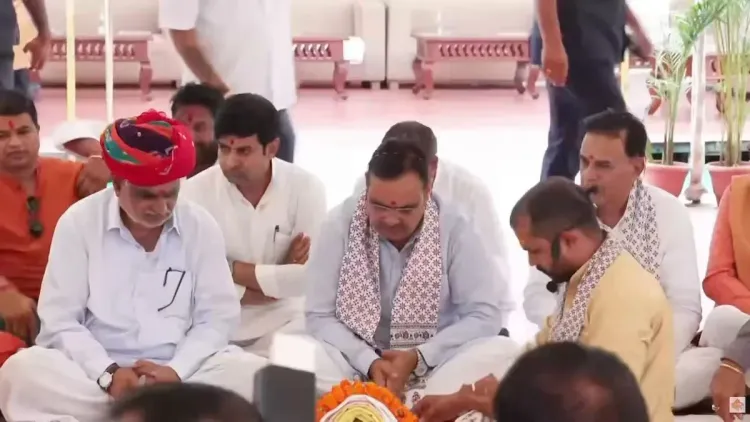
Rajasthan Chief Minister Bhajan Lal Sharma performed the bhoomi pujan (ground-breaking ceremony) for Jaipur Metro Phase-2 at the metro depot site in Sitapura on Wednesday, 22 July 2026, formally launching the next stage of the capital's urban rail expansion.
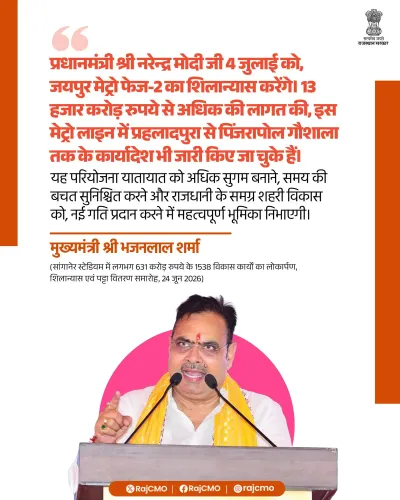
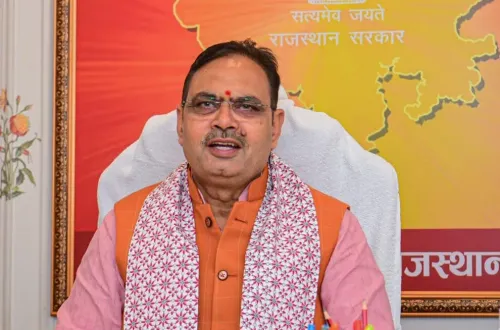
Posting on X, CM Sharma said the project would become 'the foundation of fast, safe and convenient travel for lakhs of citizens of Jaipur and provide new momentum to the development of the capital' — tez, surakshit evam suvidhaajanak safar ka aadhar.
Context
Jaipur Metro Phase-1, which connects Mansarovar to Chandpole, became operational in 2015 and remains Rajasthan's only functioning metro corridor. The Phase-1 network established the city's baseline rapid-transit infrastructure but left large swathes of southern and eastern Jaipur without rail connectivity. The Sitapura area — an industrial and institutional zone in southern Jaipur — has been designated as the anchor depot site for the new phase, making Wednesday's ceremony a visible and symbolic start to the long-pending extension.
Policy Backdrop
A detailed project report for Jaipur Metro Phase-2 was approved by the Rajasthan government as far back as 2019, with a focus on southern corridors including Sitapura. The project sits within a broader national push for phased metro expansion, supported by central schemes such as AMRUT (Atal Mission for Rejuvenation and Urban Transformation) and the Smart Cities Mission, which have collectively funded metro extensions in cities including Ahmedabad, Pune, and Indore. Depot construction and a formal bhoomi pujan are standard milestones that unlock subsequent civil-work contracts and signal committed state-level intent.
CM Sharma, who assumed office in December 2023, has positioned urban infrastructure as a priority for his administration. The Phase-2 ground-breaking is among the most significant urban-mobility announcements of his tenure so far, reflecting both inherited project momentum and fresh political impetus.
Stakeholders and Impact
The primary beneficiaries are Jaipur's daily commuters, particularly residents of southern localities who currently rely on an overcrowded road network. Reduced congestion, lower vehicular emissions, and improved last-mile connectivity are the expected downstream benefits once the corridor becomes operational. Industrial workers and businesses in the Sitapura belt stand to gain from improved freight-adjacent mobility and easier employee access.
Urban planners and civic bodies will be watching for integration plans with Jaipur's existing bus rapid transit network and potential links to regional rail services — a coordination challenge that has affected the uptake of Phase-1 ridership. Real-estate markets along the proposed Phase-2 alignment are also likely to respond to the formal project launch.
What's Next
Following the bhoomi pujan, attention shifts to the release of a revised project timeline, central funding disbursement approvals, and the award of civil construction contracts. Clearances from the Ministry of Housing and Urban Affairs and alignment of state and central budget allocations will be critical determinants of pace. Observers will also watch whether Jaipur Metro Phase-2 proceeds under the standard joint-venture model used for most Indian metro projects or adopts an alternative financing structure. The formal start places a public accountability marker on the Sharma administration to deliver visible construction progress within a reasonable window.
Point of View
Giving CM Sharma a tangible urban-development credential ahead of Jaipur's growing infrastructure expectations. By personally presiding over the ceremony, Sharma signals that metro expansion — historically a Congress-era talking point in Rajasthan — is now being actively delivered under BJP stewardship. The move fits a national BJP pattern of using infrastructure ground-breakings as high-visibility governance markers. The real test, however, will be the pace of construction and whether central co-funding materialises on schedule, since Indian metro projects have a well-documented history of cost and timeline overruns.
NationPress
22 Jul 2026
Frequently Asked Questions
What is Jaipur Metro Phase-2?
Jaipur Metro Phase-2 is an extension of the city's existing metro rail network, focused on southern corridors including Sitapura, aimed at improving connectivity for lakhs of residents not served by the Phase-1 Mansarovar–Chandpole line.
When was the bhoomi pujan for Jaipur Metro Phase-2 held?
The ground-breaking ceremony was held on 22 July 2026 at the metro depot site in Sitapura, presided over by Rajasthan Chief Minister Bhajan Lal Sharma.
What is the current status of Jaipur Metro Phase-1?
Jaipur Metro Phase-1, connecting Mansarovar to Chandpole, has been operational since 2015 and remains Rajasthan's only functioning metro corridor.
Who is Bhajan Lal Sharma?
Bhajan Lal Sharma is a BJP leader who has served as Chief Minister of Rajasthan since December 2023, with urban infrastructure development among his administration's stated priorities.
How does Jaipur Metro Phase-2 fit into national urban transport policy?
The project aligns with central government schemes such as AMRUT and the Smart Cities Mission, which have supported phased metro expansions in several Indian cities including Ahmedabad, Pune, and Indore.