CM Bhajan Lal Sharma Pushes Farmer Outreach via Seva Shivirs
Synopsis
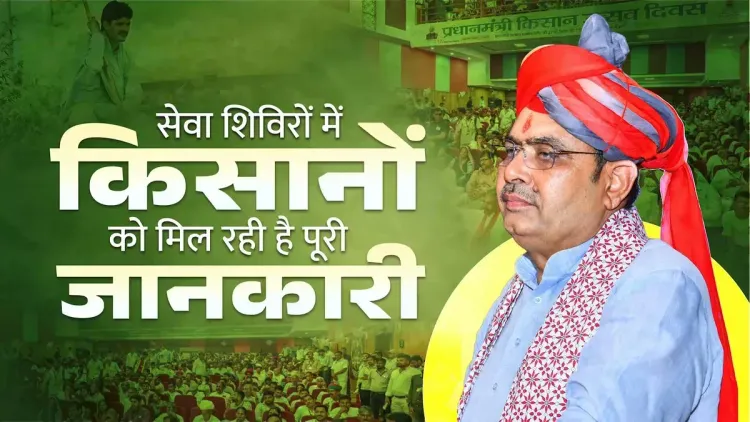
Rajasthan Chief Minister Bhajan Lal Sharma has spotlighted the state's seva shivir camps as a key mechanism for delivering agricultural schemes and farming information directly to farmers, framing the initiative as central to the BJP government's farmer empowerment agenda.
Key Takeaways
Rajasthan Chief Minister Bhajan Lal Sharma promoted seva shivirs as a direct outreach tool for farmers on 20 June 2026 .
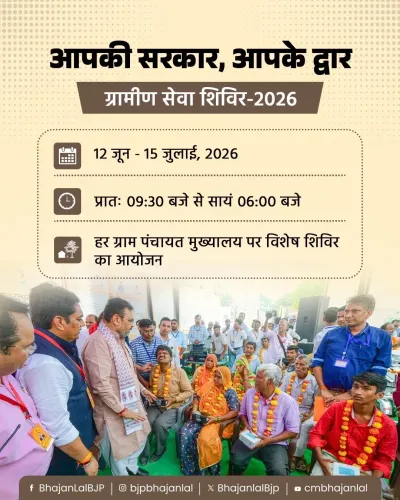
The camps are designed to deliver government schemes, welfare facilities, and agriculture-related information to farming communities at the grassroots level.
The initiative aligns with the BJP government's post- December 2023 election priority of improving last-mile delivery of agricultural welfare.
Central schemes such as PM-KISAN , launched in 2019 , are among the programmes that such camps help farmers access and register for.
The drive targets rural and semi-urban farming households in Rajasthan , where digital access and literacy can limit independent scheme uptake.
Expansion of the camps to additional districts and possible linkage with the kharif season or state budget announcements is anticipated.
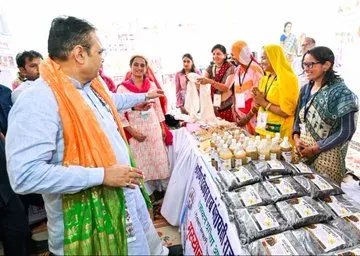
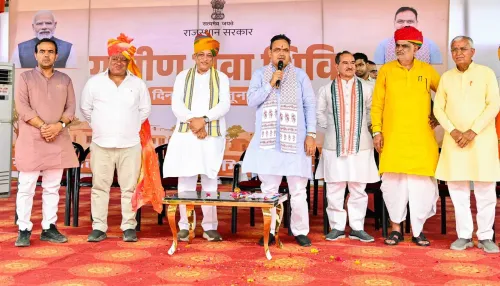
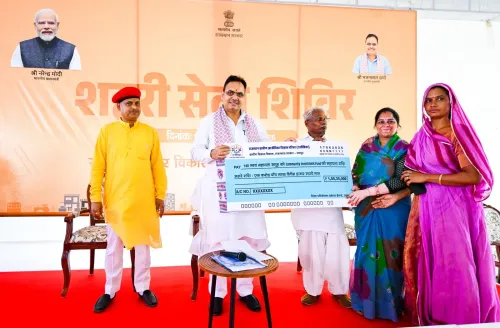
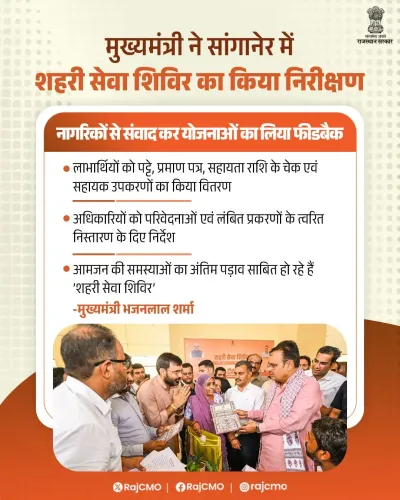
Rajasthan Chief Minister Bhajan Lal Sharma on Saturday, 20 June 2026, highlighted the state government's ongoing drive to deliver agricultural schemes, welfare facilities, and key farming information directly to farmers through dedicated service camps known as seva shivirs (service camps). The Chief Minister described the initiative as a significant step toward empowering farmers and making them self-reliant.
Context
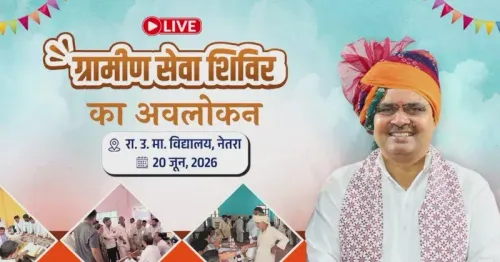
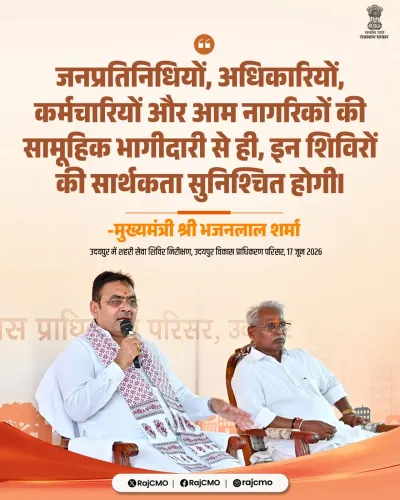
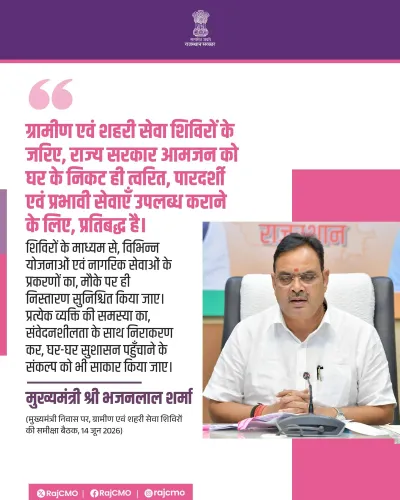
In his post, Bhajan Lal Sharma stated that through these seva shivirs, 'schemes, facilities, and important agriculture-related information are being delivered to farmers,' adding that 'this is an important initiative in the direction of making farmers empowered and self-reliant.' The message was accompanied by a video, underscoring the government's intent to document and publicise the outreach effort.
Such service camps are part of a broader pattern of last-mile delivery efforts by state governments across India, aimed at bridging the gap between welfare schemes and the rural households they are designed to benefit — particularly in regions where digital access and literacy levels can limit awareness.
Policy Backdrop
The BJP government in Rajasthan, which came to power following the December 2023 assembly elections, has consistently emphasised improving scheme delivery to the agricultural community. Rajasthan has a substantial farming population, making rural outreach a political as well as administrative priority.
At the national level, the PM-KISAN scheme — launched in 2019 — provides annual direct income support to landholding farmer families and remains one of the flagship central programmes that state-level camps frequently help farmers access and register for. State governments typically complement such central schemes with their own agricultural welfare programmes, and seva shivirs serve as a convergence point for both.
Stakeholders and Impact
The primary beneficiaries of these camps are Rajasthan's farming households, particularly those in rural and semi-urban areas who may not independently navigate the documentation and digital requirements of government schemes. By bringing officials, information, and registration facilities directly to farmers, the camps aim to raise uptake of benefits that would otherwise go unclaimed.
Rural households dependent on agriculture for their livelihoods stand to gain from timely access to income support, crop insurance details, soil health information, and guidance on government subsidies — all of which are typically disseminated through such outreach formats.
What's Next
The government's emphasis on seva shivirs signals a likely expansion of such camps across additional districts of Rajasthan, potentially timed to align with the upcoming kharif sowing season and any new state budget announcements on agricultural support. Observers will watch whether these camps are linked to specific enrolment targets for central or state schemes, and how the administration measures their on-ground impact in the months ahead.
Point of View
Consciously tying state-level action to the Centre's development narrative. Whether the camps translate into measurable increases in scheme enrolment will determine their long-term political and policy value.
NationPress
21 Jun 2026
Frequently Asked Questions
What are seva shivirs in Rajasthan?
Seva shivirs are government-organised service camps in Rajasthan where officials bring agricultural scheme information, welfare facilities, and registration support directly to farming communities, reducing the need for farmers to travel to government offices.
What schemes are delivered through Rajasthan's farmer seva shivirs?
The camps cover a range of central and state agricultural welfare schemes, including direct benefit transfers like PM-KISAN , crop insurance details, subsidy information, and soil health guidance, though the exact mix of schemes at each camp can vary.
What is PM-KISAN and how does it help Rajasthan farmers?
PM-KISAN is a central government scheme launched in 2019 that provides annual income support to landholding farmer families through direct bank transfers; seva shivirs help eligible Rajasthan farmers register for and access these benefits.
Why did CM Bhajan Lal Sharma post about farmer camps?
Chief Minister Bhajan Lal Sharma shared the update to highlight the BJP government's ongoing agricultural outreach efforts and to underline the administration's commitment to farmer empowerment and self-reliance in Rajasthan .
Which farmers benefit from Rajasthan's seva shivir programme?
The primary beneficiaries are rural and semi-urban farming households in Rajasthan , especially those who face barriers to independently navigating government scheme documentation or digital registration processes.