CM Bhajan Lal Sharma rallies BJP workers in Barmer ahead of panchayat polls
Synopsis
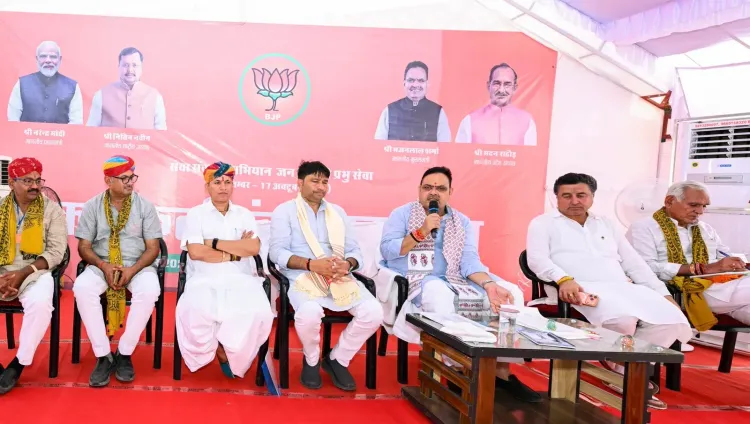
Rajasthan CM Bhajan Lal Sharma held a workers' outreach in Barmer with party members from Jaisalmer, Balotra and Barmer, framing recent local-body wins as a mandate for transparent governance and calling karyakartas the backbone of welfare delivery ahead of panchayat elections.
Key Takeaways
CM Bhajan Lal Sharma held an aatmiya samvad with BJP workers from Jaisalmer , Balotra , and Barmer on September 30, 2026 .
Sharma described party workers as devtulya karyakarta — the most powerful link in delivering government welfare schemes to eligible citizens.
The 'double-engine government' model — state and Centre aligned under BJP — was reaffirmed as the core governance and electoral narrative.
Recent local-body ( nikay ) election results were cited as public validation of the government's Antyodaya and transparent work culture.
Sharma declared the party's intent to 'establish new dimensions of public service and all-round development' in the upcoming panchayat elections.
The event signals focused mobilisation in western Rajasthan's border belt as the BJP builds toward its next electoral test.
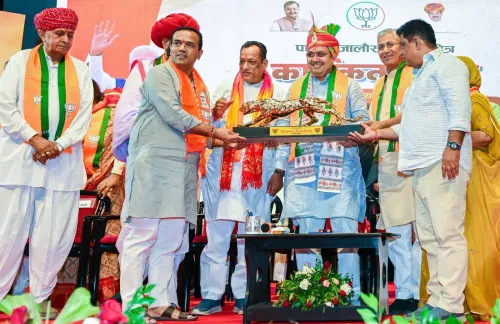
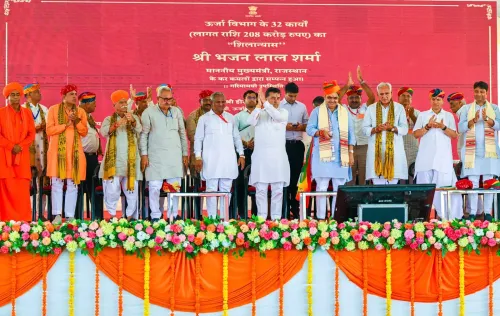
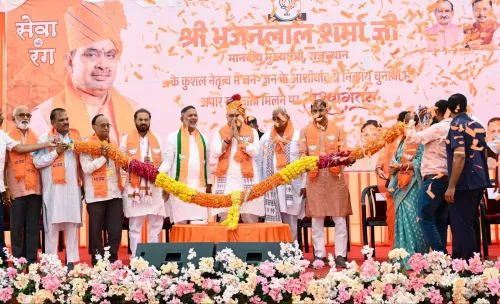
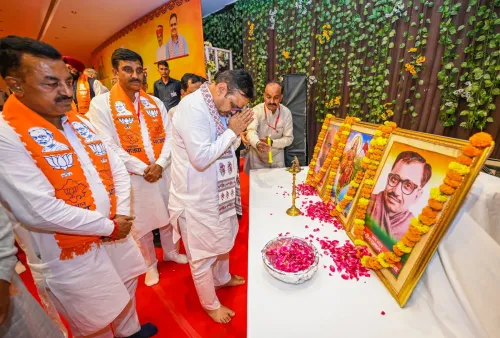
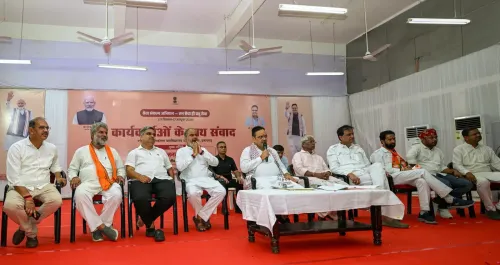
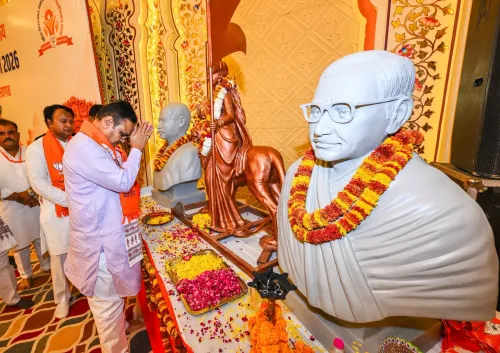
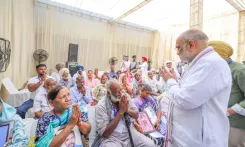
On the veer dhara — the heroic soil — of Barmer, Rajasthan Chief Minister Bhajan Lal Sharma on Wednesday, September 30 held an aatmiya samvad (intimate dialogue) with party workers from Jaisalmer, Balotra, and Barmer districts, turning western Rajasthan's border heartland into the launchpad for the BJP's panchayat election push.
The message from Barmer's border belt
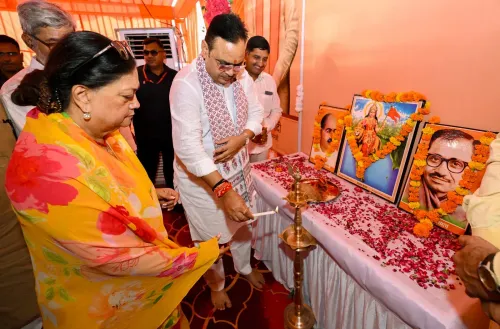
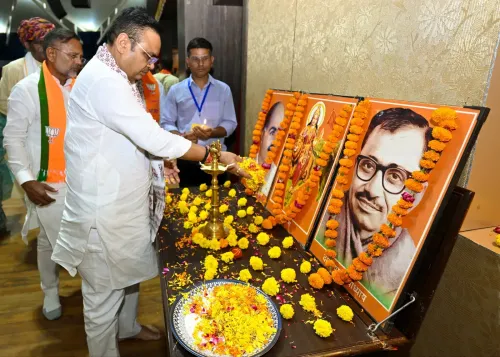
The Chief Minister's address, delivered in Hindi and shared on X, carried a clear signal: the ground-level party worker — called devtulya karyakarta (a worker deserving of reverence) by Sharma — is the central instrument for delivering welfare schemes to the last eligible citizen. 'Every resolve of the double-engine government is dedicated to bringing prosperity to the life of the last person in society,' he said, invoking the Antyodaya philosophy rooted in Deendayal Upadhyaya's vision of serving the weakest first.
Barmer, a western district that borders Pakistan and anchors Rajasthan's oil and energy belt, made for a deliberate backdrop. So did the inclusion of Jaisalmer — a district known equally for desert tourism and strategic military presence — and Balotra, one of Rajasthan's recently carved administrative units still building its local governance infrastructure. Together, the three districts form a contiguous arc along the state's western frontier, and mobilising their workers in one session signals coordinated outreach, not a routine constituency visit.
Nikay mandate as a springboard
Sharma pointedly cited the BJP's performance in recent local body (nikay) elections as 'proof of public trust in good governance, Antyodaya and a transparent work culture.' The framing is deliberate: urban civic victories become momentum assets for rural panchayat battles. Since returning to power after the 2023 Rajasthan assembly elections, the BJP has pressed the 'double-engine' argument — that a state government aligned with the Centre unlocks faster scheme delivery — as its primary electoral and governance narrative.
The karyakarta-as-last-mile-delivery-agent model is central to this approach. Rather than relying solely on administrative machinery, the party frames its workers as the human bridge between government programmes and beneficiaries in remote, hard-to-reach constituencies — precisely the terrain that dominates these three western districts.
Viksit Rajasthan and the road to panchayat polls
Sharma tied the gathering to the larger Viksit Rajasthan vision — the state's development blueprint aligned with the national Viksit Bharat goal — declaring that 'this journey of building a Developed Rajasthan will continue to move forward.' The upcoming panchayat elections, though their exact schedule is not yet confirmed, loom as the next electoral test, and the Barmer session was an explicit call to convert organisational energy into booth-level results.
The BJP's pattern in Rajasthan since December 2023 has been consistent: use each successive local election as a referendum on governance delivery, reward workers with visible outreach events, and keep the welfare-scheme narrative warm in the months between votes. Western Rajasthan — historically competitive, strategically sensitive — is clearly where the party wants to demonstrate that pattern holds in difficult terrain.
Point of View
The party signals it is not taking strategically sensitive, historically competitive terrain for granted ahead of panchayat polls. The Antyodaya framing draws on a deeper Sangh Parivar philosophical lineage, lending the campaign an ideological coherence beyond routine electoral mobilisation. The pattern — civic election win, public consolidation event, pivot to next poll — has become the BJP's playbook for sustaining governance credibility between larger mandates.
NationPress
30 Sept 2026
Frequently Asked Questions
Why did CM Bhajan Lal Sharma visit Barmer on September 30 2026?
CM Bhajan Lal Sharma visited Barmer to hold an aatmiya samvad — an intimate dialogue — with energetic and dedicated BJP workers from the Jaisalmer, Balotra and Barmer districts, ahead of upcoming panchayat elections.
What is the 'double-engine government' Bhajan Lal Sharma refers to?
The 'double-engine government' refers to BJP governments at both the state (Rajasthan) and central level working in alignment, which the party argues accelerates welfare scheme delivery and infrastructure development for citizens.
What is Viksit Rajasthan?
Viksit Rajasthan is the Rajasthan government's comprehensive state development vision, aligned with the national Viksit Bharat goal, focused on inclusive growth, scheme delivery and infrastructure across all districts.
What is the Antyodaya philosophy Sharma mentioned?
Antyodaya — meaning 'rise of the last person' — is a welfare principle rooted in thinker Deendayal Upadhyaya's philosophy, directing government programmes to benefit the poorest and most marginalised citizens first. It has guided BJP governance at the Centre and in states since 2014.
What are the upcoming panchayat elections Sharma referenced?
Sharma referenced Rajasthan panchayat (rural local body) elections that the BJP intends to contest on the back of its recent nikay (urban civic body) election wins, though the exact election schedule has not been officially confirmed.