CM Bhajanlal Announces Jaipur Metro Phase-2 Gift from Centre
Synopsis
The Rajasthan CMO announced Jaipur Metro Phase-2 on 22 July 2026, attributing the project to PM Narendra Modi's leadership and the BJP's 'double engine' model of aligned central and state governance. The move extends Jaipur's metro network beyond its Phase-1 corridor operational since 2015.
Key Takeaways
The Chief Minister's Office of Rajasthan announced Jaipur Metro Phase-2 on 22 July 2026 .
The announcement credits Prime Minister Narendra Modi and the 'double engine' BJP government at Centre and state for the project.
Jaipur Metro Phase-1 has been operational since June 2015 , running from Mansarovar to Chandpole .
Chief Minister Bhajanlal Sharma , who took office in December 2023 , is tagged in the announcement as the state-level driver of the project.
The central government's Ministry of Housing and Urban Affairs provides viability gap funding and technical approvals for such metro expansions.
Similar Phase-2 metro extensions have been progressed in Ahmedabad , Lucknow , and Indore under the same national urban mobility push.
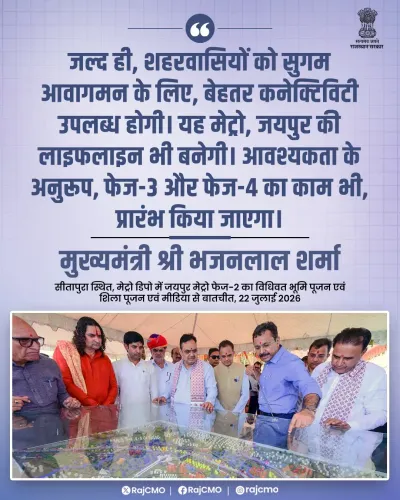
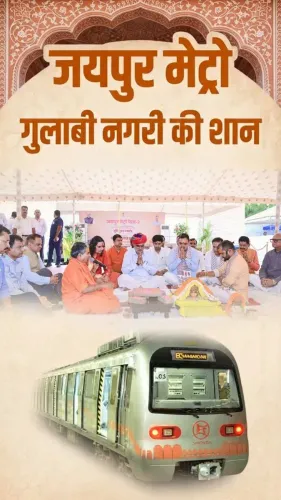
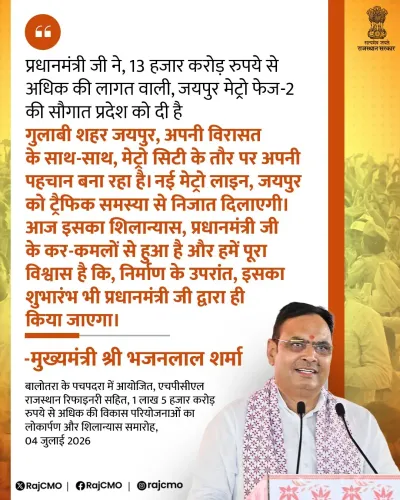
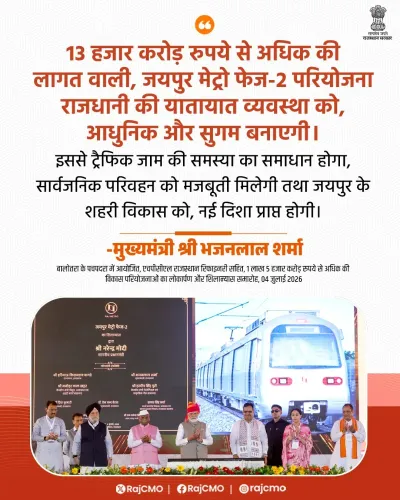
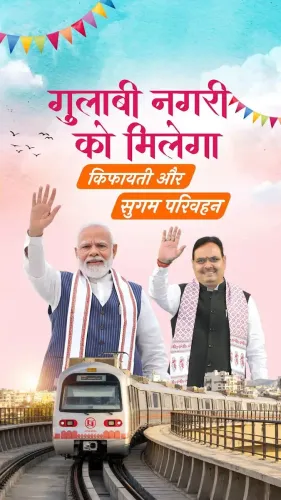
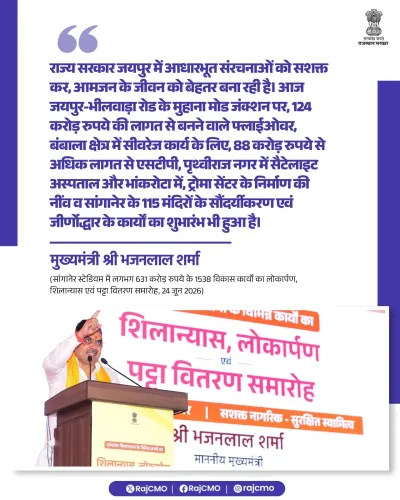
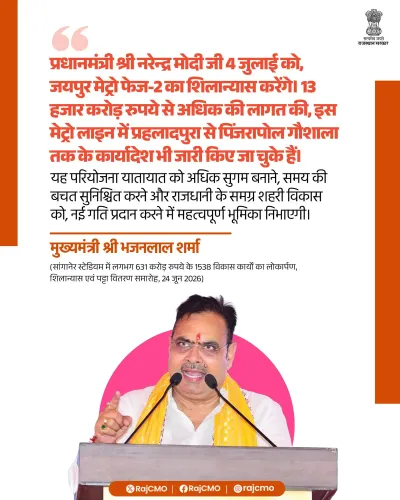
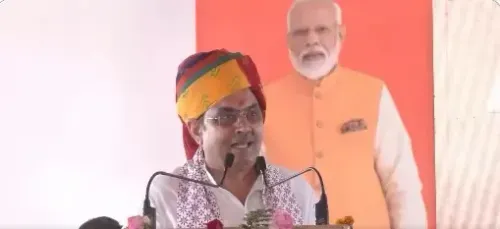
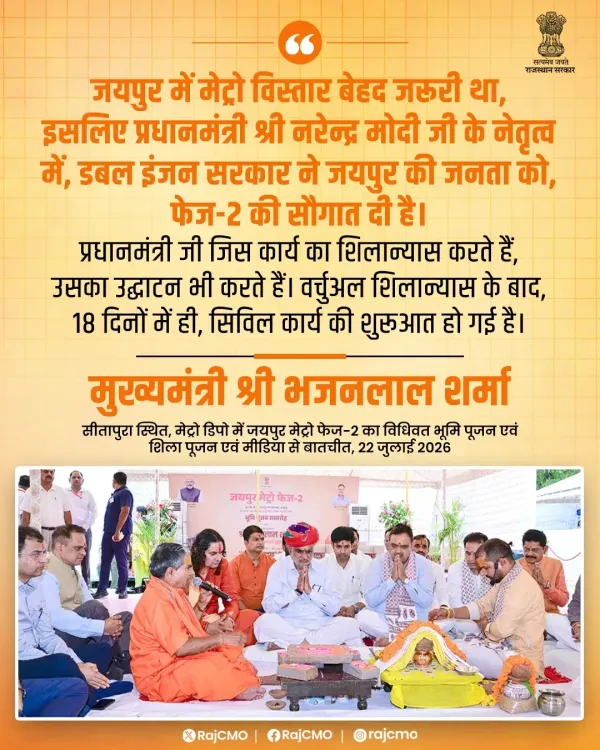
The Chief Minister's Office of Rajasthan announced on Wednesday, 22 July 2026 that Jaipur will receive Jaipur Metro Phase-2 as a major urban infrastructure boost, crediting the coordinated effort of the BJP-led central and state governments under Prime Minister Narendra Modi and Chief Minister Bhajanlal Sharma.
Context
The Rajasthan CMO post, tagged to Chief Minister @BhajanlalBjp and hashtagged #आपणो_अग्रणी_राजस्थान ('Our Leading Rajasthan'), declared: 'Metro expansion in Jaipur was absolutely essential, and so under the leadership of Prime Minister Shri Narendra Modi ji, the double engine government has given the people of Jaipur the gift of Phase-2.' The announcement frames the project as a fulfilment of long-pending urban mobility needs in the state capital.
Jaipur, the capital of Rajasthan, is one of India's fastest-growing Tier-2 cities, grappling with acute traffic congestion as its population and economic footprint expand. The city's existing metro network — Phase 1 — has been operational since June 2015, connecting Mansarovar to Chandpole, and was inaugurated during the previous BJP government led by Vasundhara Raje.
Policy Backdrop
The central government, through the Ministry of Housing and Urban Affairs, has consistently supported metro rail expansion in state capitals since 2014, providing viability gap funding and technical approvals. The so-called 'double engine' model — a phrase the BJP uses to describe aligned governance at both the Centre and the state — has been invoked to fast-track infrastructure clearances and funding in BJP-governed states.
Similar Phase-2 metro extensions have been sanctioned and progressed in cities such as Ahmedabad, Lucknow, and Indore in recent years, reflecting a broader national push to deepen urban rapid transit networks beyond their original corridors. Rajasthan re-elected a BJP government in December 2023, with Bhajanlal Sharma assuming the Chief Minister's office, positioning the state to leverage central schemes more aggressively.
Stakeholders and Impact
The primary beneficiaries of Jaipur Metro Phase-2 will be the city's daily commuters, urban residents, and the wider tourism economy — Jaipur being a key node on the Golden Triangle tourist circuit. Expanded metro connectivity is expected to reduce dependence on private vehicles, ease road congestion, and improve last-mile connectivity across new corridors.
Businesses along proposed Phase-2 corridors, real-estate developers, and construction contractors are among the secondary stakeholders who stand to gain from the project's rollout. State and central government agencies involved in land acquisition, environmental clearances, and civil works will also be central to the project's execution timeline.
What's Next
The immediate focus will shift to formal state government notifications detailing the Phase-2 corridors, land acquisition proceedings, and the tendering process for civil and systems contracts. Watchers will also track whether additional central funding allocations are earmarked in upcoming Union or state budgets to underwrite the project's capital expenditure.
With Jaipur growing as both an IT hub and a heritage tourism destination, the pace of Phase-2 execution will be a key test of the 'double engine' governance promise — and a significant infrastructure legacy project for both the Modi government at the Centre and the Bhajanlal Sharma administration in Rajasthan.
Point of View
The state government ties a long-pending urban mobility project to the national party brand, reinforcing the political dividend of aligned governance. The move fits a broader pattern of BJP-governed states fast-tracking metro and highway projects in the run-up to elections, using visible infrastructure as proof of delivery. The real test, however, will be the speed and transparency of land acquisition, tendering, and construction — areas where past metro projects across India have faced significant delays.
NationPress
23 Jul 2026
Frequently Asked Questions
What is Jaipur Metro Phase-2?
Jaipur Metro Phase-2 is the planned extension of Jaipur's existing metro rail network beyond the Phase-1 corridor that runs from Mansarovar to Chandpole and has been operational since 2015. The Rajasthan CMO announced Phase-2 on 22 July 2026, attributing it to PM Modi and the BJP's double engine government.
When was Jaipur Metro Phase-1 inaugurated?
Jaipur Metro Phase-1 was inaugurated in June 2015 during the Vasundhara Raje-led BJP government in Rajasthan, connecting Mansarovar to Chandpole.
What does 'double engine government' mean in Jaipur Metro context?
'Double engine government' is a BJP phrase referring to aligned BJP governance at both the central and state levels, enabling faster project approvals, viability gap funding, and coordinated infrastructure rollout — as cited in the Jaipur Metro Phase-2 announcement.
Who is the Chief Minister of Rajasthan in 2026?
Bhajanlal Sharma is the Chief Minister of Rajasthan, having taken office in December 2023 after the BJP won the state assembly elections.
Which other cities have received metro Phase-2 extensions under the central government?
Cities including Ahmedabad, Lucknow, and Indore have seen metro Phase-2 extensions sanctioned or progressed under the central government's urban mobility push in recent years, reflecting a national pattern of deepening metro networks in Tier-2 cities.