Rajasthan CMO flags Rs 13,000 cr Jaipur Metro Phase-2 plan
Synopsis
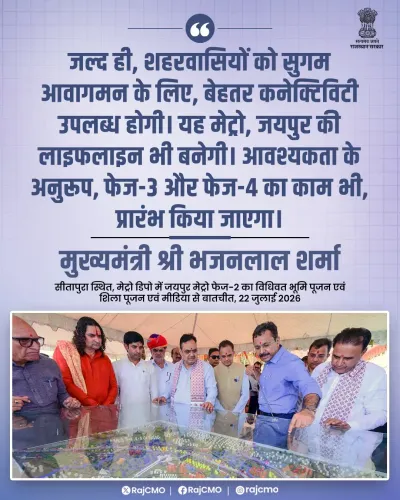
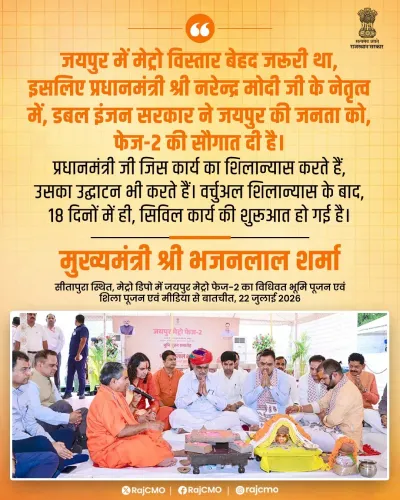
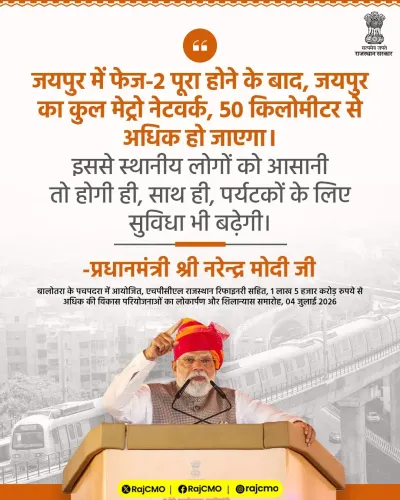
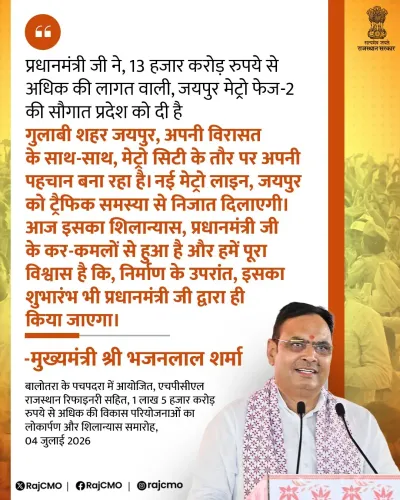
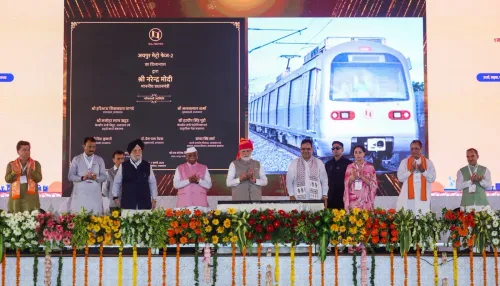
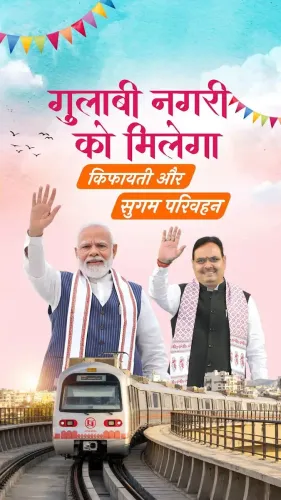
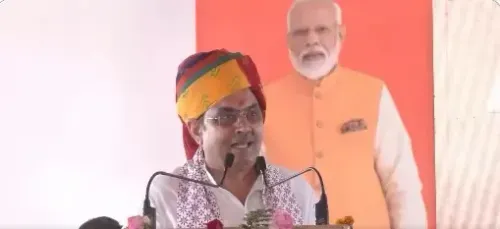
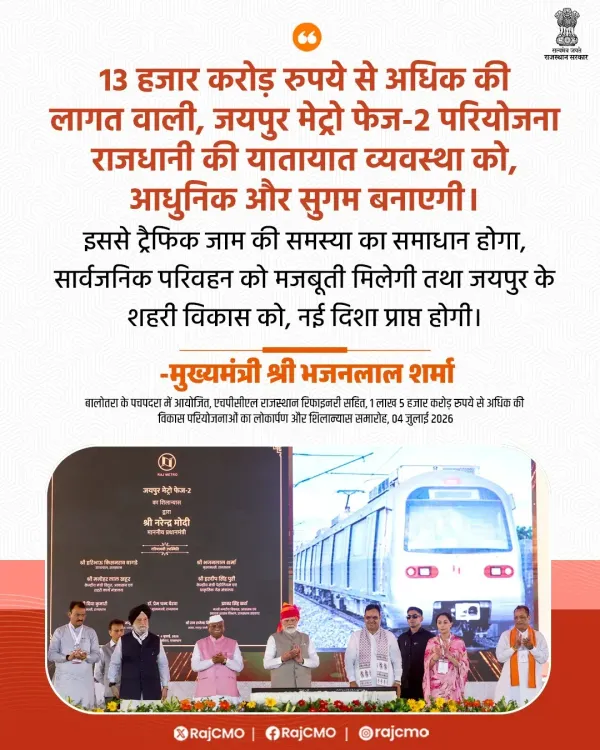
The Rajasthan Chief Minister's Office announced the Jaipur Metro Phase-2 project, valued at over Rs 13,000 crore, pledging to modernise the capital's transport system. Tagged to CM Bhajanlal Sharma and PM Modi's development vision, the project builds on Phase-1 operational since 2015.
Key Takeaways
The Rajasthan CMO officially announced the Jaipur Metro Phase-2 project on 5 July 2026 .
The project is estimated to cost more than Rs 13,000 crore .
The stated goal is to make Jaipur's traffic and transport system modern and convenient.
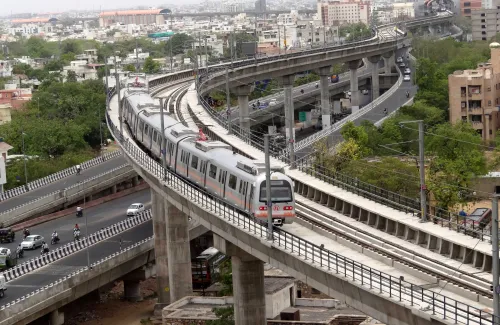
Jaipur Metro Phase-1 has been operational since 2015 , connecting Mansarovar to Chandpole.
The announcement was tagged to CM Bhajanlal Sharma and aligned with PM Modi's Viksit Rajasthan vision.
Central government funding sanction and tendering timelines remain key milestones to watch.
The Chief Minister's Office of Rajasthan announced on Sunday, 5 July 2026 that the Jaipur Metro Phase-2 project, estimated to cost more than Rs 13,000 crore, is set to modernise and streamline the capital city's traffic and transport system.
Context
The post, shared from the official Rajasthan CMO account and tagging Chief Minister Bhajanlal Sharma, states in Hindi: '13 hazar crore rupaye se adhik ki lagat wali, Jaipur Metro Phase-2 pariyojana rajdhani ki yatayat vyavastha ko, aadhunik aur sugam banayegi' — meaning the project 'will make the capital's traffic system modern and convenient.' The message was accompanied by the hashtags #AapnoAgraniRajasthan and #PMModi4ViksitRajasthan, signalling alignment with the state's development narrative and the broader national vision championed by Prime Minister Narendra Modi.
Jaipur, Rajasthan's capital, has been experiencing rapid urban growth that has placed mounting pressure on its road network. The city's first metro corridor — Jaipur Metro Phase-1 — became operational in 2015, connecting Mansarovar to Chandpole and marking the city's entry into rail-based urban transit.
Policy Backdrop
Metro rail expansions across Indian state capitals have become a central pillar of urban infrastructure policy, supported by central schemes such as the AMRUT (Atal Mission for Rejuvenation and Urban Transformation) and the Smart Cities Mission, both launched in 2015. These frameworks encourage cost-sharing between state and central governments, making large-scale transit investments more financially viable for states.
Chief Minister Bhajanlal Sharma, who assumed office in December 2023 as the BJP's pick to lead Rajasthan, has positioned infrastructure development as a signature priority of his administration. The Phase-2 announcement fits within a pattern of state governments leveraging metro projects to signal governance delivery ahead of electoral cycles.
Stakeholders and Impact
The primary beneficiaries of Jaipur Metro Phase-2 would be the city's daily commuters and urban residents who currently contend with road congestion. An expanded metro network is expected to reduce dependence on private vehicles, cut travel times, and lower vehicular emissions in the city.
Beyond commuters, the project carries implications for real-estate development along proposed corridors, local contractors and construction workers, and the broader Rajasthan economy. A project of this scale — exceeding Rs 13,000 crore — would represent one of the largest single infrastructure investments in the state in recent years.
What's Next
The key milestones to watch include formal sanction from the central government for funding allocation, followed by detailed project reports, tendering processes, and an eventual groundbreaking timeline. Metro projects of this magnitude typically require approval from the Ministry of Housing and Urban Affairs and coordination with bodies such as the Jaipur Metro Rail Corporation.
As the Rajasthan government advances this proposal, the pace of central clearances and the finalisation of corridor alignments will determine how quickly Phase-2 moves from announcement to construction. The project's progress will be closely watched as a barometer of the state's infrastructure ambitions under the current BJP administration.
Point of View
000 crore, the project would be a landmark investment, but the gap between announcement and central sanction remains the critical variable. State governments across India have increasingly used metro project announcements to demonstrate urban development intent, and Rajasthan's move follows this well-established pattern. How quickly the Bhajanlal Sharma administration secures central clearances will determine whether this becomes a tangible legacy project or remains an aspirational headline.
NationPress
5 Oct 2026
Frequently Asked Questions
What is Jaipur Metro Phase-2?
Jaipur Metro Phase-2 is a planned expansion of Jaipur's existing metro rail network, announced by the Rajasthan Chief Minister's Office at a projected cost of over Rs 13,000 crore, aimed at modernising and easing traffic in the state capital.
How much will Jaipur Metro Phase-2 cost?
According to the Rajasthan CMO's announcement on 5 July 2026, the Jaipur Metro Phase-2 project will cost more than Rs 13,000 crore.
When did Jaipur Metro Phase-1 start?
Jaipur Metro Phase-1 became operational in 2015, providing connectivity between Mansarovar and Chandpole in the city.
Who is the Chief Minister of Rajasthan in 2026?
Bhajanlal Sharma of the BJP is the Chief Minister of Rajasthan, having assumed office in December 2023.
Will the central government fund Jaipur Metro Phase-2?
Metro projects of this scale typically involve cost-sharing between state and central governments under schemes like AMRUT, but formal central government sanction for Jaipur Metro Phase-2 is a key milestone yet to be confirmed publicly.