CM Bhajanlal Courts Bengaluru Investors for Rajasthan Push
Synopsis
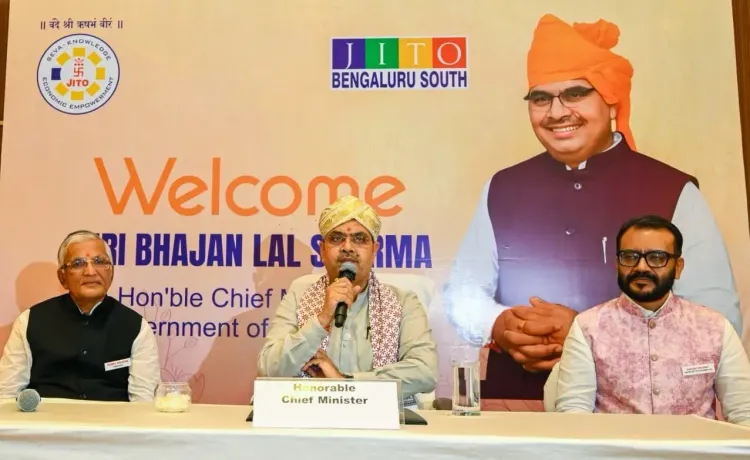
Chief Minister Bhajanlal Sharma held a high-level investor meeting in Bengaluru on 10 August 2026, discussing investment proposals across eleven sectors — from semiconductors and aerospace to cold-chain ecosystems and GCC operations — as Rajasthan accelerates its manufacturing diversification drive.
Key Takeaways
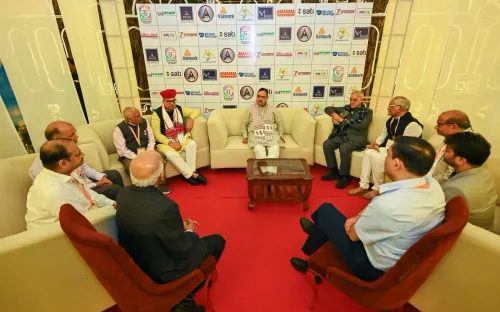
CM Bhajanlal Sharma met industrialists and investors in Bengaluru on 10 August 2026 to pitch Rajasthan as an investment destination.
Eleven investment verticals were discussed, spanning semiconductors, AI-based manufacturing, aerospace, defence components, copper processing, MSMEs, bio-energy, technical textiles, footwear, cold-chain, rubber recycling, tourism, and GCC operations .
The GCC pitch directly targets Bengaluru's established technology and multinational ecosystem.
Rajasthan's existing strengths in copper, textiles, and agro-processing underpin the broader manufacturing diversification push.
The outreach aligns with national Atmanirbhar Bharat , Make in India , and Semiconductor Mission frameworks.
Concrete outcomes — MoUs, investment figures, policy incentives — are yet to be confirmed and will be the key measure of the meeting's success.
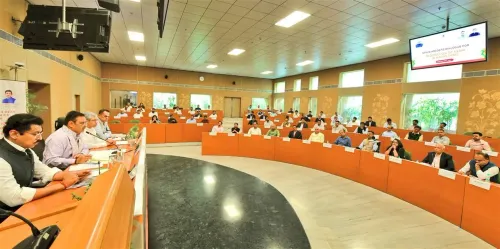
Semiconductors, aerospace, copper, and cold-chain — Chief Minister Bhajanlal Sharma arrived in Bengaluru on Monday, 10 August 2026 with a wide-angle pitch for Rajasthan, sitting down with industrialists and investors in a high-level meeting to map out the state's next manufacturing leap.
The Chief Minister's Office confirmed that the discussions ranged across eleven distinct investment verticals, signalling that Rajasthan is not hunting for one big headline deal — it is building a diversified industrial portfolio from the ground up.
Eleven sectors, one pitch: what was on the table
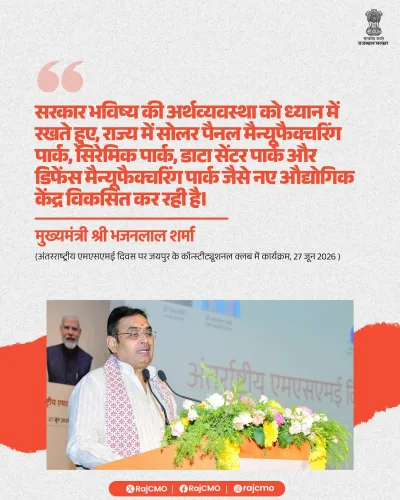
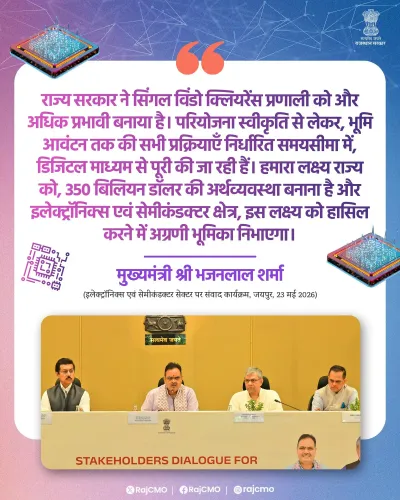
The breadth of the agenda was striking. Proposals covered semiconductor and AI-based manufacturing units, aerospace and defence component manufacturing, and copper processing and value-addition projects — three high-capital, high-complexity sectors where national policy momentum is already strong. Alongside these sat more grounded priorities: integrated industrial parks for MSMEs, bio-energy and agri-innovation parks, and technical textile manufacturing units.
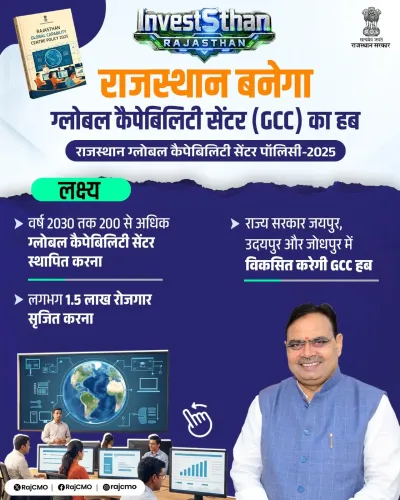
Rounding out the list were footwear production units, a cold-chain and refrigeration manufacturing ecosystem, rubber recycling projects, tourism and hospitality ventures, and Global Capability Centre (GCC) operations. That last item — GCCs — is a direct play for Bengaluru's technology establishment, which has turned southern India into the back-office capital of global multinationals.
Why Bengaluru, and why now
The choice of venue is deliberate. Bengaluru concentrates the precise decision-makers Rajasthan needs: semiconductor ecosystem players, aerospace supply-chain firms, and the technology investors who fund GCC expansions. Indian state governments have increasingly treated the city as a mandatory stop on the investor-outreach circuit, and Sharma's visit follows that well-worn playbook — but with a notably wider sectoral sweep than most.
Rajasthan brings real assets to the conversation. The state holds significant copper deposits, a deep-rooted textile tradition, and growing agro-processing capacity. Sharma's government is now trying to layer advanced manufacturing and technology services on top of that base, aligning with the Centre's Atmanirbhar Bharat and Make in India priorities — and with India's Semiconductor Mission and the Production-Linked Incentive (PLI) schemes for electronics and IT hardware launched in 2021.
From conversation to commitment
High-level investor meetings in metro cities are a standard instrument of state industrial policy. The real measure of Monday's discussions will come in the weeks that follow: whether the proposals on the table translate into signed Memoranda of Understanding, announced investment figures, or concrete policy incentives from Jaipur. Rajasthan's upcoming participation in national and global investor forums will be the next checkpoint.
Sharma's government has been in office since December 2023, giving it roughly two and a half years to show tangible industrial results before the electoral cycle begins to tighten. The Bengaluru roadshow is a signal that the administration is accelerating — the question is how many of these eleven conversations become construction sites.
Point of View
Aerospace, and GCC investment that the Centre's PLI and Semiconductor Mission frameworks have unlocked. By pitching eleven sectors simultaneously, Rajasthan is hedging against the risk that any single vertical stalls — a pragmatic strategy, but one that can dilute focus and make it harder to build the deep ecosystem any one sector requires. The real test for Sharma's government, now past the two-year mark, is converting investor interest into ground-level industrial activity before electoral pressures begin to dominate the agenda.
NationPress
10 Aug 2026
Frequently Asked Questions
Why did CM Bhajanlal Sharma go to Bengaluru to meet investors?
Bengaluru is India's primary hub for technology, semiconductor, and GCC investment decision-makers. Sharma visited on 10 August 2026 to pitch Rajasthan directly to the industrialists and investors most relevant to the state's manufacturing diversification goals.
Which sectors were discussed at the Bengaluru investor meeting?
Eleven sectors were on the table: semiconductor and AI-based manufacturing, aerospace and defence components, copper processing, MSME industrial parks, bio-energy and agri-innovation, technical textiles, footwear, cold-chain and refrigeration, rubber recycling, tourism and hospitality, and Global Capability Centre operations.
What is the 'Aapno Agrani Rajasthan' campaign?
Aapno Agrani Rajasthan ('Our Leading Rajasthan') is the Bhajanlal Sharma government's branding for its industrial and investment promotion drive, used to promote the state as a premier destination for manufacturing and services investment.
What are Global Capability Centres and why is Rajasthan targeting them?
Global Capability Centres (GCCs) are offshore delivery units set up by multinational corporations for technology, analytics, and business operations. Rajasthan is targeting them to attract high-value services employment and technology investment beyond its traditional manufacturing base.
How does this meeting connect to India's Semiconductor Mission?
India's Semiconductor Mission, launched in 2021 , offers significant incentives for semiconductor and electronics manufacturing. Rajasthan is positioning itself to capture a share of that investment by pitching semiconductor and AI-based manufacturing units to investors already engaged with the national scheme.