CM Bhajanlal credits Sambal Sakhis for Viksit Rajasthan 2047 push
Synopsis
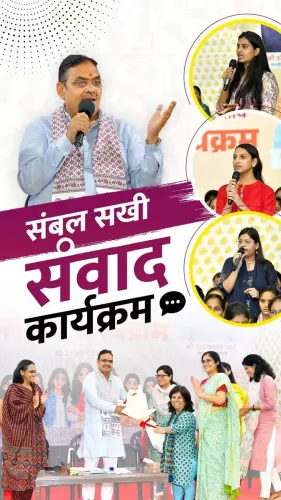
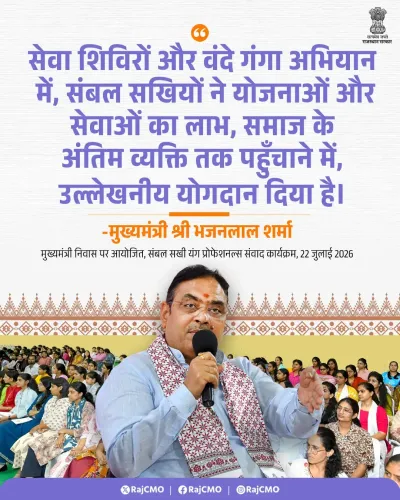
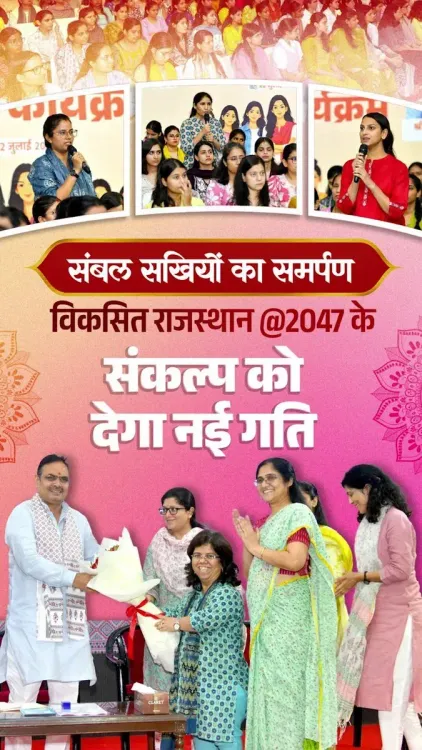
Chief Minister Bhajanlal Sharma on 23 July 2026 praised Sambal Sakhi Young Professionals at his Jaipur residence, saying their dedication to seva shivirs and the Vande Ganga Abhiyan is central to delivering the Viksit Rajasthan 2047 vision to the last person in society.
Key Takeaways
CM Bhajanlal Sharma met Sambal Sakhi Young Professionals at the Chief Minister's Residence in Jaipur on 23 July 2026 .
He stated that the Viksit Rajasthan 2047 vision will be realised only through the dedication of Sambal Sakhis.
Sambal Sakhis have been recognised for their role in seva shivirs (service camps) and the Vande Ganga Abhiyan campaign.
Their core mandate is last-mile delivery of government scheme benefits to the most marginalised sections of society.
The programme aligns Rajasthan's grassroots delivery model with the national Viksit Bharat 2047 development framework launched in 2023 .
Sambal Sakhis are young women professionals, making the cadre a women-led welfare outreach force across the state.
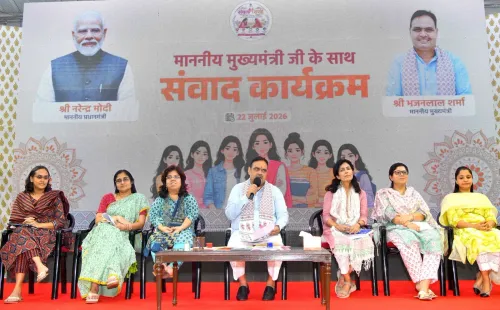
Chief Minister Bhajanlal Sharma on Thursday, 23 July 2026, met with Sambal Sakhi Young Professionals at the Chief Minister's Residence in Jaipur, crediting the cadre's dedication as essential to realising the state's Viksit Rajasthan 2047 vision. The Chief Minister's Office of Rajasthan shared the interaction on X, highlighting the women professionals' grassroots outreach role.
Context
Speaking directly to the young women professionals, CM Sharma said — 'Viksit Rajasthan 2047 ka sankalp Sambal Sakhiyon ke samarpan se hi sakar hoga' — ('The resolve of Viksit Rajasthan 2047 will be realised only through the dedication of Sambal Sakhis'). He specifically acknowledged their contributions to seva shivirs (service camps) and the Vande Ganga Abhiyan, describing their work as instrumental in delivering scheme benefits to the last person in society.
The Sambal Sakhi programme engages young women professionals as ground-level facilitators to ensure welfare schemes reach underserved populations. Their role spans awareness generation, beneficiary identification, and hand-holding citizens through government service processes.
Policy Backdrop
The Viksit Rajasthan 2047 framework is Rajasthan's state-level alignment with the national Viksit Bharat 2047 vision, announced by the Government of India in 2023, which charts a long-term development roadmap tied to India's independence centenary. States across the country have been tasked with building their own vision documents and delivery mechanisms to achieve the overarching national targets.
The Vande Ganga Abhiyan is a Rajasthan community campaign combining water conservation awareness with scheme outreach through service camps. Sambal Sakhis have been positioned as a key human resource within such campaigns, bridging the gap between government programmes and rural or semi-urban beneficiaries who may otherwise remain outside the reach of formal administrative channels.
Stakeholders and Impact
The primary beneficiaries of the Sambal Sakhi model are rural welfare recipients — particularly women and marginalised communities — who gain improved access to entitlements under central and state schemes. The young women professionals themselves gain structured engagement with public administration, building civic capacity at the grassroots level.
Indian states have increasingly deployed volunteer and young professional cadres since the mid-2010s to improve scheme saturation. Rajasthan's model under CM Sharma, who took office in December 2023, mirrors approaches seen in other states that emphasise women-led, community-embedded delivery networks as a force-multiplier for welfare administration.
What's Next
The government's emphasis on the Sambal Sakhi cadre signals continued investment in last-mile delivery infrastructure as Rajasthan builds toward its 2047 development targets. Coverage metrics and any formal integration of Sambal Sakhis into district administration structures will be a key indicator of how deeply the model is institutionalised beyond campaign-level deployments.
Progress on the Vande Ganga Abhiyan service camps is expected to feature in annual budget presentations, offering a measurable yardstick for the programme's reach. If the cadre is formally scaled and its data integrated into state planning, it could serve as a replicable template for grassroots governance across Rajasthan's 33 districts.
Point of View
Community-embedded outreach rather than purely administrative channels. The framing around Viksit Rajasthan 2047 ties a state-level programme to a national political narrative, lending the cadre long-term legitimacy beyond any single scheme or campaign. Recognising Sambal Sakhis by name at the Chief Minister's Residence also elevates the cadre's profile in ways that could translate into formal integration with district administration. The broader pattern suggests that states seeking to demonstrate scheme saturation are increasingly investing in such visible, named volunteer corps as both governance tools and political assets.
NationPress
23 Jul 2026
Frequently Asked Questions
What is the Sambal Sakhi programme in Rajasthan?
The Sambal Sakhi programme engages young women professionals in Rajasthan as grassroots facilitators who help deliver government scheme benefits to underserved and marginalised communities, including through service camps and awareness drives.
What is Viksit Rajasthan 2047?
Viksit Rajasthan 2047 is Rajasthan's state-level development vision aligned with the national Viksit Bharat 2047 goal, which aims to make India a developed nation by its independence centenary. The state framework guides long-term planning and welfare delivery targets.
What is the Vande Ganga Abhiyan?
The Vande Ganga Abhiyan is a Rajasthan government campaign that combines water conservation awareness with community service camps, using cadres like Sambal Sakhis to extend the reach of government schemes to rural populations.
Who is CM Bhajanlal Sharma?
Bhajanlal Sharma is the Chief Minister of Rajasthan, in office since December 2023, with a focus on welfare delivery, grassroots governance, and aligning the state with national development goals.
How do Sambal Sakhis help with last-mile delivery in Rajasthan?
Sambal Sakhis serve as on-ground connectors between government schemes and beneficiaries who may not otherwise access formal services, assisting with beneficiary identification, awareness, and navigation of government processes at the community level.