CM Bhajanlal Pushes Digital Empowerment for Rajasthan's Small Traders
Synopsis
The Chief Minister's Office of Rajasthan shared CM Bhajanlal Sharma's message on June 20, 2026, calling digital empowerment of small traders 'the need of the hour' under the Aapno Agrani Rajasthan banner, signalling a possible push for formal trader digitisation programmes.
Key Takeaways
CM Bhajanlal Sharma declared digital empowerment of small traders 'the need of the hour' in a post by the Rajasthan CMO on June 20, 2026 .
The message was shared under the hashtag #आपणो_अग्रणी_राजस्थान ('Our Pioneering Rajasthan'), a recurring government branding theme.
Rajasthan's small traders — including kirana stores and market vendors — remain partially outside the formal digital payments ecosystem.
The push aligns with the national Digital India programme launched in July 2015 and accelerated post- 2016 demonetisation.
CM Bhajanlal Sharma has prioritised economic modernisation since taking office in December 2023 .
Concrete state-level schemes for trader digitisation may be announced in upcoming budget sessions or industry events.
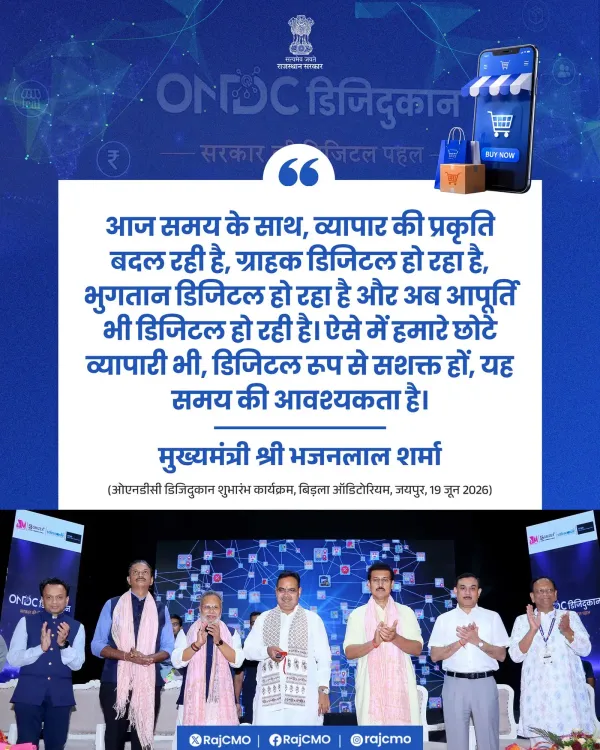
The Chief Minister's Office of Rajasthan on Saturday, June 20, 2026, shared a message from Chief Minister Bhajanlal Sharma underscoring the urgent need to digitally empower the state's small traders, framing it as a necessity of the times.
Context
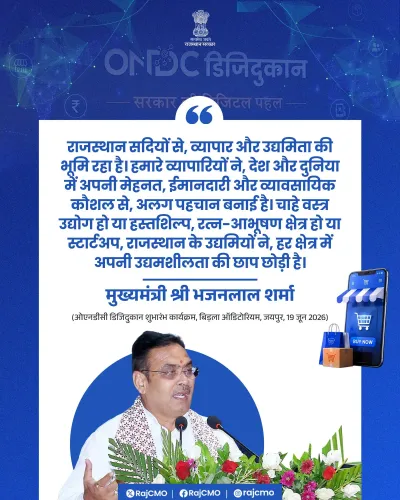
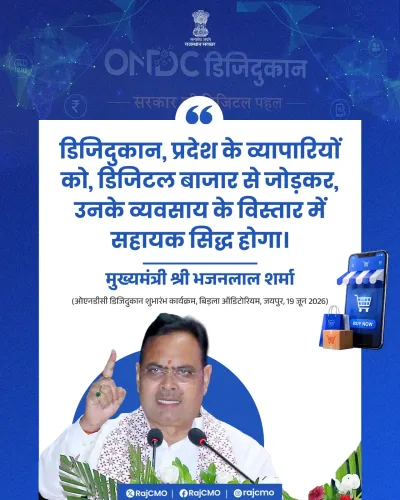
The post, shared under the hashtag #आपणो_अग्रणी_राजस्थान ('Our Pioneering Rajasthan'), carries a direct statement from CM Bhajanlal Sharma: 'हमारे छोटे व्यापारी भी, डिजिटल रूप से सशक्त हों, यह समय की आवश्यकता है' — 'It is the need of the hour that our small traders, too, become digitally empowered.' The message signals the Rajasthan government's intent to extend the benefits of the digital economy to the grassroots trading community.
Small traders — from neighbourhood kirana stores to weekly market vendors — form a critical backbone of Rajasthan's economy, yet many remain outside the formal digital payments and e-commerce ecosystem. The Chief Minister's emphasis on 'also' (भी) suggests an acknowledgement that digital gains have so far been uneven.
Policy Backdrop
The push aligns with the national Digital India programme, launched in July 2015, which sought to bridge the digital divide through expanded connectivity, digital literacy, and e-services. The programme gained momentum after 2016, when demonetisation accelerated the adoption of UPI and cashless transactions across urban and semi-urban India.
Rajasthan, like several other states, has followed this national trajectory, with successive governments promoting digital payments and e-governance at the district and block level. CM Bhajanlal Sharma, who took office in December 2023, has positioned economic modernisation and governance reform as central planks of his administration.
The hashtag #आपणो_अग्रणी_राजस्थान — a recurring theme in the CMO's communications — reflects the government's branding of Rajasthan as a forward-looking, pioneering state in development indices.
Stakeholders and Impact
Rajasthan's small and micro-trader community stands to gain improved access to digital credit, formal banking linkages, and online marketplaces if the government translates this stated intent into structured programmes. Digitisation also benefits traders through better inventory management, reduced cash-handling risks, and eligibility for government procurement portals.
Consumer-facing benefits include greater payment flexibility and price transparency at local markets. For the state, a digitised trader base improves tax compliance visibility and creates a richer data trail for targeted welfare delivery.
What's Next
Observers will watch whether this messaging is followed by concrete announcements — such as digital-onboarding drives, subsidised point-of-sale infrastructure, or trader-specific financial literacy camps — in upcoming Rajasthan budget sessions or industry events. The statement, attributed directly to CM Bhajanlal Sharma, raises expectations of a formal policy initiative targeting small trader digitisation in the near term.
Point of View
A constituency the party has historically courted. By invoking urgency ('need of the hour'), the messaging seeks to build anticipation for a concrete programme, likely timed to a budget cycle or trader-community event. The 'Aapno Agrani Rajasthan' framing is consistent with the administration's effort to build a distinct state-level development identity. Whether the rhetoric translates into measurable digitisation targets will determine its lasting political and economic value.
NationPress
20 Jun 2026
Frequently Asked Questions
What did CM Bhajanlal Sharma say about small traders and digital empowerment?
CM Bhajanlal Sharma stated that it is 'the need of the hour' that small traders in Rajasthan become digitally empowered, as shared by the Rajasthan CMO on June 20, 2026.
What is the Aapno Agrani Rajasthan initiative?
'Aapno Agrani Rajasthan' — meaning 'Our Pioneering Rajasthan' — is a branding theme used by the Rajasthan government to highlight its development and governance ambitions under CM Bhajanlal Sharma.
How does Digital India relate to Rajasthan's small trader push?
The national Digital India programme, launched in July 2015, created the policy and infrastructure foundation that state governments including Rajasthan are now building on to bring small traders into the formal digital economy.
Who is Bhajanlal Sharma and when did he become Chief Minister of Rajasthan?
Bhajanlal Sharma is a BJP leader who became Chief Minister of Rajasthan in December 2023, with a focus on economic modernisation and governance reform.
What benefits can digital empowerment bring to small traders in Rajasthan?
Digital empowerment can give small traders access to formal credit, online marketplaces, digital payment systems, and government procurement portals, while also improving tax compliance and reducing cash-handling risks.