Shivraj Singh Chouhan Backs Natural Farming, Cites Farmer's Moong Yield
Synopsis
Union Agriculture Minister Shivraj Singh Chouhan on 20 June 2026 highlighted farmer Rajesh Singh Thakur's 14-quintal moong harvest from 3 acres using only bio-inputs, connecting the achievement to PM Modi's same-day call for a 'Khet Bachao' campaign to restore soil health across India.
Key Takeaways
Farmer Rajesh Singh Thakur produced 14 quintals of moong from 3 acres using no synthetic fertilisers or pesticides.
Inputs used were entirely bio-based: Sanjeevani Khad , Bel Rasayan , and Jeevamrit .
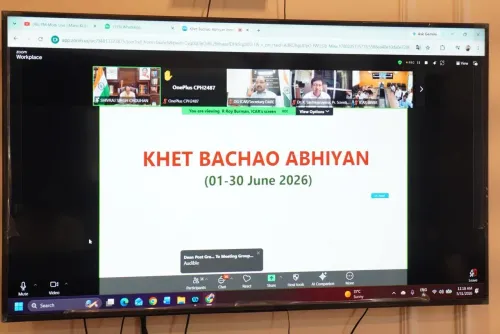
PM Narendra Modi called for a 'Khet Bachao' (Save the Fields) campaign on the same day, 20 June 2026 .
Minister Chouhan argued that properly practised natural farming does not reduce yields.
The central government's Paramparagat Krishi Vikas Yojana , launched in 2015 , has been the primary policy vehicle for promoting organic farming clusters nationwide.
The case is being positioned as a replicable model for smallholders hesitant to abandon chemical inputs.
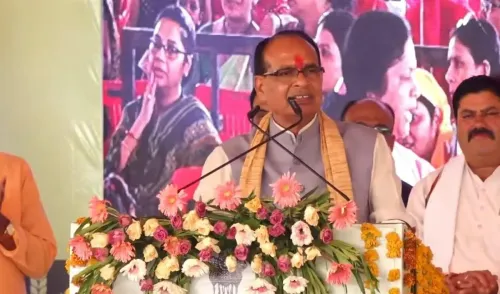
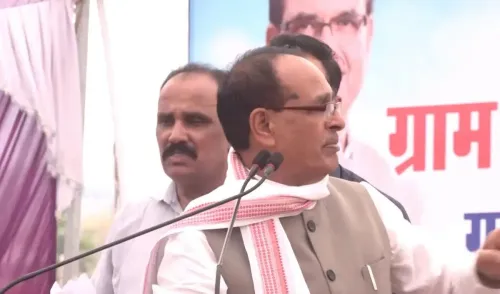
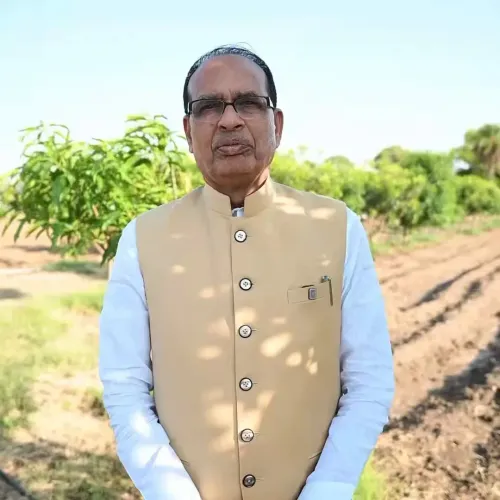
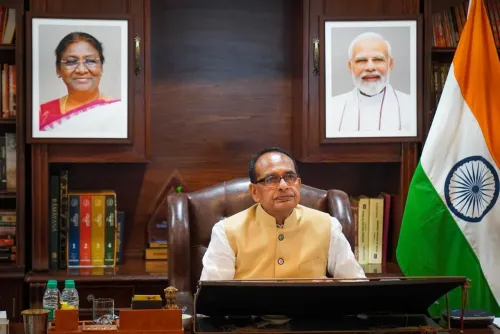
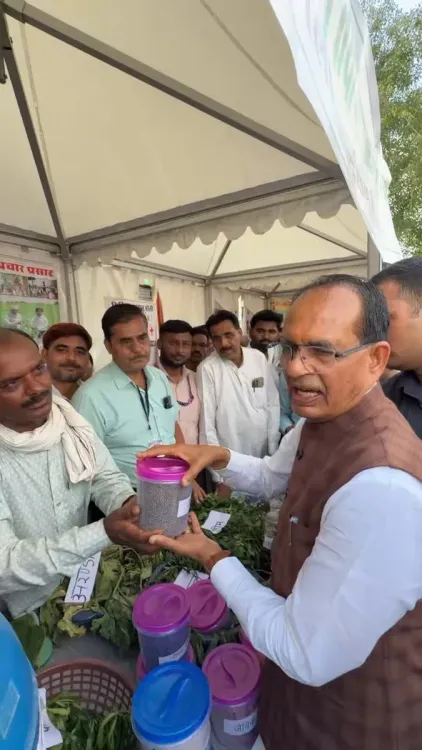
Union Agriculture Minister Shivraj Singh Chouhan on Saturday, 20 June 2026, highlighted the success of farmer Rajesh Singh Thakur, who harvested 14 quintals of moong from 3 acres using entirely natural farming methods — no synthetic fertilisers or pesticides — and linked the achievement to Prime Minister Narendra Modi's call for a 'Khet Bachao' (Save the Fields) campaign launched the same day.
Context
Chouhan shared the post in Hindi, stating: 'Kisan Rajesh Singh Thakur praakritik kheti paddhati se moong ki kheti kar rahe hain' — 'Farmer Rajesh Singh Thakur is cultivating moong through the natural farming method.' He noted that inputs such as Sanjeevani Khad, Bel Rasayan, and Jeevamrit — all bio-based preparations — were used in place of chemical fertilisers and pesticides. The minister emphasised that yields did not suffer, pointing to Thakur's output as direct evidence.
Chouhan added: 'If natural farming is understood and practised properly, there is no reduction in production.' He congratulated Thakur, describing him as a 'pragasheel kisan' — a progressive farmer — doing important work to save farmland through organic methods.
Policy Backdrop
The post connects Thakur's field-level success to a broader government initiative. Prime Minister Modi on the same day called for the 'Khet Bachao' campaign, which Chouhan positioned as a national movement to restore soil health and reduce chemical dependency in Indian agriculture. The minister's framing presents individual farmer successes as proof of concept for this campaign.
Natural and organic farming has been a recurring policy priority for the central government. The Paramparagat Krishi Vikas Yojana (PKVY), launched in 2015, has promoted cluster-based organic farming across states. Between 2019 and 2023, the National Mission on Sustainable Agriculture expanded natural farming promotion, with state-level models in Andhra Pradesh and Gujarat drawing national attention. Chouhan, as a former four-term Chief Minister of Madhya Pradesh, has long been associated with farmer-welfare messaging in the state.
Stakeholders and Impact
The case of Rajesh Singh Thakur is being held up as a replicable model for smallholders and marginal farmers who are wary that switching away from synthetic inputs will hurt productivity. A yield of 14 quintals per 3 acres — roughly 4.67 quintals per acre — is being cited as competitive with chemically farmed moong yields in many central Indian districts.
Organic farmers and farmer-producer organisations that have already transitioned stand to benefit from increased government visibility and potential budgetary support under any formalised Khet Bachao framework. Consumer interest in chemical-free pulses has also grown, which could translate into premium pricing for certified natural produce.
What's Next
Attention will now turn to the structure and funding of the Khet Bachao campaign — whether it will be anchored within existing schemes like PKVY or the Soil Health Card programme, or launched as a standalone initiative with fresh budgetary support. State agriculture departments, particularly in Madhya Pradesh, Uttar Pradesh, and other major pulse-growing states, are expected to be key implementation partners. Chouhan's public endorsement of individual farmer stories suggests a ground-up communication strategy aimed at building farmer confidence in the natural farming transition.
Point of View
The minister signals a coordinated messaging push from the top of the BJP government down to the constituency level. This fits a broader pattern in which the Agriculture Ministry has increasingly used social media to humanise policy through farmer success stories rather than data releases. The critical question remains whether the 'Khet Bachao' campaign will receive dedicated funding or remain an umbrella brand for existing schemes.
NationPress
21 Jun 2026
Frequently Asked Questions
What is the Khet Bachao campaign announced by PM Modi?
The 'Khet Bachao' (Save the Fields) campaign is an initiative called for by Prime Minister Narendra Modi on 20 June 2026 to promote natural and chemical-free farming as a means of restoring soil health across India. Full structural and budgetary details of the campaign are yet to be formally announced.
What inputs did farmer Rajesh Singh Thakur use for natural moong farming?
Rajesh Singh Thakur used three bio-based inputs — Sanjeevani Khad, Bel Rasayan, and Jeevamrit — and no synthetic fertilisers or pesticides to grow moong on 3 acres, achieving a yield of 14 quintals.
Does natural farming reduce crop yield compared to chemical farming?
Agriculture Minister Shivraj Singh Chouhan has argued it does not, citing Thakur's output of roughly 4.67 quintals per acre as competitive with conventional moong yields. Government policy also frames natural farming as complementary to, rather than a replacement for, conventional agriculture.
What is Paramparagat Krishi Vikas Yojana and how does it relate to natural farming?
Paramparagat Krishi Vikas Yojana (PKVY) is a central government scheme launched in 2015 that promotes organic farming through cluster-based participatory models. It is the primary existing policy framework under which natural and organic farming promotion is funded and organised.
What is Jeevamrit used for in natural farming?
Jeevamrit is a fermented bio-stimulant made from cow dung, cow urine, jaggery, and pulse flour. It is used in natural farming systems to enrich soil microbial activity and replace synthetic fertilisers, and is one of the core inputs promoted under India's natural farming programmes.