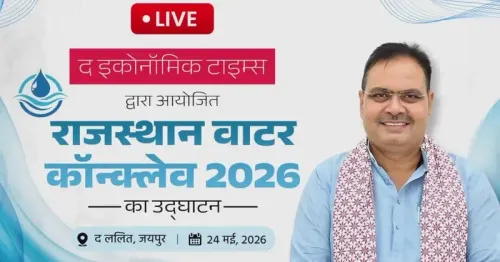
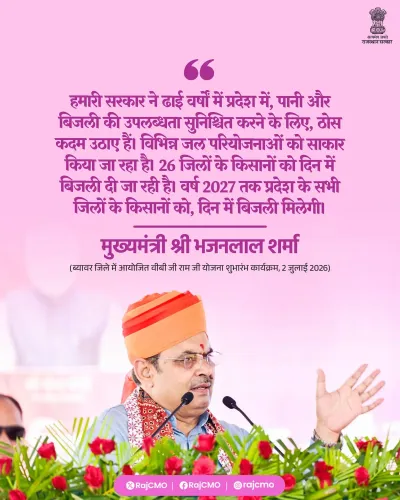
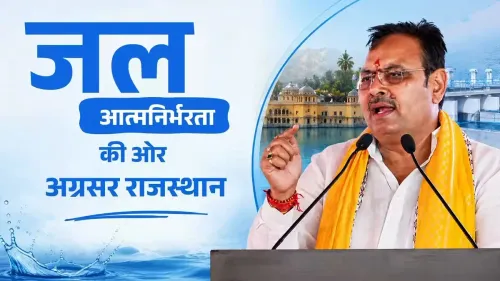
CM Bhajanlal: Rajasthan completed 4 water pacts in 2.5 years
Synopsis
Chief Minister Bhajanlal Sharma, addressing a multi-project inauguration in Pratapgarh on 27 September 2026, declared that Rajasthan — India's most water-stressed large state — has completed four water-related agreements in two-and-a-half years under PM Modi's leadership, framing it as a landmark administrative achievement.
Key Takeaways
CM Bhajanlal Sharma addressed an inauguration and foundation-laying ceremony for multiple development projects in Pratapgarh district on 27 September 2026 .
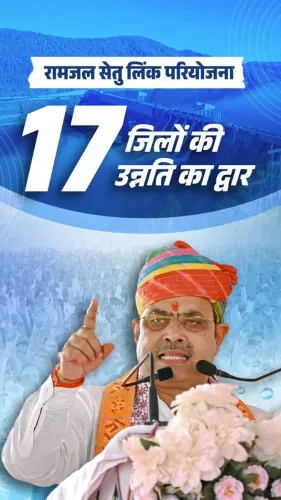
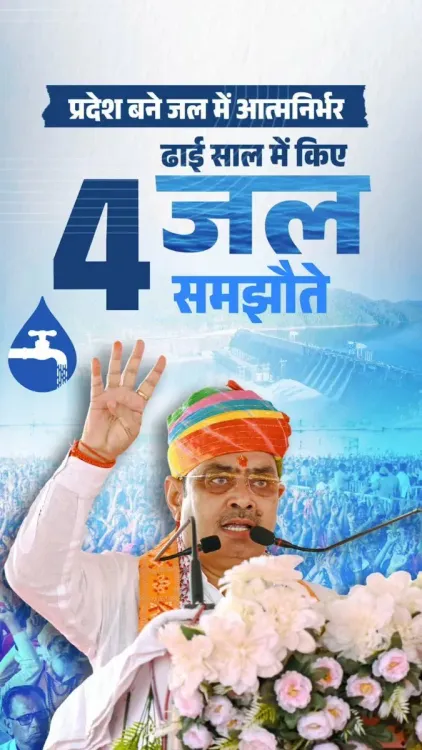
Sharma declared that four agreements related to water have been completed in two-and-a-half years under his government.
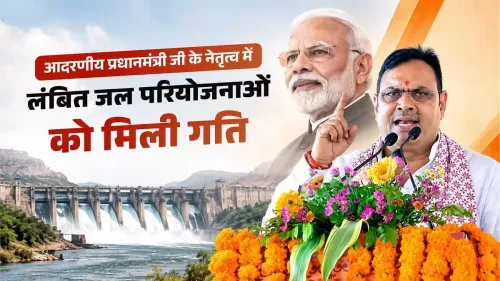
He credited Prime Minister Narendra Modi 's leadership as central to achieving the water compacts.
Rajasthan covers over 10 percent of India's land area but holds limited surface water, making inter-state water agreements critical for the state.
The Jal Jeevan Mission , launched in 2019 , provided the national framework and funding impetus for states to accelerate water infrastructure.
The event was promoted under the hashtag #आपणो_अग्रणी_राजस्थान ('Our Forward Rajasthan'), signalling the administration's broader political messaging campaign.
Water-scarce Rajasthan has long run a race against its own arid geography — and on Sunday, 27 September 2026, Chief Minister Bhajanlal Sharma arrived in Pratapgarh district with a pointed claim: his government has done in two-and-a-half years what remained stuck for years before him.
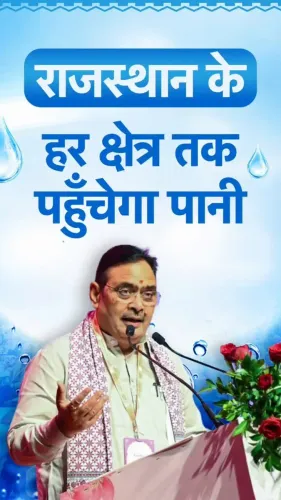
Addressing a public programme for the inauguration and foundation-laying of multiple development projects in Pratapgarh, CM Sharma declared that 'राजस्थान को सबसे ज्यादा आवश्यकता पानी की है' — 'Rajasthan's greatest need is water' — and that under Prime Minister Narendra Modi's leadership, his administration had completed four agreements on water in just two-and-a-half years.Why Pratapgarh, and why water
Pratapgarh sits in southern Rajasthan, a region that straddles the boundary between the state's historic water poverty and its uneven development story. The choice of venue is deliberate: district-level inauguration events have become a signature format for the current administration, bringing project launches directly to communities rather than announcing them from Jaipur.
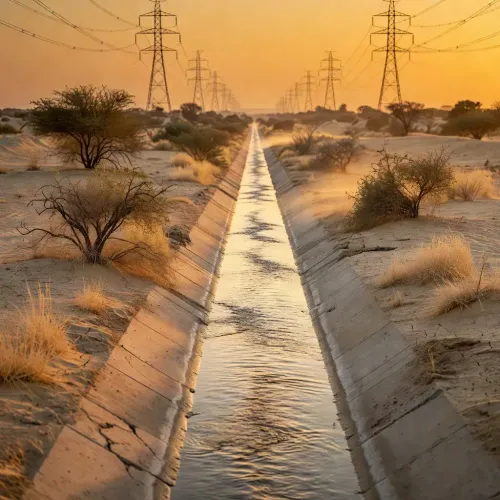
Rajasthan's water crisis is structural, not seasonal. The state is one of India's driest, covering over 10 percent of the country's land area while holding a far smaller share of its surface water. Successive governments have depended on inter-state river agreements — with Madhya Pradesh, Gujarat, and others — to unlock irrigation and drinking water supply at scale. Those negotiations are notoriously slow.
Four agreements in 2.5 years — the political weight of that number
The claim of four completed agreements in two-and-a-half years is the sharpest political punch in Sharma's address. The BJP government took office in December 2023, meaning the window it is measuring covers roughly the period up to mid-2026. Inter-state or centre-state water compacts typically take years of negotiation; completing four in that window, if borne out, would represent a meaningful administrative pace.
The broader backdrop is the Jal Jeevan Mission, the 2019 central scheme to expand rural tap-water connections, which gave states like Rajasthan both funding momentum and political incentive to resolve pending water infrastructure agreements. CM Sharma's framing — crediting PM Modi's leadership explicitly — positions the achievements within that national programme umbrella, reinforcing the BJP's dual-government narrative ahead of any future electoral cycle.
What the Pratapgarh programme signals
Beyond the water agreements, the event was framed as a broader development push: inaugurations and foundation-layings across multiple projects in Pratapgarh. Such district-level ceremonies serve a dual function — they deliver visible infrastructure milestones to local constituents while generating a state-wide political message through social media amplification, as seen in the CMO's post carrying the hashtag #आपणो_अग्रणी_राजस्थान ('Our Forward Rajasthan').
Farmers and rural households in southern Rajasthan stand to benefit most directly if the water agreements translate into actual supply improvements. The real test, as always, is implementation on the ground — whether pipelines get laid, canals get water, and taps run in villages that have waited for them.
Rajasthan has made this promise before. The question CM Sharma's government now owns is whether the four agreements signed become four results delivered — and whether Pratapgarh, when the cameras move on, gets the water it was promised.
Point of View
With PM Modi cast as the enabling force behind agreements that were long delayed. The explicit water-first framing is strategically sound: in a state where arid geography shapes every election, water delivery is the single most visceral governance promise a CM can make. Completing four agreements in two-and-a-half years — if verified and implemented — gives the administration a concrete, rural-facing achievement to campaign on. However, the credibility of this milestone will ultimately rest on whether the agreements translate into measurable water supply improvements for farmers and households, or remain administrative paperwork that precedes another cycle of unmet promises.
NationPress
27 Sept 2026
Frequently Asked Questions
What did CM Bhajanlal Sharma announce in Pratapgarh on 27 September 2026?
CM Bhajanlal Sharma announced that the Rajasthan government had completed four water-related agreements in two-and-a-half years under PM Narendra Modi's leadership, while addressing an inauguration and foundation-laying ceremony for multiple development projects in Pratapgarh district.
What are the four water agreements completed by Rajasthan?
The exact names and nature of the four agreements were not specified in the announcement. CM Sharma referenced them broadly as agreements completed under PM Modi's leadership to address Rajasthan's water needs.
Why is water such a critical issue for Rajasthan?
Rajasthan covers over 10 percent of India's land area but has very limited surface water resources due to its arid climate. The state historically depends on inter-state river agreements for irrigation and drinking water supply, making water a central governance and political issue.
What is the Jal Jeevan Mission and how does it relate to Rajasthan?
The Jal Jeevan Mission is a central government scheme launched in 2019 to expand rural tap-water connections across India. It provided both funding and political momentum for states like Rajasthan to accelerate pending water infrastructure agreements and projects.
Where is Pratapgarh district in Rajasthan?
Pratapgarh is a district located in southern Rajasthan. It is a region that reflects many of the state's development challenges, including limited water access, and has been a site of district-level government project launches under the current administration.