CM Bhajanlal Reviews ₹15,000 Cr Projects at Raj Unnati's 9th Meet
Synopsis
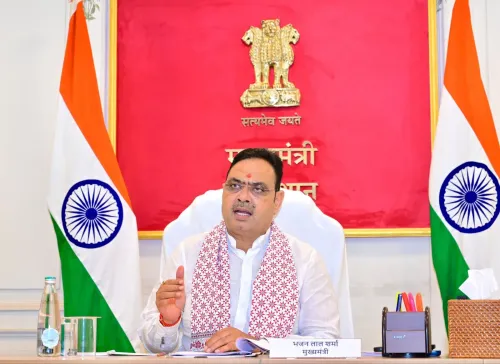
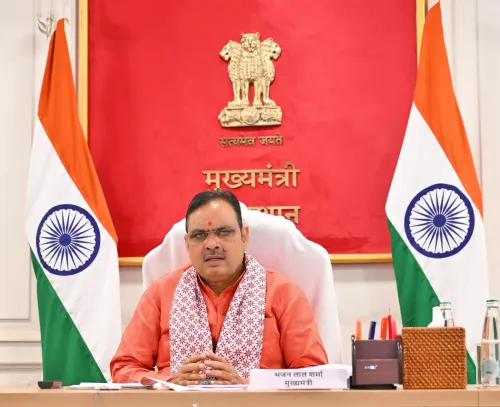
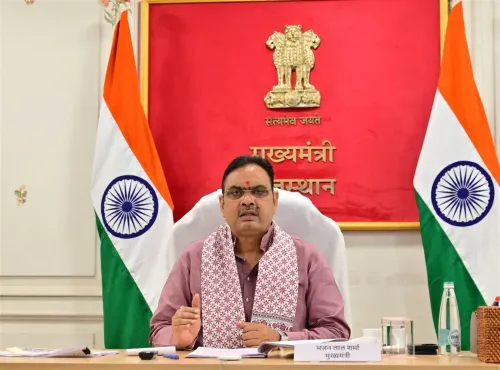
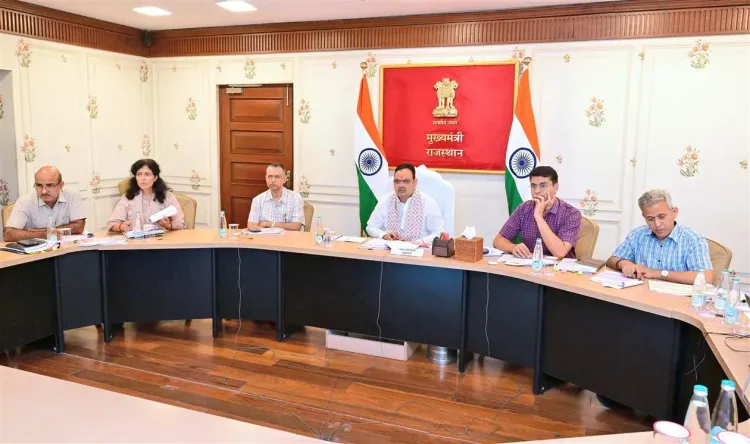
CM Bhajanlal Sharma chaired the 9th Raj Unnati meeting at the Chief Minister's Office on September 25, 2026, reviewing ₹15,000 crore in projects including rural roads, PMAY-G, six new trauma centres, and three engineering college upgrades, while directing action against officers causing project delays.
Key Takeaways
₹15,000 crore worth of projects and schemes were reviewed at the 9th Raj Unnati meeting on September 25, 2026 .
Schemes reviewed include Atal Pragati Paths in rural towns with populations over 5,000 , PMAY-G , Pannadhay Bal Gopal Yojana , and VB-G Ram Ji Yojana .
Construction of six new trauma centres and conversion of three engineering colleges into Rajasthan Institutes of Technology were also on the agenda.
CM Sharma directed that accountability be fixed for officers causing unnecessary project delays, with action to follow.
Officials were instructed to conduct physical field inspections and ensure effective on-ground monitoring of all schemes.
Compliance with directives from earlier Raj Unnati sessions and individual public grievances were also reviewed.
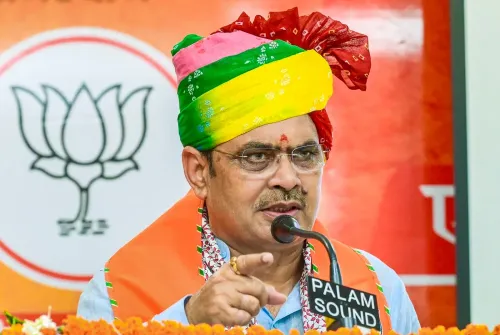
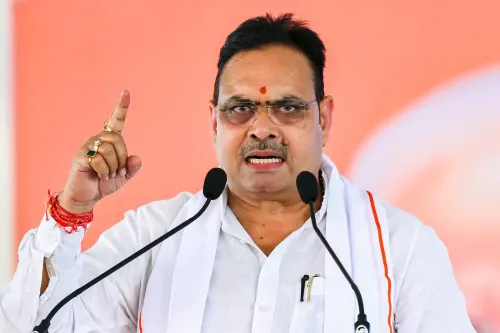
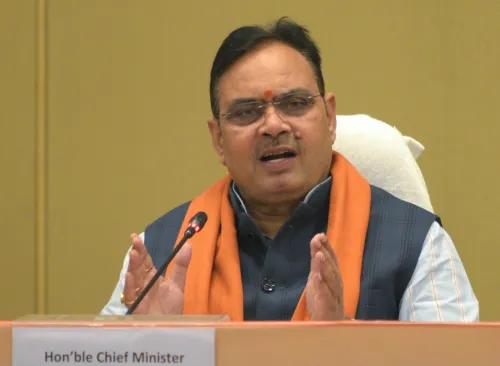
Accountability is now on the agenda in Jaipur. Chief Minister Bhajanlal Sharma chaired the 9th Raj Unnati meeting at the Chief Minister's Office on Friday, September 25, 2026, conducting a sweeping review of projects and schemes worth approximately ₹15,000 crore — and made clear that officers who delay work without reason will face consequences.
What was on the table: roads, houses, hospitals, and colleges
The review covered a wide sweep of rural infrastructure and welfare priorities. Construction of Atal Pragati Paths — dedicated road corridors in rural towns with populations exceeding 5,000 — was examined alongside the Pannadhay Bal Gopal Yojana and VB-G Ram Ji Yojana, two state welfare programmes. The Pradhan Mantri Awas Yojana-Gramin (PMAY-G), the central government's flagship rural housing scheme launched in 2016 to ensure pucca homes for eligible rural households, also came under the lens for progress tracking.
Beyond housing and roads, Sharma reviewed the status of civic amenity grievances from rural areas, the conversion of three engineering colleges into Rajasthan Institutes of Technology, and the construction of six new trauma centres. Compliance with directives issued at earlier Raj Unnati sessions and individual public grievances were also taken up.
The sharp edge: officers told to go to the field or face action
Sharma's message to his bureaucracy was direct. Officers responsible for unnecessary project delays will have their accountability fixed and action initiated against them. More pointedly, he directed that officials must physically visit project sites — not just monitor from desks — and ensure effective on-ground monitoring of schemes.
This insistence on field inspection is a recurring theme in how the BJP government, which came to power in December 2023 after winning the Rajasthan assembly elections, has framed its governance style. Regular high-level review sessions like Raj Unnati are designed to compress the distance between state-level policy intent and district-level execution.
The Raj Unnati framework and what it signals
At its ninth iteration, Raj Unnati is no longer a new experiment — it is an established rhythm. The meeting structure allows the Chief Minister's Office to track both centrally-sponsored schemes and state initiatives within a single review window, cutting across departments from public works and rural development to health and higher education. The simultaneous focus on trauma centres and engineering college upgrades signals that the government is using these sessions to push capital expenditure forward on multiple fronts at once.
With ₹15,000 crore in projects under active review and personal accountability of officers now formally on the table, the next Raj Unnati meeting will be a clear test of whether these directives translate to measurable movement on the ground.
Point of View
Aimed at demonstrating that the BJP's post-2023 mandate in Rajasthan will be measured in completed infrastructure, not announced projects. With rural housing, roads, health infrastructure, and technical education all on a single review agenda, the government is consciously projecting a wide-front development narrative ahead of future electoral cycles.
NationPress
25 Sept 2026
Frequently Asked Questions
What is the Raj Unnati meeting in Rajasthan?
Raj Unnati is a high-level review mechanism initiated by the Bhajanlal Sharma government in Rajasthan after the BJP's December 2023 assembly election victory, designed to track progress on development projects and welfare schemes across departments.
How much project money was reviewed at the 9th Raj Unnati meeting?
Approximately ₹15,000 crore worth of projects and schemes were reviewed at the 9th Raj Unnati meeting on September 25, 2026.
What is the Atal Pragati Path scheme in Rajasthan?
Atal Pragati Path refers to road construction projects being undertaken in rural towns with populations exceeding 5,000 in Rajasthan, aimed at improving connectivity in semi-urban rural areas.
What action did CM Bhajanlal Sharma announce against officials at Raj Unnati?
CM Sharma directed that accountability be fixed for officers who cause unnecessary delays in projects, with formal action to be taken against them, and that officials must personally conduct field inspections of ongoing work.
What is Pradhan Mantri Awas Yojana-Gramin reviewed in the Raj Unnati meeting?
PMAY-G is the central government's rural housing scheme launched in 2016 to provide pucca houses to eligible rural households; its progress in Rajasthan was reviewed at the 9th Raj Unnati meeting.