Rajasthan CM Orders Suspensions at Rs 23,890cr Raj Unnati Review
Synopsis
Rajasthan CM Bhajan Lal Sharma suspended two officials and set hard deadlines for airports, ring roads, and AI projects at the 4th Raj Unnati review of Rs 23,890 crore schemes — signalling that bureaucratic delays now carry real personal consequences in the state.
Key Takeaways
CM Bhajan Lal Sharma chaired the 4th Raj Unnati review on April 25 , assessing schemes worth Rs 23,890 crore .
Two government employees were suspended and one officer received a notice for negligence in grievance redressal.
Pre-feasibility studies ordered for airports at Bharatpur-Deeg, Sikar-Jhunjhunu, Abu Road, and Banswara ; Bikaner Nal Airport tender to be fast-tracked.
Jaipur Northern Ring Road must see land acquisition by June 2026 , construction start by October 2026 , and completion by January 2028 .
The Chief Secretary directed to personally monitor AMRUT 2.0 implementation to prevent cascading urban development delays.
87 Custom Hiring Centre proposals remain under process; Rural Development and Cooperatives Departments directed to expedite coordination.
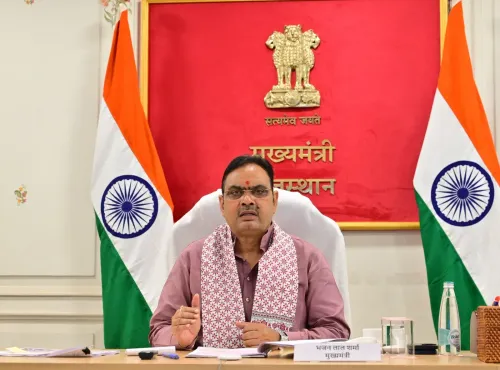
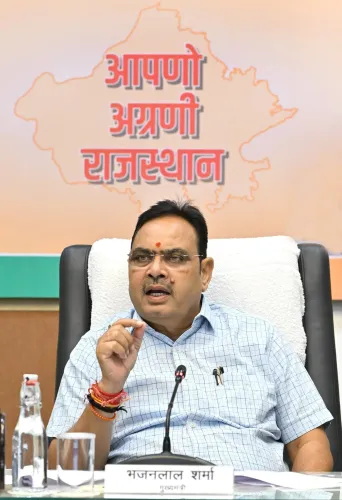
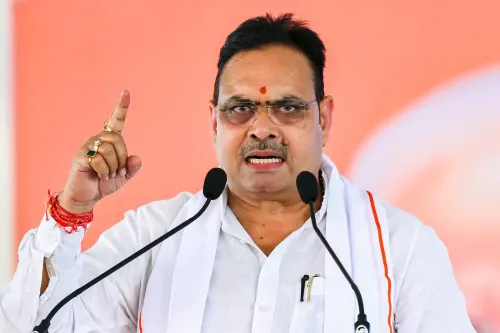
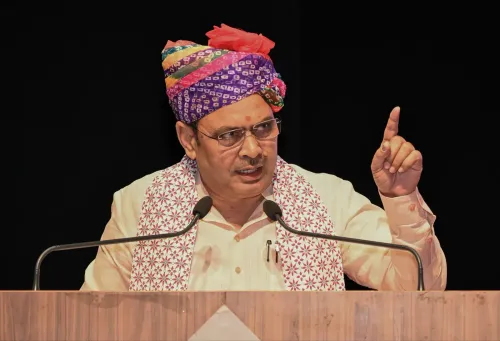
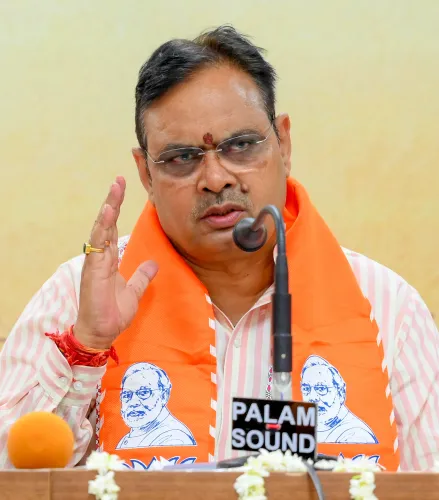
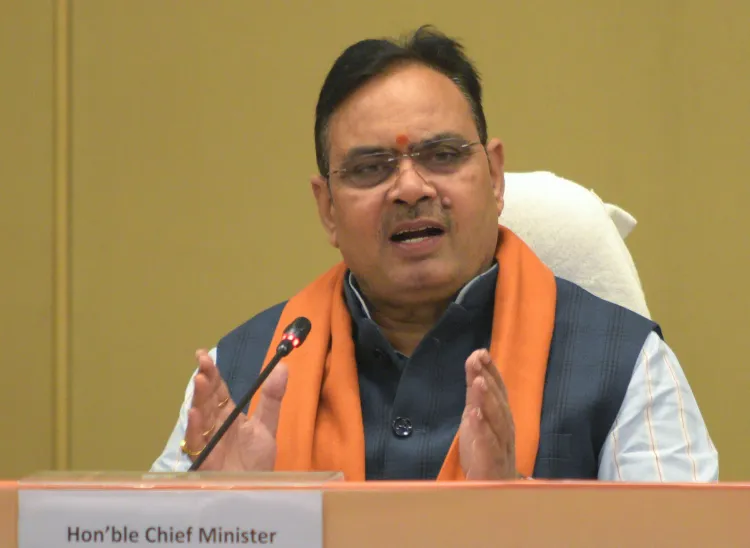
Jaipur, April 25: Rajasthan Chief Minister Bhajan Lal Sharma chaired the fourth edition of the 'Raj Unnati' review meeting at the Chief Minister's Office in Jaipur on Friday, April 25, scrutinising development projects and government schemes valued at approximately Rs 23,890 crore. Signalling zero tolerance for bureaucratic inertia, the CM ordered the suspension of two government employees and issued a show-cause notice to one officer over negligence in grievance redressal — a sharp message that accountability is no longer optional in Rajasthan's administrative machinery.
Strict Accountability and Disciplinary Action
CM Sharma made personal accountability a centrepiece of the meeting. He directed that delays in project execution must be traced to specific officials and that disciplinary action will follow swiftly. The suspension of two employees and the notice to a third officer were not isolated acts — they were a deliberate signal to the entire state bureaucracy.
He also mandated that all departments hold high-level internal review meetings at least 15 days before each Raj Unnati session, ensuring that data presented at the CM-level review is actionable rather than aspirational. This structural reform in monitoring could significantly reduce the gap between policy announcement and on-ground delivery.
Airport Expansion and Air Connectivity Push
The Chief Minister placed air connectivity high on Rajasthan's development agenda. He directed officials to initiate pre-feasibility studies for new airports at Bharatpur-Deeg, Sikar-Jhunjhunu, Abu Road, and Banswara (greenfield). For the Bikaner Nal Airport, he instructed that the tender process be completed within the stipulated timeline in coordination with the Central Government.
Officials confirmed that land reversion approval has been granted and demarcation completed by the concerned departments — clearing a critical procedural hurdle that had previously stalled progress. Rajasthan's vast geography makes air connectivity a genuine economic equaliser, particularly for tier-2 and tier-3 districts currently underserved by transport infrastructure.
Rajasthan Mandapam, Ring Road, and Logistics Projects
The Rajasthan Mandapam — a flagship project being developed on 90 acres along Tonk Road (B2 Bypass) in Jaipur — received focused attention. The CM directed a comprehensive action plan to be prepared in coordination with the Industries Department, JDA, PHED, and the District Collector. He insisted on seamless road connectivity with Tonk Road and JLN Marg and set a firm two-year completion deadline.
On the Jaipur Northern Ring Road, the CM laid out a precise timeline: land acquisition by June 2026, construction commencement by October 2026, and full completion by January 2028. NHAI officials presented progress updates at the meeting. Additionally, the CM directed the Urban Development Department and Housing Board to secure land in Jodhpur for a generative AI-based innovation and skill development project — a forward-looking investment that aligns Rajasthan with India's emerging tech economy.
Directions were also issued for the establishment of an Inland Container Depot and Multi-Modal Logistics Park in Jaipur under the Integrated Logistics Project, which could transform the state into a regional trade and distribution hub.
Social Welfare, AMRUT 2.0, and Energy Storage
Reaffirming the government's commitment to marginalised communities, CM Sharma highlighted budget provisions for housing schemes targeting Denotified, Nomadic, and Semi-Nomadic communities. He directed officials to prepare district-wise allocation plans and prioritise eligible families — a move with direct electoral resonance ahead of future cycles.
Expressing concern over stalled urban infrastructure, the CM flagged delays in AMRUT 2.0 projects, noting that bottlenecks in one component cascade across entire urban development timelines. He directed the Chief Secretary to personally monitor AMRUT 2.0 implementation — an unusual escalation that underscores the seriousness of the delay. He also instructed the Energy Department to accelerate work on Battery Energy Storage System (BESS) projects, a critical piece of Rajasthan's renewable energy transition.
Broader Context: Raj Unnati as a Governance Accountability Tool
The Raj Unnati initiative, now in its fourth review cycle, represents the Bhajan Lal Sharma government's attempt to institutionalise performance-based governance. Notably, Rajasthan has historically struggled with project execution gaps — a 2023 CAG report flagged significant delays across infrastructure schemes in the state. The current administration's aggressive review mechanism, including real-time suspensions, is a departure from the more passive oversight of previous governments.
The meeting also reviewed progress on MoUs signed under the 'Rising Rajasthan' Global Investment Summit, where the state had attracted investment commitments running into lakhs of crores. Critics, however, have pointed out that MoU-to-execution conversion rates in Indian states often remain below 30% — making the CM's insistence on timelines and accountability particularly significant. With 87 Custom Hiring Centre proposals still under process and the CM publicly questioning why deadlines were missed, the pressure on the Rural Development and Cooperatives Departments is now squarely in the public domain.
As Rajasthan heads deeper into its infrastructure build-out phase, the next Raj Unnati session will be a key indicator of whether these directives translate into measurable outcomes — or remain another layer of bureaucratic choreography.
Point of View
Not administrative routine. What's striking is the breadth of ambition: AI hubs, greenfield airports, logistics parks, and battery storage — all being tracked in a single sitting. But Rajasthan's track record on MoU conversion and project completion rates demands scrutiny; grand timelines announced in review rooms have a long history of dissolving in the field. The real test is whether the Chief Secretary's direct monitoring of AMRUT 2.0 and the ring road deadlines produce verifiable outcomes by mid-2026 — or become the subject of the next CAG report.
NationPress
24 Sept 2026
Frequently Asked Questions
What is the Raj Unnati review meeting in Rajasthan?
Raj Unnati is a structured governance review mechanism initiated by the Rajasthan government under CM Bhajan Lal Sharma to monitor the progress of major development projects and schemes. The fourth such meeting reviewed projects worth approximately Rs 23,890 crore and resulted in disciplinary action against officials for delays.
Which officials were suspended at the Raj Unnati meeting on April 25?
CM Bhajan Lal Sharma ordered the suspension of two government employees and issued a show-cause notice to one officer during the fourth Raj Unnati meeting. The action was taken for negligence in grievance redressal and project delays.
What is the timeline for the Jaipur Northern Ring Road project?
CM Sharma directed that land acquisition for the Jaipur Northern Ring Road be completed by June 2026, construction begin by October 2026, and the project be fully completed by January 2028. NHAI officials presented progress updates at the meeting.
Which new airports are being planned in Rajasthan?
The Rajasthan government has directed pre-feasibility studies for new airports at Bharatpur-Deeg, Sikar-Jhunjhunu, Abu Road, and Banswara (greenfield). The tender process for the Bikaner Nal Airport is also to be completed in coordination with the Central Government.
What is the Rising Rajasthan initiative and how does it connect to Raj Unnati?
Rising Rajasthan was a global investment summit where Rajasthan attracted large-scale investment commitments through MoUs. The Raj Unnati review mechanism tracks the on-ground progress of these MoUs, with CM Sharma directing departments to accelerate execution of key projects including an AI innovation hub in Jodhpur.