CM Bhajanlal's policies draw large-scale investment to Rajasthan
Synopsis
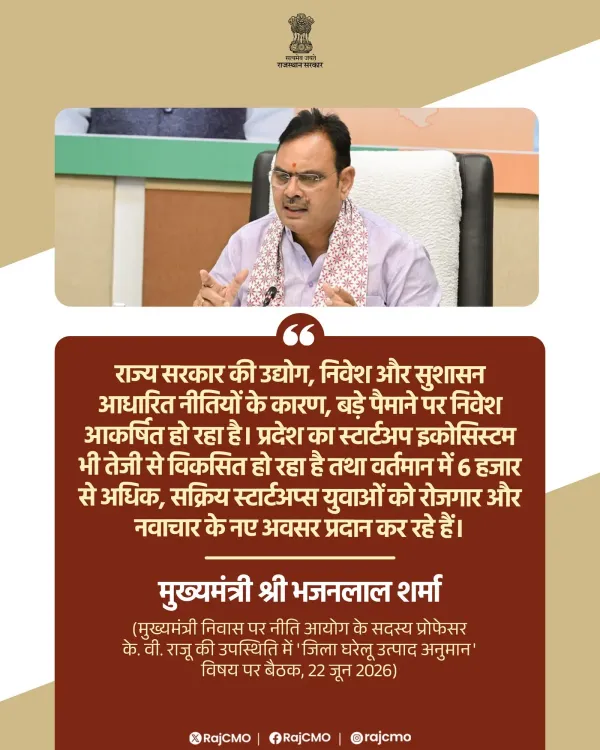
The Rajasthan Chief Minister's Office on 23 June 2026 attributed large-scale investment inflows to CM Bhajanlal Sharma's industry, investment and good-governance policies, reinforcing the BJP government's economic messaging under the 'Aapno Agrani Rajasthan' campaign.
Key Takeaways
The Chief Minister's Office of Rajasthan posted on 23 June 2026 attributing large-scale investment attraction to the state government's industry and good-governance policies.
Chief Minister Bhajanlal Sharma , who took office after the December 2023 assembly elections, was directly tagged in the post as the driver of this policy agenda.
The post was shared under the hashtag #आपणो_अग्रणी_राजस्थान ('Our Leading Rajasthan'), a recurring campaign theme of the BJP state government.
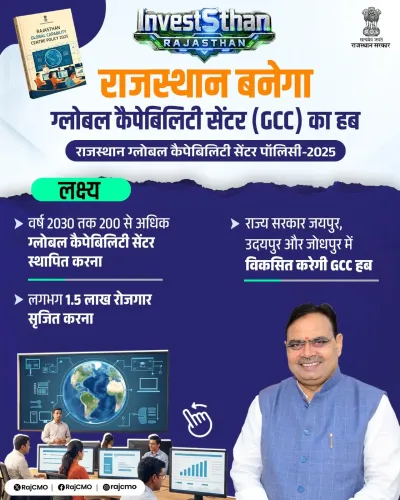
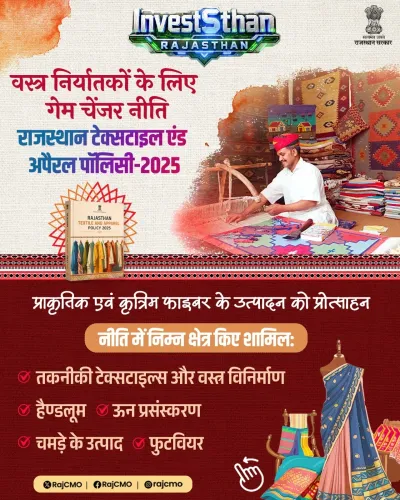
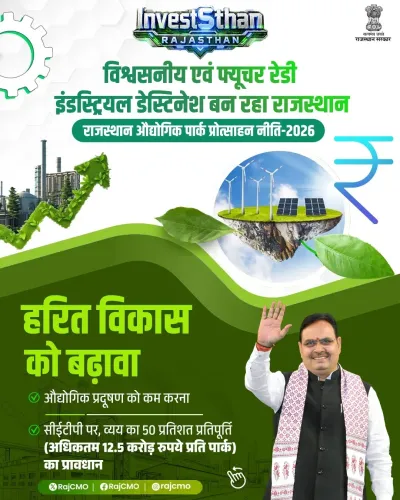
Rajasthan's updated industrial policies target sectors including manufacturing, renewable energy and information technology, supported by national schemes such as Make in India.
Key stakeholders include industrial investors, MSMEs and the state workforce, who stand to benefit from sustained capital inflows and job creation.
Independent verification of specific investment figures and project realisation data remains pending from the state government.
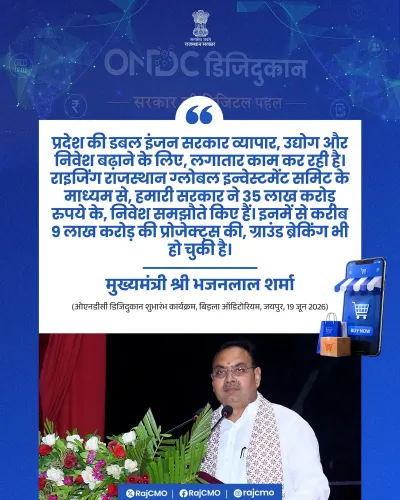
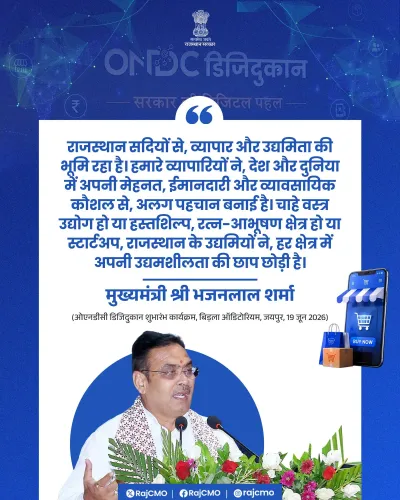
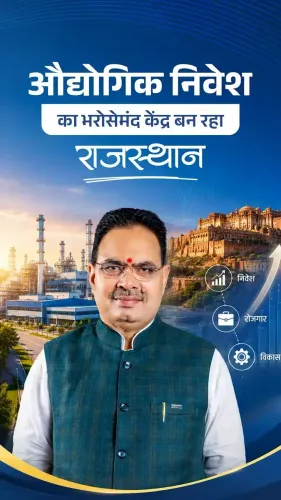
The Chief Minister's Office of Rajasthan on Tuesday, 23 June 2026, credited Chief Minister Bhajanlal Sharma's industry, investment and good-governance policies with attracting large-scale capital inflows into the state, signalling growing investor confidence in Rajasthan's economic direction.
Context
The post, shared under the hashtag #आपणो_अग्रणी_राजस्थान ('Our Leading Rajasthan'), states that 'rajya sarkar ki udyog, nivesh aur sushasan aadharit neetiyon ke kaaran bade paimane par nivesh aakarshit ho raha hai' — meaning 'due to the state government's industry, investment and good-governance-based policies, large-scale investment is being attracted.' The message tags Chief Minister Bhajanlal Sharma directly, framing the investment momentum as a product of his administration's policy agenda.
The BJP government in Rajasthan came to power after the December 2023 assembly elections and has since positioned economic reform and ease of doing business as central pillars of its governance narrative. The 'sushasan' (good governance) emphasis has been a recurring theme in the administration's public communication.
Policy Backdrop
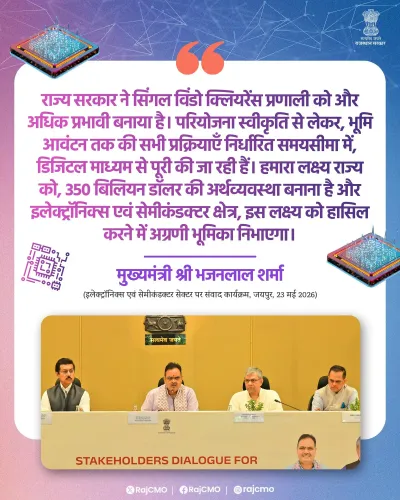
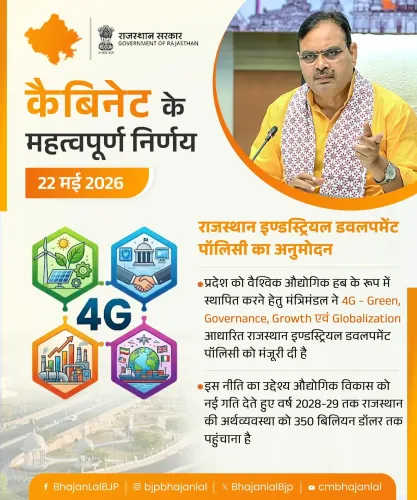
Since taking office, the Bhajanlal Sharma government has introduced updated industrial and investment facilitation policies aimed at improving the state's ease-of-doing-business rankings. These include revised frameworks for land allocation, single-window clearances and sector-specific incentives targeting manufacturing, renewable energy and information technology.
Rajasthan sits at the intersection of several national-level schemes, including the central government's Make in India initiative and production-linked incentive programmes, which encourage states to host investor summits and build dedicated industrial corridors. The state's vast land bank and solar energy potential have made it a focus area for domestic and international capital looking at green energy and logistics.
Indian states routinely compete to attract capital through incentive packages and administrative reforms, a pattern visible across party lines. Rajasthan's messaging strategy — linking governance quality directly to investment attraction — mirrors approaches adopted by several other large states in recent years.
Stakeholders and Impact
The primary beneficiaries of sustained investment inflows are expected to be Rajasthan's industrial entrepreneurs, micro, small and medium enterprises (MSMEs), and the broader workforce seeking employment in new manufacturing and services facilities. Investors in renewable energy, logistics and IT infrastructure stand to gain from the policy environment the government is projecting.
For the state exchequer, higher private investment typically translates into expanded tax revenues, improved infrastructure and stronger economic growth metrics — outcomes the administration is keen to demonstrate ahead of future electoral cycles. The government's consistent public messaging on investment attraction also serves to maintain momentum and signal predictability to prospective investors.
What's Next
Attention will now turn to whether the Rajasthan government releases granular investment realisation data — including committed versus grounded capital — to substantiate the claim of large-scale inflows. Any announcement of a new sector-specific policy, investor summit or major project inauguration in the coming months will be closely watched as a measure of actual progress beyond the government's stated intent.
If the administration follows through with transparent disclosure of investment figures and project timelines, Rajasthan could consolidate its positioning as one of India's preferred investment destinations in the western region — a status that would carry significant political and economic weight for Chief Minister Bhajanlal Sharma's government.
Point of View
The messaging personalises policy credit and reinforces his brand ahead of future electoral cycles. The 'sushasan' framing also aligns Rajasthan's BJP government with the broader national narrative linking administrative reform to capital attraction. The real test will come when the government publishes grounded investment figures that can be independently assessed against its commitments.
NationPress
23 Jun 2026
Frequently Asked Questions
What did the Rajasthan CMO post about on 23 June 2026?
The Chief Minister's Office of Rajasthan posted that the state government's industry, investment and good-governance policies are attracting large-scale investment into Rajasthan, tagging Chief Minister Bhajanlal Sharma.
Who is CM Bhajanlal Sharma?
Bhajanlal Sharma is the Chief Minister of Rajasthan from the BJP, who took office in December 2023 after the state assembly elections, with a focus on industrial growth and governance reforms.
What is the 'Aapno Agrani Rajasthan' campaign?
'Aapno Agrani Rajasthan' translates to 'Our Leading Rajasthan' and is a recurring hashtag campaign used by the Rajasthan BJP government to promote the state's development and investment narrative.
Which sectors is Rajasthan targeting for investment?
Rajasthan is actively targeting manufacturing, renewable energy and information technology sectors, leveraging its large land bank, solar potential and alignment with national schemes such as Make in India.
How does Rajasthan's investment push compare with other Indian states?
Indian states routinely compete for capital through incentives, land banks and single-window clearances; Rajasthan's approach mirrors similar strategies adopted by both BJP-ruled and opposition-ruled states, with 'good governance' messaging being a common thread.