CM Nayab Saini Approves Motor Vehicle Tax Relief for Haryana NCR Districts
Synopsis
Haryana Chief Minister Nayab Singh Saini on June 23, 2026 approved exemptions in motor vehicle tax and registration fees for NCR districts. The decision benefits vehicle owners in Haryana's NCR belt and follows the state's pattern of fiscal calibration within the regional planning framework.
Key Takeaways
Haryana CM Nayab Singh Saini approved exemptions in motor vehicle tax and registration fees for NCR districts on June 23, 2026 .
The announcement was made via an official post on X, with formal notification pending from the Haryana Transport Department .
Specific exemption rates, eligible vehicle categories, and the list of covered districts are yet to be officially notified.
Vehicle owners in Haryana's NCR districts — including commuters and small-business operators — are the primary beneficiaries.
The move fits a broader pattern of Haryana governments adjusting vehicle taxes in NCR areas to align with regional mobility and planning goals.
The revenue impact on the state exchequer will be clearer once the formal gazette notification is issued.
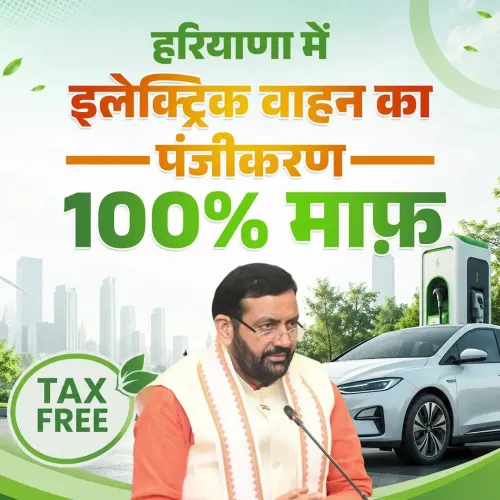
Haryana Chief Minister Nayab Singh Saini on Tuesday, June 23, 2026, announced approval for exemptions in motor vehicle tax and registration fees applicable to districts of the state falling within the National Capital Region (NCR). The decision signals a targeted fiscal intervention aimed at vehicle owners in Haryana's NCR belt.
Context
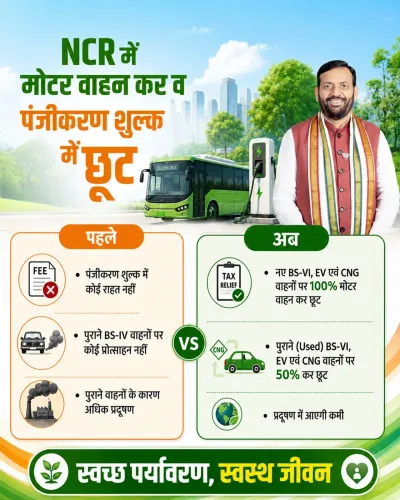
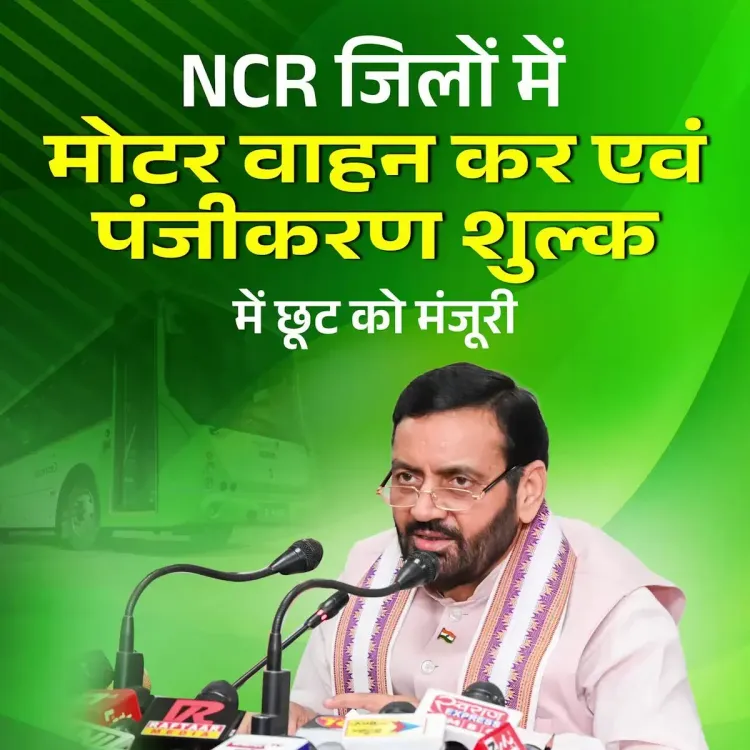
Saini posted on X announcing the approval, stating in Hindi: 'NCR जिलों में मोटर वाहन कर एवं पंजीकरण शुल्क में छूट को मंजूरी' — translated as 'Approval granted for exemption in motor vehicle tax and registration fees in NCR districts.' The announcement did not specify the quantum of the exemption or the list of districts covered, with formal notification expected from the Haryana Transport Department.
Haryana's NCR districts include major urban and semi-urban areas that share economic and mobility linkages with Delhi. Vehicle registration and taxation policy in these districts has long been shaped by both state priorities and broader regional planning frameworks.
Policy Backdrop
The National Capital Region is a planning zone governed by coordinated frameworks involving Haryana, Delhi, Uttar Pradesh, and Rajasthan. Haryana governments across successive administrations have periodically revised motor vehicle taxes and registration fees in NCR districts to align with regional mobility goals, pollution-control mandates, and economic competitiveness.
Such fiscal adjustments are a recurring tool of state policy — used to either incentivise vehicle upgrades, attract registered vehicles away from neighbouring jurisdictions, or ease the cost burden on residents who commute into Delhi. The current approval fits squarely within that established pattern of state-level calibration within the NCR framework.
Stakeholders and Impact
The immediate beneficiaries of the exemption would be vehicle owners in Haryana's NCR districts — a large and economically active constituency that includes daily commuters, small-business operators, and first-time vehicle buyers. Lower registration costs can reduce the upfront financial burden of vehicle ownership, which is particularly significant in peri-urban areas where personal transport is often essential.
The state exchequer will absorb a revenue impact from the fee waivers, the scale of which will become clearer once the Haryana Transport Department issues the formal notification detailing exemption rates and eligible vehicle categories. Neighbouring states within the NCR may also watch the move closely for any competitive policy implications on vehicle registration trends.
What's Next
The formal gazette notification from the Haryana Transport Department is expected to spell out the precise exemption percentages, the specific NCR districts covered, and any conditions attached — such as vehicle type, fuel category, or registration timeline. Any associated budgetary impact is likely to feature in subsequent legislative or finance committee discussions.
The move also comes as NCR-wide governance bodies continue to push for harmonised transport and pollution policies across the region, making the details of this exemption relevant not just to Haryana but to the broader NCR policy conversation.
Point of View
Urban-adjacent voter base ahead of any regional political cycle. Haryana's NCR districts are economically integrated with Delhi, making vehicle ownership costs a live issue for middle-class and aspirational households. By acting through an executive approval rather than a budget announcement, the government moves quickly while leaving the detailed design — exemption quantum, vehicle categories, district list — to a subsequent departmental notification, which limits immediate scrutiny. The broader pattern across NCR states of using transport tax policy as a competitive lever means this decision will be watched closely by neighbouring administrations.
NationPress
21 Sept 2026
Frequently Asked Questions
What did Haryana CM Nayab Saini approve for NCR districts?
Haryana Chief Minister Nayab Singh Saini approved exemptions in motor vehicle tax and registration fees for districts of Haryana falling within the National Capital Region, as announced on June 23, 2026.
Which Haryana districts are covered under the NCR vehicle tax exemption?
The specific districts covered will be detailed in the formal notification by the Haryana Transport Department. Haryana's NCR includes several districts with close economic and commuting ties to Delhi.
How much is the exemption in motor vehicle tax for Haryana NCR districts?
The exact exemption rates have not yet been specified in the announcement. The Haryana Transport Department is expected to issue a formal gazette notification with precise figures.
Who benefits from the Haryana NCR motor vehicle tax exemption?
Vehicle owners in Haryana's NCR districts — including daily commuters, first-time buyers, and small-business operators — are the primary beneficiaries of the fee and tax relief.
Why does Haryana periodically revise vehicle taxes in NCR districts?
Haryana adjusts motor vehicle taxes and registration fees in NCR districts to align with regional planning goals, manage urban mobility, address pollution-control requirements, and remain competitive with neighbouring NCR states.