CM Saini approves 100% EV registration waiver in Haryana
Synopsis
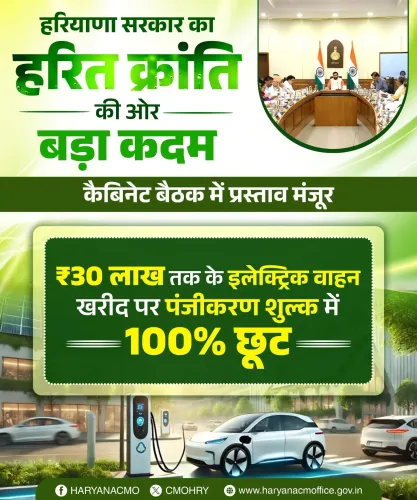
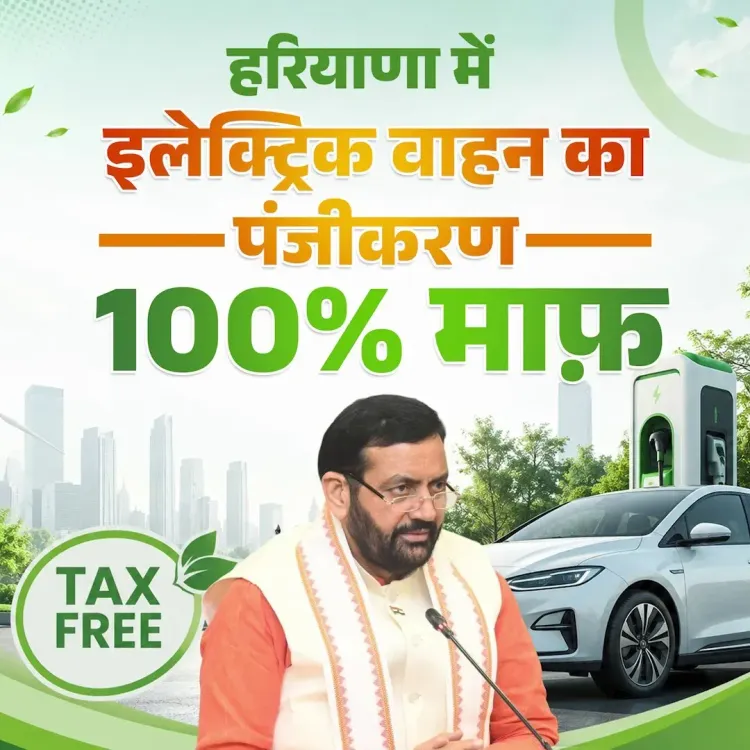
Haryana Chief Minister Nayab Singh Saini has approved a 100 per cent exemption on registration fees for electric vehicles priced up to ₹30 lakh, significantly lowering the upfront cost of EV ownership and extending the state's existing push for cleaner personal transport.
Key Takeaways
100% registration fee waiver approved for electric vehicles priced up to ₹30 lakh in Haryana.
The announcement was made by Chief Minister Nayab Singh Saini on 28 July 2026 .
The ₹30 lakh ceiling covers the majority of passenger EVs currently available in the Indian market.
The move builds on Haryana's Electric Vehicle Policy 2022 , which already included registration fee incentives.
The waiver complements central government subsidies under the FAME scheme for EV buyers and manufacturers.
A formal government notification detailing the implementation timeline is expected next.
Haryana just made it significantly cheaper to go electric. Chief Minister Nayab Singh Saini announced on Tuesday, 28 July 2026 that his government has approved a proposal granting 100 per cent exemption on registration fees for electric vehicles priced up to ₹30 lakh — a direct financial push to accelerate EV adoption across the state.
Posting in Hindi on X, CM Saini stated: 'हरियाणा में ₹30 लाख तक के इलेक्ट्रिक वाहनों के पंजीकरण पर 100 प्रतिशत छूट देने के प्रस्ताव को मंजूरी दे दी गई है' — 'The proposal to grant 100 per cent exemption on registration of electric vehicles up to ₹30 lakh in Haryana has been approved.' The price ceiling is broad enough to cover the vast majority of passenger EVs currently on the Indian market, from entry-level hatchbacks to premium SUVs.
What the waiver means for EV buyers in Haryana
Vehicle registration fees in India are calculated as a percentage of the on-road price and can run into tens of thousands of rupees on higher-value cars. A full waiver on vehicles up to ₹30 lakh effectively reduces the total cost of ownership from the moment of purchase — a tangible saving that complements central government subsidies under the FAME scheme, which supports both EV buyers and manufacturers.
For context, Haryana borders Delhi — one of India's most pollution-stressed urban corridors — and carries a heavy load of both industrial and personal transport emissions. Cutting the upfront cost of switching to electric is a lever the state government has used before: Haryana's Electric Vehicle Policy 2022 already included registration fee waivers as a core incentive, and Tuesday's approval appears to extend or reinforce that framework with a specific price-ceiling commitment.
Haryana joins a widening state-level EV push
The move fits a clear national pattern. Multiple Indian states have introduced registration tax exemptions for electric vehicles below defined price thresholds as part of coordinated efforts to cut vehicular emissions and build domestic EV demand. Haryana's ₹30 lakh ceiling is among the more generous thresholds announced at the state level, signalling an intent to pull mid-range and premium EV buyers — not just budget-segment customers — into the transition.
The immediate stakeholders are straightforward: EV buyers across Haryana stand to save on registration costs, while automobile dealers in the state can expect the waiver to function as a closing argument in showroom conversations. The state government will now be watched for the formal notification detailing the implementation timeline and any adjustments to registration revenue projections.
The registration fee is often the last friction point between a buyer and an EV purchase. Remove it, and the calculus changes fast.
Point of View
The Saini government is deliberately targeting the mid-to-premium segment — a strategic departure from policies that only subsidise budget EVs. The move also carries political logic: with Haryana sitting in Delhi's pollution shadow, visible climate-friendly action strengthens the ruling party's governance narrative ahead of any future electoral cycle. The real test will be in the implementation notification — specifically whether the waiver is time-bound or open-ended, and how the state plans to offset the registration revenue foregone.
NationPress
27 Oct 2026
Frequently Asked Questions
What is the Haryana EV registration fee waiver announced in July 2026?
Haryana Chief Minister Nayab Singh Saini approved a proposal granting 100 per cent exemption on registration fees for electric vehicles priced up to ₹30 lakh, making EV ownership cheaper from the point of purchase.
Which electric vehicles qualify for the Haryana registration fee exemption?
All electric vehicles with a price up to ₹30 lakh are eligible for the 100 per cent registration fee waiver under the approved proposal, covering most passenger EVs on the Indian market.
How does this waiver relate to Haryana's earlier EV policy?
Haryana's Electric Vehicle Policy 2022 already included registration fee waivers as an incentive. The July 2026 approval reinforces and formalises that approach with a specific ₹30 lakh price ceiling.
Does this Haryana EV waiver combine with central government FAME subsidies?
Yes. The state-level registration waiver is separate from central government subsidies under the FAME scheme, meaning eligible buyers could benefit from both simultaneously.
When will the Haryana EV registration waiver come into effect?
The proposal has been approved by the Haryana government, but a formal notification detailing the exact implementation date and procedural guidelines is still awaited.