CM Bhupendra Patel: 6,000+ of Gujarat's new Vidya Sahayaks are women
Synopsis
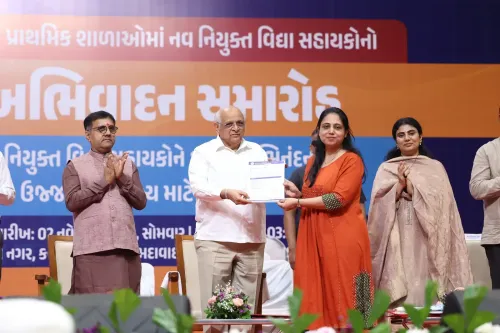
Gujarat CM Bhupendra Patel announced that more than 6,000 of the state's 8,000-plus newly appointed Vidya Sahayaks are women, connecting the milestone to Narendra Modi's Kanya Kelavani and Shala Praveshotsav drives launched in Gujarat in the early 2000s.
Key Takeaways
Gujarat has appointed 8,000-plus Vidya Sahayaks (contractual teaching assistants) in the latest recruitment round.
More than 6,000 of those appointees — roughly three in four — are women.
CM Bhupendra Patel publicly credited PM Narendra Modi's early-2000s Kanya Kelavani and Shala Praveshotsav drives as the policy foundation for this outcome.
The Vidya Sahayak scheme was created to address teacher shortages and support RTE compliance in Gujarat government schools.
The high share of women in teaching recruitment is seen as reinforcing girl-student enrolment and retention at the primary level.
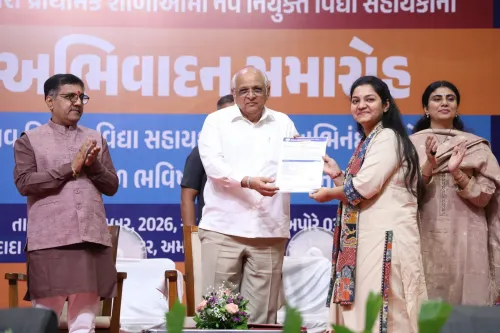
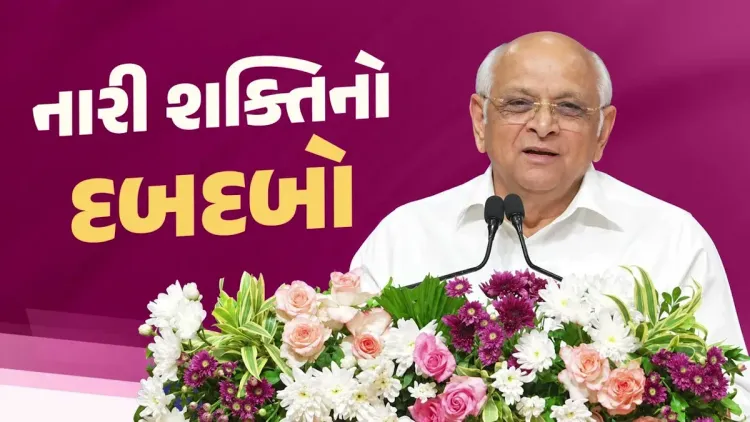
More than 6,000 of the 8,000-plus newly appointed Vidya Sahayaks in Gujarat are women — daughters and sisters, as Gujarat Chief Minister Bhupendra Patel put it — a number that turns a decades-old policy seed into visible, statewide harvest.
Posting on Monday, 2 November 2026, CM Patel wrote in Gujarati: 'રાજ્યમાં નવનિયુક્ત 8000+ વિદ્યાસહાયકોમાંથી 6,000 થી વધુ તો માત્ર આપણી દીકરીઓ અને બહેનો છે.' ('Of the 8,000-plus newly appointed Vidya Sahayaks in the state, more than 6,000 are our very own daughters and sisters.') He then drew a direct line back to the education drives launched by Prime Minister Narendra Modi during his tenure as Gujarat Chief Minister — calling those initiatives a banyan tree that has now grown vast.
What a Vidya Sahayak appointment actually means
The Vidya Sahayak scheme creates contractual teaching-assistant positions in Gujarat government schools, originally designed to plug chronic teacher shortages and help the state meet Right to Education norms. Appointments under this scheme have been a recurring feature of Gujarat's education policy since the mid-2000s, with successive state administrations expanding and periodically regularising the cadre. Landing one of these posts is, for many young women from semi-urban and rural Gujarat, a credible first step into a salaried, government-linked career.
The twin roots: Shala Praveshotsav and Kanya Kelavani
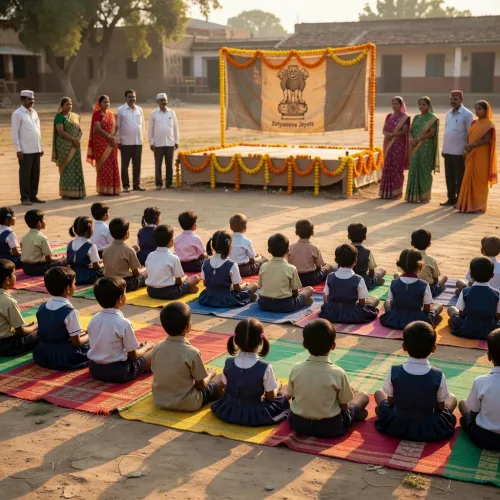
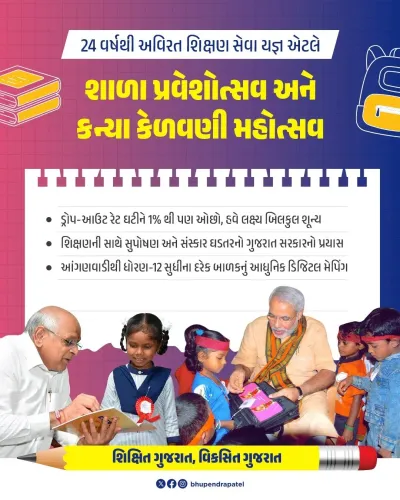
The two programmes CM Patel invoked have a well-documented origin. Shala Praveshotsav — an annual school-enrolment festival — and Kanya Kelavani — a targeted campaign for girl-child education and retention — were both launched in Gujarat in the early 2000s under then Chief Minister Narendra Modi. The goal was blunt and urgent: get children, especially girls, into classrooms and keep them there. Villages across the state held enrolment ceremonies; senior officials personally escorted children to school gates.
The cumulative effect, BJP governments in Gujarat have long argued, now shows up in exactly these kinds of recruitment cohorts — a generation of girls who stayed in school long enough to qualify for, and win, teaching posts of their own. That narrative arc is what CM Patel is pointing to when he calls the original policy a 'vat-vriksha' (banyan tree) — deep-rooted, wide-spreading, self-sustaining.
Women as teachers, not just as students
The emphasis on the gender composition of this recruitment batch matters beyond optics. Research on learning outcomes consistently links the presence of female teachers to higher enrolment and retention of girl students, particularly in rural primary schools. A cohort in which women account for roughly three in every four new Vidya Sahayak appointments shifts the demographic of Gujarat's classroom workforce in ways that compound over years. These women will also become, in many villages, among the most visibly employed women in their communities.
The political message is equally deliberate: linking today's numbers to Modi's early-2000s decisions frames three consecutive decades of BJP rule in Gujarat as a single, coherent education story — from enrolment drives to a feminised teaching force.
Watch for the next Shala Praveshotsav data release from the Gujarat education department, and any announcement on whether this latest Vidya Sahayak cohort moves toward regularisation — the question that matters most to the 8,000-plus people now holding these posts.
Point of View
Hard-to-dispute texture. It also pre-empts opposition critiques about contractual rather than permanent jobs by framing even contractual posts as empowerment milestones. The move to spotlight sisters and daughters rather than aggregate numbers signals that women's economic participation — not just enrolment statistics — is now the primary metric Gujarat's ruling establishment wants voters to associate with its education record.
NationPress
2 Nov 2026
Frequently Asked Questions
What is a Vidya Sahayak in Gujarat?
A Vidya Sahayak is a contractual teaching-assistant post created by the Gujarat government to address teacher shortages in state-run schools and to meet Right to Education staffing norms. The scheme has been a fixture of Gujarat's education policy since the mid-2000s.
What is Kanya Kelavani?
Kanya Kelavani is a Gujarat government programme focused specifically on girl-child education — encouraging enrolment, reducing dropout rates, and improving school retention among girls, particularly in rural areas. It was launched under then Chief Minister Narendra Modi in the early 2000s.
What is Shala Praveshotsav?
Shala Praveshotsav is an annual school-enrolment festival held in Gujarat in which government officials, including senior ministers, personally escort children to school on the first day to boost primary-school admissions. It was also initiated under Modi's Gujarat chief ministership.
How many women were appointed as Vidya Sahayaks in Gujarat's latest round?
According to CM Bhupendra Patel's post, more than 6,000 of the 8,000-plus newly appointed Vidya Sahayaks in Gujarat are women — approximately three in every four new appointees.
Why does having female teachers matter for girls' education?
Evidence from Indian primary schools shows that the presence of female teachers is associated with higher enrolment and lower dropout rates among girl students, especially in rural and semi-urban areas. A majority-female Vidya Sahayak cohort is therefore expected to reinforce the gains of programmes like Kanya Kelavani over the coming years.