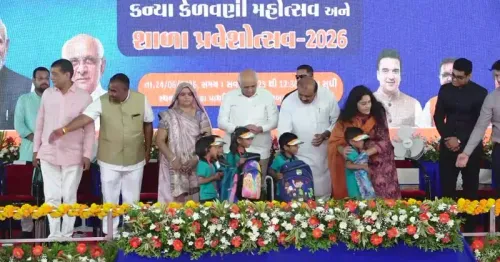
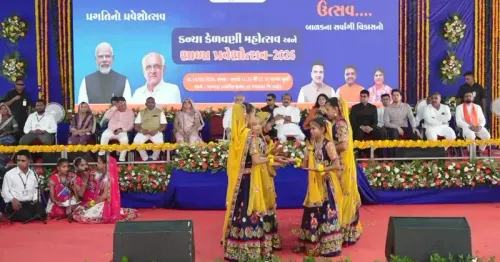
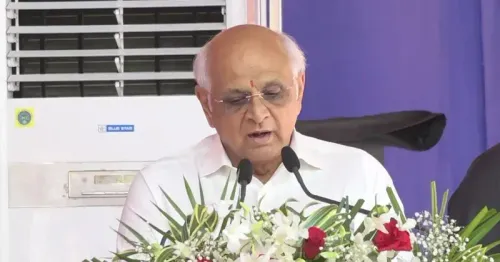
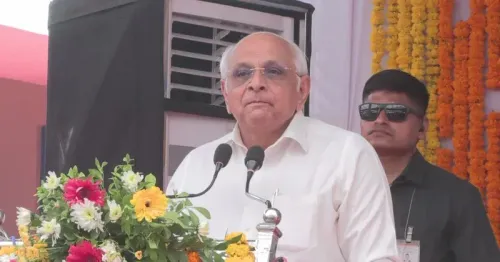
CM Bhupendra Patel at Shala Praveshotsav in Dahod's Garbada
Synopsis
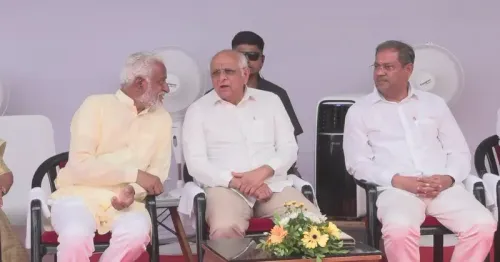
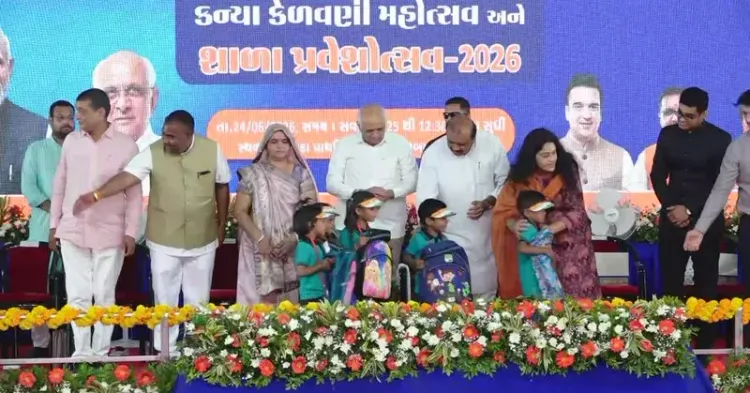
Chief Minister Bhupendra Patel attended the Shala Praveshotsav and Kanya Kelavani Mahotsav at Gangarda Primary School in Dahod's Garbada taluka on 24 June 2026, continuing Gujarat's decades-long annual drive to boost primary enrolment and girl-child education in the state's tribal heartland.
Key Takeaways
Chief Minister Bhupendra Patel was personally present at Gangarda Primary School , Garbada taluka , Dahod district , on 24 June 2026 .
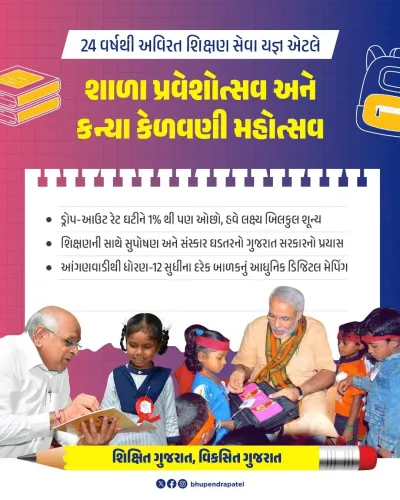
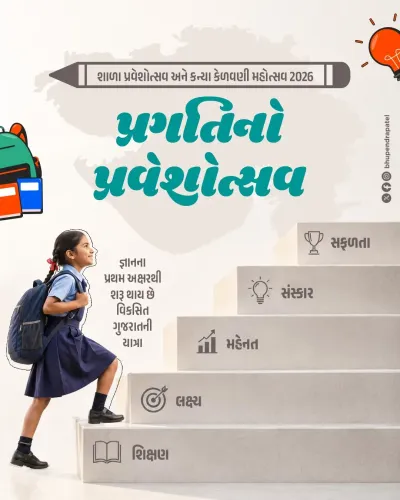
Shala Praveshotsav is Gujarat's annual June programme to boost primary school admissions and reduce dropouts, running since the early 2000s.
Kanya Kelavani Mahotsav is a dedicated state festival to improve girl-child enrolment and retention, prioritising tribal districts like Dahod.
Dahod is a Scheduled Tribe-dominated district in eastern Gujarat where literacy and female enrolment have historically lagged state averages.
The event was broadcast live, extending its reach to a wider digital audience beyond the immediate gathering.
District enrolment data is expected to be released in July–August 2026 , providing a measure of the festival's on-ground impact.
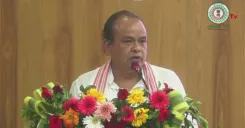
The Chief Minister's Office of Gujarat announced on Wednesday, 24 June 2026, that Chief Minister Bhupendrabhai Patel was present at Gangarda Primary School in Garbada taluka, Dahod district, for the Shala Praveshotsav (School Enrolment Festival) and Kanya Kelavani Mahotsav (Girl Child Education Festival), marking the start of the new academic year's enrolment drive in one of Gujarat's most educationally underserved tribal regions.
The official post, shared live, described the Chief Minister's presence as 'prerак upasthiti' ('inspiring presence'), underscoring the state's intent to signal high-level political commitment to primary education in the tribal belt.
Context
Dahod district is a Scheduled Tribe-dominated area in eastern Gujarat where literacy rates and female school enrolment have historically lagged behind state averages. Garbada taluka is one of the administrative subdivisions within Dahod that has been a recurring focus of state education outreach. The choice of Gangarda Primary School as the venue signals a deliberate effort to spotlight grassroots infrastructure in remote tribal blocks.
The event was broadcast live, reflecting the government's push to extend the visibility of the programme beyond the immediate gathering to a wider digital audience.
Policy Backdrop
Shala Praveshotsav is an annual Gujarat government programme conducted every June since the early 2000s, designed to encourage fresh school admissions and curb dropout rates at the primary level across rural and tribal blocks. Kanya Kelavani Mahotsav was institutionalised in the mid-2000s as a parallel drive specifically aimed at closing gender gaps in enrolment and retention, with tribal districts such as Dahod identified as priority zones.
Together, the two festivals represent a long-standing state strategy that combines community mobilisation, symbolic political participation, and on-ground administrative outreach to lift overall literacy and gender parity indicators. Chief Minister Bhupendrabhai Patel, who has held office since September 2021, has continued this tradition of senior leadership attending enrolment events to reinforce their public salience.
Stakeholders and Impact
The primary beneficiaries of the programme are rural schoolchildren — particularly girl students from tribal communities in Dahod — whose families are encouraged by community leaders and government officials to enrol children at the start of the academic year. The festival format, with its celebratory tone, is designed to reduce social and cultural hesitancy around sending children, especially girls, to school.
Local school teachers, anganwadi workers, and district administration officials play a central role in organising the event and following up on enrolment commitments made during the festival. The high-visibility attendance of the Chief Minister is intended to motivate both officials and communities.
What's Next
District-level enrolment data for Dahod is typically compiled and released in July–August, which will offer a clearer picture of how this year's festival translated into actual admissions on the ground. Observers will also watch whether the state expands similar events to additional talukas within Dahod and other tribal districts in the coming weeks of the enrolment season.
The broader pattern suggests that Gujarat's education outreach in tribal belts will continue to rely on this combination of political visibility and community mobilisation as a core delivery mechanism for improving access to primary schooling.
Point of View
Particularly for girls, remains a visible state priority rather than a bureaucratic routine. Dahod's persistent gaps in female enrolment make it a strategically important venue: progress here carries both policy and optics weight. The live broadcast dimension adds a newer layer, reflecting a shift toward real-time public accountability for such events. Whether the festival format alone can sustain meaningful long-term enrolment gains in tribal belts remains the central question that district-level data releases later this summer will begin to answer.
NationPress
24 Jun 2026
Frequently Asked Questions
What is Shala Praveshotsav in Gujarat?
Shala Praveshotsav is an annual Gujarat government programme held every June to encourage fresh school admissions and reduce dropout rates at the primary level, particularly in rural and tribal areas. It has been conducted since the early 2000s.
What is Kanya Kelavani Mahotsav?
Kanya Kelavani Mahotsav is a Gujarat state festival dedicated to improving the enrolment and retention of girl children in schools. It was institutionalised in the mid-2000s and is especially focused on tribal districts where gender gaps in education are wider.
Why was the event held in Dahod district?
Dahod is a Scheduled Tribe-dominated district in eastern Gujarat where literacy rates and female school enrolment have historically been below the state average, making it a priority area for the government's education outreach programmes.
Who attended the Shala Praveshotsav at Gangarda Primary School on 24 June 2026?
Chief Minister Bhupendra Patel attended the event at Gangarda Primary School in Garbada taluka, Dahod district, on 24 June 2026, as announced by the Chief Minister's Office of Gujarat.
When will enrolment results from Shala Praveshotsav 2026 be available?
District-level enrolment data for Dahod and other areas is typically compiled and released in July–August, which will indicate how effectively this year's festival converted community participation into actual school admissions.