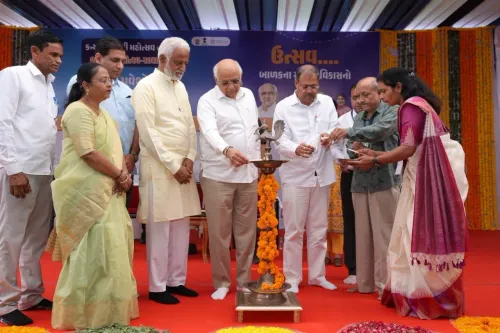
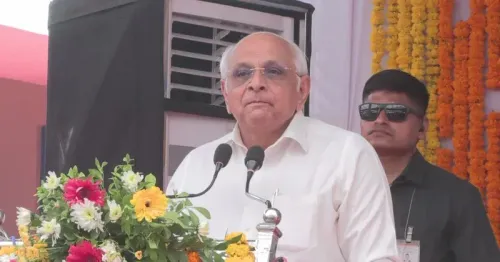
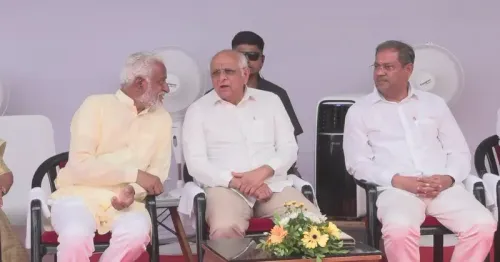
CM Bhupendra Patel attends Shala Praveshotsav in Dahod's Garbada
Synopsis
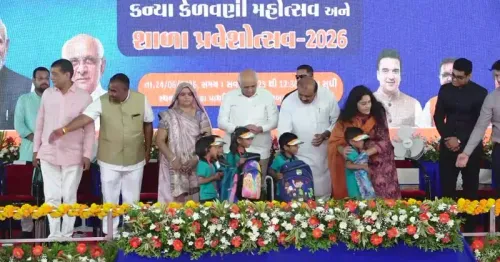
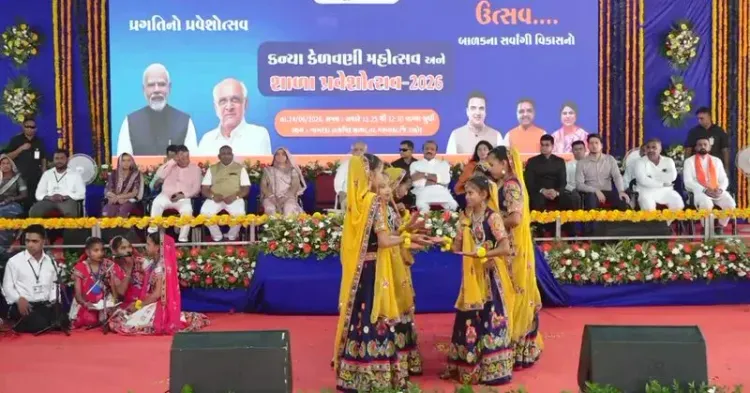
Gujarat Chief Minister Bhupendra Patel attended the annual Shala Praveshotsav and Kanya Kelavani Mahotsav at Gangarda Primary School in Dahod's Garbada taluka on 24 June 2026, continuing a two-decade state drive to boost elementary enrollment and girl-child education in tribal districts.
Key Takeaways
CM Bhupendra Patel personally attended the school enrollment festival at Gangarda Primary School , Garbada taluka , Dahod on 24 June 2026 .
Shala Praveshotsav and Kanya Kelavani Mahotsav were launched in 2003-04 and have run annually for over two decades.
Dahod district has a predominantly tribal population and has historically recorded lower literacy rates than the Gujarat state average.
The festivals combine senior-leader school visits with on-ground monitoring of enrollment and retention targets for the new academic year.
Key outcomes to watch include 2026-27 district-wise enrollment data and any expansion of incentives such as free transport or scholarships in tribal blocks.
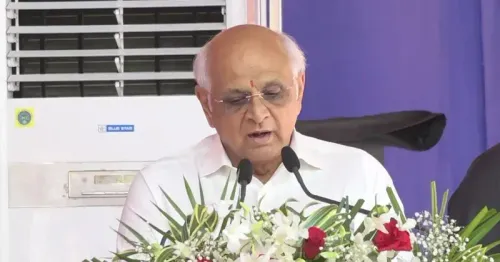
Gujarat Chief Minister Bhupendra Patel attended the Shala Praveshotsav and Kanya Kelavani Mahotsav programme at Gangarda Primary School in Garbada taluka, Dahod district, on Wednesday, 24 June 2026, marking the state government's annual drive to boost school enrollment and girl-child education at the start of the academic year.
Context
The Chief Minister's post, shared live from the venue, announced his presence at the Gangarda primary school event in Gujarati: 'Shala Praveshotsav ane Kanya Kelavani Mahotsav karyakram maa upasthiti' — attendance at the school enrollment festival and girl education festival programme. Dahod, located in eastern Gujarat, has a predominantly tribal population and has historically recorded lower literacy indicators compared to the state average.
The visit places senior state leadership directly in one of Gujarat's most educationally underserved districts, signalling the government's continued focus on bridging regional and gender gaps in elementary schooling.
Policy Backdrop
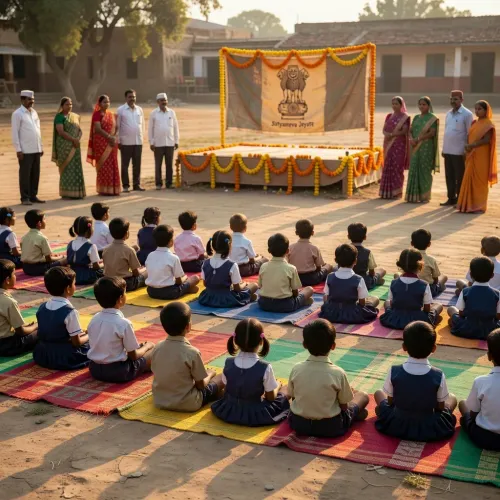
Shala Praveshotsav and Kanya Kelavani Mahotsav were launched as statewide annual festivals in 2003-04 under then-Chief Minister Narendra Modi to drive near-universal elementary enrollment and improve female literacy across Gujarat. For over two decades, these events have combined ceremonial school visits by senior leaders with on-ground monitoring of enrollment and retention targets.
The festivals have been especially focused on tribal districts such as Dahod, where social and economic barriers historically kept girl children out of classrooms. The dual format — one festival for general enrollment, one specifically for girls — reflects a deliberate policy of addressing gender gaps alongside overall access.
Stakeholders and Impact
The primary beneficiaries of these annual drives are tribal students and girl children in rural Gujarat, particularly those in blocks where school dropout rates remain above the state average. Participation by the Chief Minister in person at a taluka-level primary school carries symbolic and administrative weight, drawing district officials' attention to enrollment targets for the 2026-27 academic year.
Local communities in Garbada taluka stand to benefit from the heightened official focus, which typically accompanies announcements or reinforcement of incentives such as free textbooks, uniforms, and mid-day meals designed to improve retention alongside initial enrollment.
What's Next
The 2026-27 district-wise enrollment figures for Gujarat, particularly for tribal districts including Dahod, will be a key indicator of whether this cycle of the festival has translated into measurable gains. Any expansion of existing incentives — such as free transport in tribal blocks or enhanced scholarships for girl students — will be watched closely by education administrators and civil society groups working in the region.
With CM Patel personally present at a grassroots venue, the event also sets a public accountability benchmark: the administration's own visibility at the school level makes enrollment outcomes for Garbada taluka a data point to track in the months ahead.
Point of View
The Shala Praveshotsav model is well-institutionalised, but the real test remains retention beyond the first week of school. The CM's visit raises the political stakes for district officials to deliver measurable outcomes in 2026-27.
NationPress
24 Jun 2026
Frequently Asked Questions
What is Shala Praveshotsav in Gujarat?
Shala Praveshotsav is an annual school enrollment festival launched by the Gujarat government in 2003-04 to achieve near-universal elementary enrollment. Senior leaders, including the Chief Minister, visit schools at the start of the academic year to ceremonially welcome new students and monitor enrollment targets.
What is Kanya Kelavani Mahotsav?
Kanya Kelavani Mahotsav is a statewide festival held alongside Shala Praveshotsav specifically to promote girl-child education and reduce gender gaps in school enrollment, particularly in rural and tribal areas of Gujarat.
Why did CM Bhupendra Patel visit Dahod for the education festival?
Dahod is an eastern Gujarat district with a large tribal population and historically lower literacy indicators, making it a priority area for the state's education drives. CM Patel's presence at Gangarda Primary School in Garbada taluka underscores the government's focus on bridging educational gaps in underserved tribal regions.
When did Shala Praveshotsav start in Gujarat?
Shala Praveshotsav was launched in 2003-04 under then-Chief Minister Narendra Modi as part of a broader effort to drive school enrollment and improve literacy across Gujarat.
What benefits do students in tribal areas get during Shala Praveshotsav?
Students in tribal and rural areas typically receive incentives such as free textbooks, uniforms, and mid-day meals as part of the enrollment drive. Expansion of benefits like free transport in tribal blocks is also periodically reviewed during and after these festivals.