CM Bhupendra Patel Backs MSMEs, Unveils Gujarat Industrial Vision
Synopsis
Gujarat CM Bhupendra Patel released the Central Gujarat Region Souvenir and presented MSME Regional Awards at the VGRC event on June 30, anchoring the state's industrial ambition in the Viksit Gujarat Industrial Policy 2026, which targets 21 sectors including Green Energy and Semiconductors.
Key Takeaways
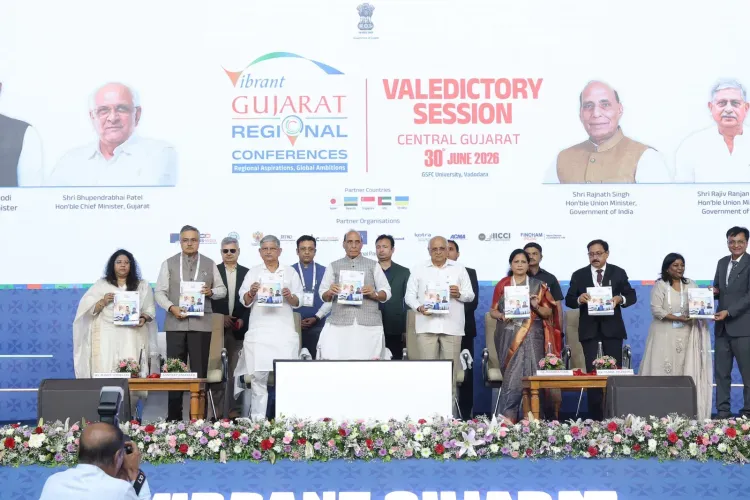
CM Bhupendra Patel released the Central Gujarat Region Souvenir and presented MSME and Artisan Regional Awards at the VGRC Central Gujarat event on June 30, 2026 .
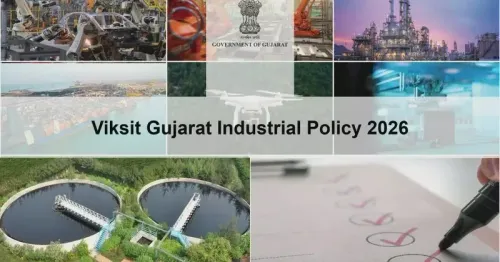
The Viksit Gujarat Industrial Policy 2026 identifies 21 thrust sectors , ranging from Green Energy and Semiconductors to Sports Goods manufacturing , with the highest tier of state incentives.
New Smart GIDC estates will provide world-class plug-and-play infrastructure targeted at MSMEs and artisans in the state.
The state's industrial strategy is framed around three pillars: Make in Gujarat, Innovate in Gujarat, Export from Gujarat .
The policy explicitly aims to build a future-ready workforce and a resilient supply chain to position Gujarat as a node in the global industrial network.
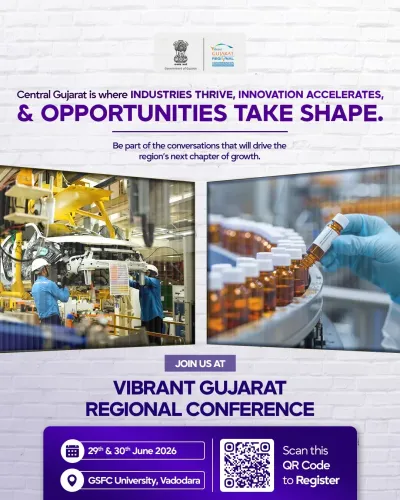
The event is part of the Vibrant Gujarat Regional Chapter (VGRC) series, which feeds into the larger biennial Vibrant Gujarat Global Summit investment pipeline.
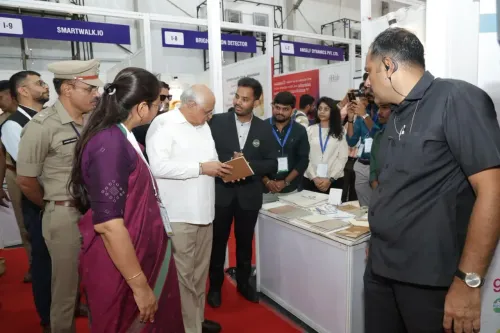
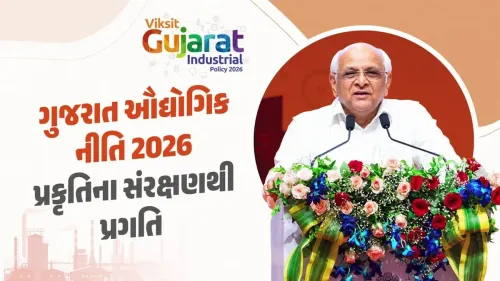
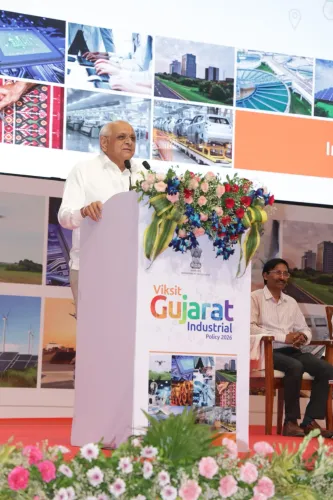
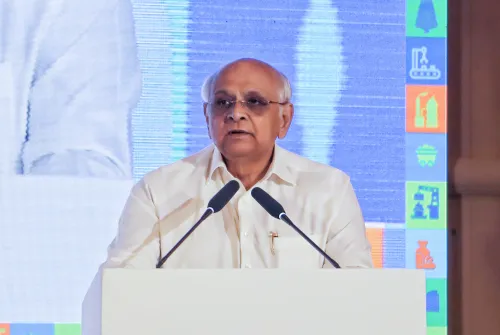
Gujarat Chief Minister Bhupendra Patel on Tuesday, June 30, 2026, celebrated the state's manufacturing momentum by releasing the Central Gujarat Region Souvenir at the Vibrant Gujarat Regional Chapter (VGRC) event, honouring MSMEs and artisans with Regional Awards and reaffirming the state's ambition to become a global industrial hub.
Context
CM Patel framed the event around Prime Minister Narendra Modi's 'Aatmanirbharta' (self-reliance) philosophy, crediting grassroots entrepreneurs and artisans as 'the real engines of our economy.' The VGRC Central Gujarat gathering brought together industrialists, MSME owners, and policymakers to assess the region's industrial progress and chart a forward-looking strategy.
The Chief Minister announced that the state is committed to providing 'world-class infrastructure' through new Smart GIDC (Gujarat Industrial Development Corporation) estates, signalling a push to upgrade industrial zones beyond legacy facilities.
Policy Backdrop
The cornerstone policy cited by CM Patel is the 'Viksit Gujarat Industrial Policy 2026,' under which the state has identified 21 thrust sectors eligible for the 'highest level of incentives.' The sectors span a wide spectrum — from Green Energy and Semiconductors at the technology frontier to Sports Goods manufacturing at the grassroots end, reflecting a deliberate attempt to balance high-tech investment attraction with employment-intensive industries.
The three-pronged strategic slogan articulated by the CM — 'Make in Gujarat, Innovate in Gujarat, and Export from Gujarat' — mirrors the Centre's 'Make in India' framework but localises it with an explicit export orientation, aligning with India's broader goal of expanding its share in global merchandise trade.
The GIDC Smart Estates initiative is positioned as the infrastructure backbone of this policy, intended to offer plug-and-play facilities, digital connectivity, and logistics support to MSMEs that have historically struggled with fragmented infrastructure.
Stakeholders and Impact
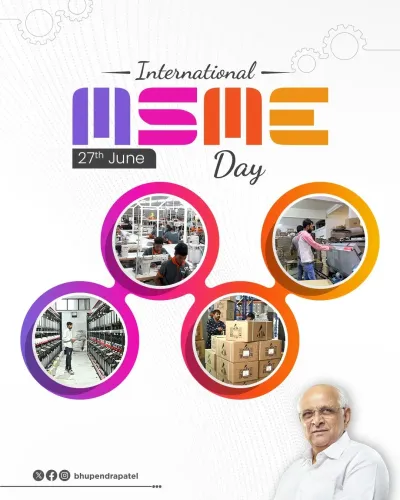
MSMEs and artisans in the Central Gujarat region — covering districts such as Vadodara, Anand, Kheda, and Panchmahal — stand as the immediate beneficiaries. The Regional Awards recognise enterprises that have demonstrated innovation, export performance, or employment generation, providing them visibility and policy acknowledgement.
For larger investors, the identification of 21 thrust sectors under the Viksit Gujarat Industrial Policy 2026 provides a clear signal of where state incentives — including capital subsidies, power tariff concessions, and land allocation preferences — will be concentrated. Sectors like Semiconductors and Green Energy are particularly significant given global supply-chain realignments and India's push to reduce import dependence in critical technologies.
The workforce development emphasis — building a 'future-ready workforce and a resilient supply chain' — suggests that skill-training institutions and vocational programmes in the region may see increased state attention and budgetary allocation in the coming months.
What's Next
The Vibrant Gujarat Global Summit, the flagship biennial investment conclave, serves as the larger canvas for commitments announced at regional chapters like this one. Announcements made at VGRC events typically feed into the investment pipeline that is showcased at the global summit, meaning that MSME and sectoral commitments flagged on June 30 could be formalised into MoUs and project launches in the months ahead.
With 21 thrust sectors now formally identified and Smart GIDC estates on the anvil, the next visible milestones will likely be land allocation notifications, incentive framework circulars, and the operationalisation of at least pilot Smart GIDC estates — developments that industry bodies and investors in Central Gujarat will watch closely.
Point of View
A constituency that has historically felt peripheral to the state's headline investment numbers. By anchoring the Viksit Gujarat Industrial Policy 2026 around 21 thrust sectors and Smart GIDC estates, the BJP government in Gujarat is attempting to demonstrate that its industrial policy has both a high-tech ceiling (Semiconductors, Green Energy) and a grassroots floor (Sports Goods, artisan clusters). This dual-track messaging serves an important political function ahead of any forthcoming electoral cycle, reassuring small producers that large-investment summits are not exclusively for marquee corporations. The explicit export orientation — 'Export from Gujarat' — also signals alignment with the Centre's push to grow India's merchandise export share, positioning the state as a proactive partner in national economic strategy rather than a passive beneficiary.
NationPress
30 Jun 2026
Frequently Asked Questions
What is the Viksit Gujarat Industrial Policy 2026?
The Viksit Gujarat Industrial Policy 2026 is the state government's industrial incentive framework that identifies 21 thrust sectors — including Green Energy, Semiconductors, and Sports Goods manufacturing — and offers the highest level of state incentives to attract investment and boost manufacturing in Gujarat.
What are Smart GIDC estates in Gujarat?
Smart GIDC estates are upgraded industrial zones being developed by the Gujarat Industrial Development Corporation, designed to provide world-class plug-and-play infrastructure, digital connectivity, and logistics support, particularly targeted at MSMEs and artisan enterprises.
What is the Vibrant Gujarat Regional Chapter (VGRC)?
The VGRC is a series of regional events held across Gujarat that build up to the biennial Vibrant Gujarat Global Summit. These chapters engage local industrialists, MSMEs, and policymakers to showcase regional investment potential and recognise outstanding enterprises through awards.
Which sectors are identified as thrust sectors under Gujarat's industrial policy?
Gujarat's Viksit Gujarat Industrial Policy 2026 has identified 21 thrust sectors. The CM specifically mentioned Green Energy, Semiconductors, and Sports Goods manufacturing as examples, with the full list spanning high-technology and employment-intensive industries.
What did CM Bhupendra Patel announce at the VGRC Central Gujarat event?
CM Bhupendra Patel released the Central Gujarat Region Souvenir, presented MSME and Artisan Regional Awards, and outlined Gujarat's industrial strategy centred on the Viksit Gujarat Industrial Policy 2026, Smart GIDC estates, and the goal of making Gujarat a global manufacturing and export hub.