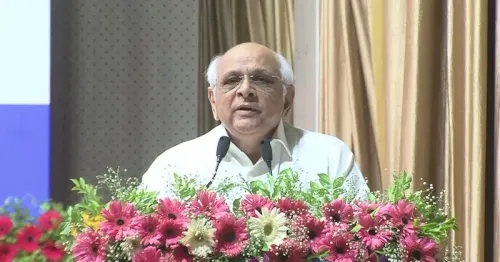
CM Bhupendra Patel Calls for Collective Ownership of Swachh Gujarat
Synopsis
Gujarat Chief Minister Bhupendra Patel on 1 July 2026 called on every resident to personally own the responsibility of cleanliness, invoking the 'Swachh Gujarat' goal in a Gujarati-language post on X backed by a video, deepening the state's alignment with the Swachh Bharat Mission's behavioural-change phase.
Key Takeaways
CM Bhupendra Patel posted on X on 1 July 2026 calling for individual ownership of cleanliness across Gujarat .
The post was written in Gujarati and accompanied by a video , targeting a broad public audience.
The message aligns with Swachh Bharat Mission Phase 2.0 , which focuses on behavioural change and community sustainability rather than infrastructure alone.
Gujarat has consistently ranked among top-performing states in annual Swachh Survekshan cleanliness surveys.
The Chief Minister framed cleanliness as a collective civic duty — 'together, we all have to build a Clean Gujarat' — not merely a government responsibility.
The appeal may precede intensified municipal drives and could foreshadow new state-level sanitation targets in upcoming policy announcements.
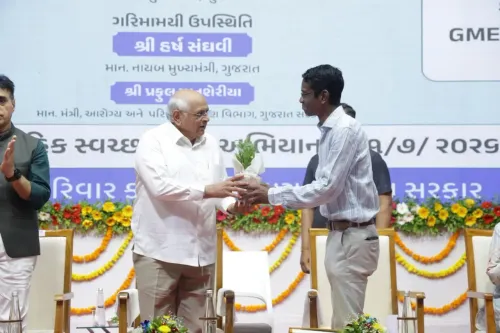
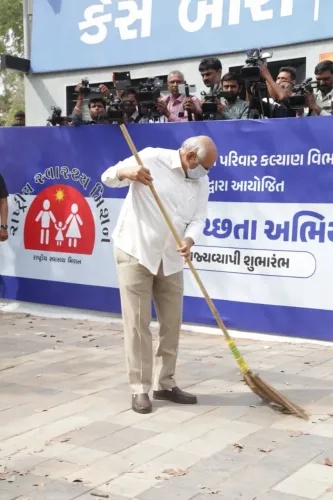
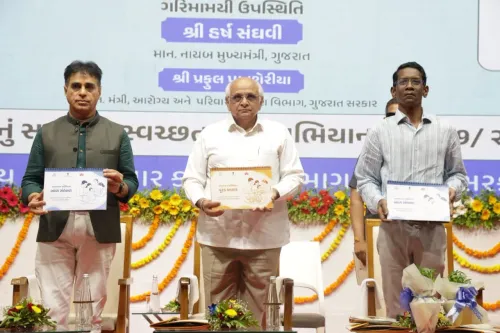
Gujarat Chief Minister Bhupendra Patel on Wednesday, 1 July 2026, issued a public call for collective civic responsibility around cleanliness, urging every resident of the state to personally own the goal of a clean Gujarat. Writing in Gujarati on X, the Chief Minister framed sanitation not merely as awareness but as individual accountability — a message aimed at sustaining the behavioural shift that national cleanliness programmes have long sought to embed.
Context
The post, written in Gujarati, translates broadly as: 'સ્વચ્છ ગુજરાત' — 'Everyone knows that cleanliness must be maintained... but what is necessary is that all of us take responsibility on our own shoulders and keep cleanliness. Together, we all have to build a Clean Gujarat.' The Chief Minister's choice of the vernacular underscores that the message is directed at the general public rather than officials or institutions alone.
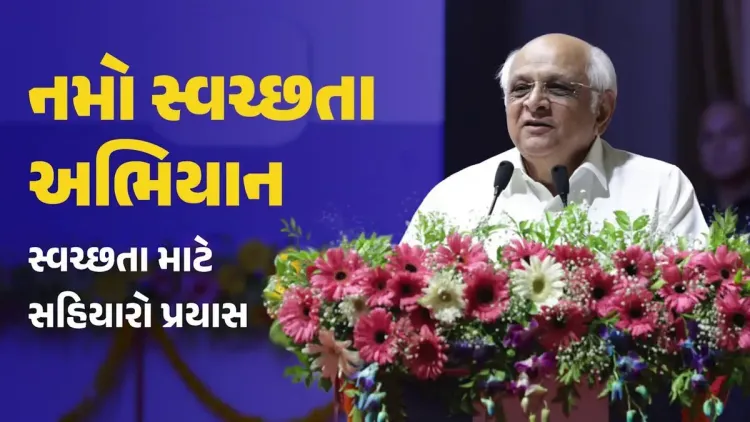
The accompanying video, shared without additional caption, is understood to reinforce the cleanliness theme visually. The combination of a personal-accountability narrative and a video format signals an intent to reach a broad, non-urban audience across Gujarat.
Policy Backdrop
The post aligns closely with the Swachh Bharat Mission, the national sanitation programme launched in October 2014 by the Government of India to eliminate open defecation and improve solid waste management. After its first phase targeted infrastructure — toilets, waste processing units — Phase 2.0 shifted emphasis to sustainability and community-led behavioural change, precisely the register CM Patel invokes here.
Gujarat has historically performed well in the annual Swachh Survekshan cleanliness rankings, with several of its urban local bodies featuring among top-ranked cities. The state's urban development machinery has repeatedly been cited for solid waste processing coverage. By reinforcing the 'own it yourself' message, the Chief Minister is signalling that infrastructure gains must now be matched by durable civic habits.
Bhupendra Patel has served as Chief Minister since September 2021 and has consistently aligned state-level communication with the BJP's flagship national schemes, including Swachh Bharat, making cleanliness a recurring motif in his public outreach.
Stakeholders and Impact
The primary audience is Gujarat's citizens — urban residents, resident welfare associations, and rural communities — alongside urban local bodies responsible for last-mile waste collection and processing. When a Chief Minister publicly frames cleanliness as a personal duty rather than a government service, it places moral pressure on both individuals and civic institutions to close the gap between policy targets and ground reality.
For urban local bodies, the message is also a quiet performance signal: cleanliness rankings like Swachh Survekshan directly reflect on city administrations, and a Chief Ministerial nudge typically precedes intensified municipal drives. Citizens' groups and NGOs working on waste segregation and community sanitation are likely to amplify the call as part of ongoing outreach campaigns.
What's Next
Attention will now turn to whether this public appeal is followed by concrete state-level announcements — new waste management targets, expanded door-to-door collection coverage, or incentives for clean neighbourhoods — potentially through Gujarat's urban development policy or its annual budget cycle. The next edition of the Swachh Survekshan rankings will serve as the most visible scorecard for how effectively the state translates this messaging into measurable outcomes.
As BJP-ruled states continue to use cleanliness rankings as a marker of governance performance, CM Patel's post sets the tone for what could be a renewed, community-ownership-focused push in Gujarat through the coming months.
Point of View
He insulates the government from ranking disappointments while simultaneously energising grassroots compliance. The Gujarati-language framing is deliberate: it bypasses English-speaking urban commentators and speaks directly to the semi-urban and rural voters whose behaviour most influences cleanliness survey outcomes. This positions the BJP's Gujarat unit to claim credit for any ranking improvements while distributing accountability broadly across the electorate.
NationPress
1 Jul 2026
Frequently Asked Questions
What did Gujarat CM Bhupendra Patel say about cleanliness?
CM Bhupendra Patel called on all Gujarat residents to personally take responsibility for maintaining cleanliness, stating that everyone must come together to build a 'Swachh Gujarat' or Clean Gujarat.
What is the Swachh Bharat Mission and how does it relate to Gujarat?
The Swachh Bharat Mission is a national sanitation programme launched in October 2014 to eliminate open defecation and improve waste management. Gujarat has been among the high-performing states in the mission's annual cleanliness rankings.
What is Swachh Survekshan?
Swachh Survekshan is an annual cleanliness ranking survey conducted by the Government of India that rates cities and states on sanitation, waste processing, and citizen feedback. Gujarat's cities have regularly featured among the top performers.
Why did CM Patel post in Gujarati about cleanliness?
Posting in Gujarati allows the Chief Minister to communicate directly with the broader Gujarat public, including rural and semi-urban residents, reinforcing the behavioural-change goals of the Swachh Bharat Mission at the community level.
What could follow CM Patel's Swachh Gujarat appeal?
The public appeal may be followed by intensified municipal cleanliness drives, new waste management targets, or policy announcements in Gujarat's urban development budget, with the next Swachh Survekshan rankings serving as the key performance indicator.