CM Bhupendra Patel Chairs Gujarat Border Security Grid Meet
Synopsis
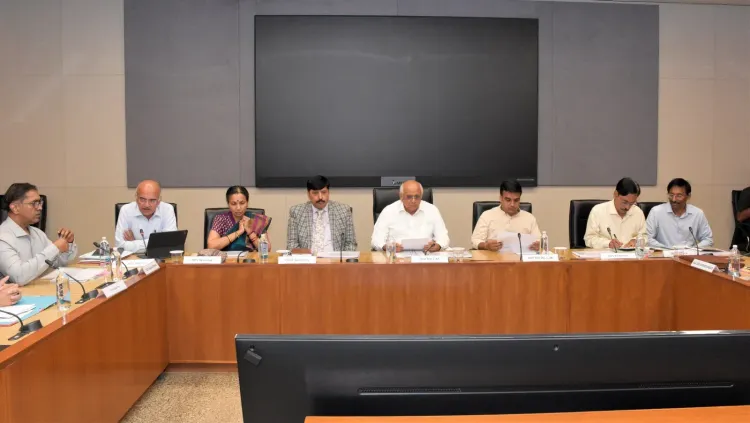
Chief Minister Bhupendra Patel and Deputy CM Harsh Sanghvi held a high-level security meeting in Gandhinagar on September 30, 2026, to strengthen the Chatushkoni Suraksha Grid — a four-pillar border security framework conceived by Union Home Minister Amit Shah — targeting infiltration, narcotics, and economic crimes in Gujarat's border districts.
Key Takeaways
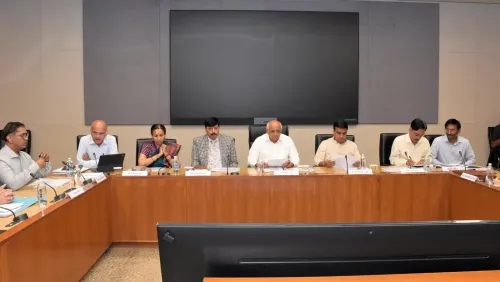
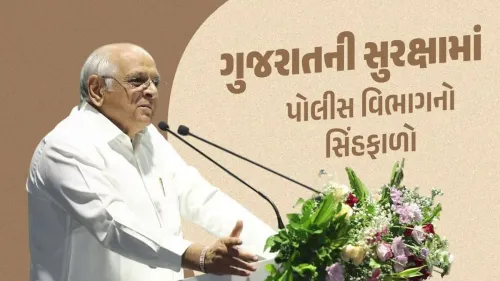
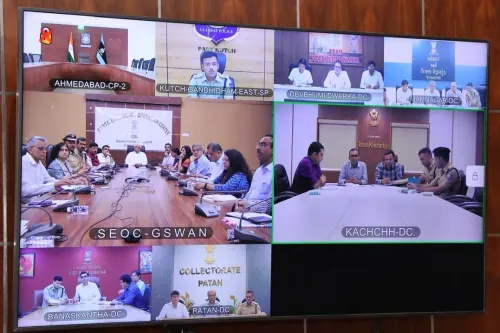
High-level meeting on the Chatushkoni Suraksha Grid was held in Gandhinagar on September 30, 2026 , chaired by CM Bhupendra Patel and Deputy CM Harsh Sanghvi .
The grid operates on the 'One Border — One Picture — One Chain of Action' doctrine, integrating central agencies and state police under a unified command.
Six focus areas were deliberated: infiltration, narcotics smuggling, population balance, economic crimes, and related illegal border activities.
The four-pillar framework — border guarding forces, central agencies, state administration, and citizens — was originally conceived by Union Home Minister Amit Shah at a meeting in Bhuj .
CM Patel called for intensified 360-degree surveillance across all border districts and issued a zero-tolerance warning against illegal activities in Gujarat.
Gujarat has drawn a hard line at its borders. Chief Minister Bhupendra Patel and Deputy Chief Minister Harsh Sanghvi convened a high-level meeting in Gandhinagar on September 30, 2026, to sharpen the state's quadrilateral security grid — a four-pillar framework designed to lock down infiltration, narcotics trafficking, demographic imbalance, and economic crimes in Gujarat's border districts.
The Chief Minister's Office of Gujarat confirmed that the session focused on the Chatushkoni Suraksha Grid (Quadrilateral Security Grid), built around the doctrine of 'One Border — One Picture — One Chain of Action' — a unified command philosophy that insists every agency sees the same threat picture and acts in one coordinated chain.
Six threat fronts, one integrated response
The Gandhinagar meeting drilled into six priority areas: infiltration, narcotics smuggling, population balance, economic crimes, and two further related categories of illegal activity along the border belt. Senior officials from state police and central agencies mapped out round-the-clock surveillance protocols and enforcement actions against each of these threat vectors.
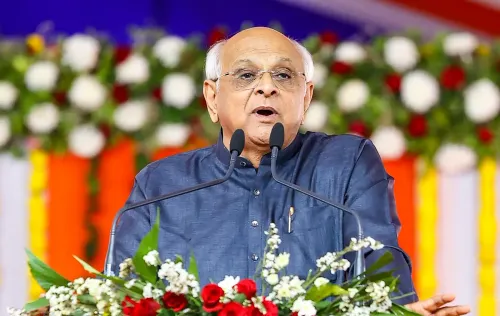
CM Patel praised the ongoing coordination between central agencies and Gujarat Police, and issued a pointed warning. 'We want to send a clear message,' he said, 'that Gujarat will no longer tolerate illegal activities, infiltration, narcotics trafficking or illegal encroachments. Such activities will not be allowed to continue here.' The language was deliberate — a signal aimed as much at actors beyond the border as at enforcement machinery within the state.
Amit Shah's Bhuj blueprint behind the grid
The Chatushkoni Suraksha Grid traces directly to Union Home Minister Amit Shah, who introduced the concept at a meeting held earlier in the border district of Bhuj, in the Kutch region. Shah outlined four load-bearing pillars: border guarding forces, central intelligence and enforcement agencies, the state and district administration, and — strikingly — ordinary citizens. The citizen pillar formalises community surveillance as a formal component of the security architecture, not merely a goodwill add-on.
Bhuj sits at the strategic heart of Gujarat's interface with the Pakistan border. The Kutch frontier has historically been a pressure point for smuggling corridors and cross-border movement, making it the natural launch point for a doctrine the state now intends to scale across all border districts.
360-degree watch becomes official policy
The September 30 meeting's central deliverable was intensifying what the CM called a '360-degree surveillance approach' — meaning no sector of the border belt, and no category of illegal activity, falls outside the grid's field of view. Each department was directed to deepen its contribution to this all-encompassing watch rather than operate in independent silos.
Gujarat's push for integrated border management mirrors a broader national pattern across India's western frontier states, where multi-agency coordination frameworks are increasingly seen as the only credible answer to threats that routinely cross jurisdictional lines. The question now is whether the grid's four pillars — especially the citizen component — can be activated at speed across every border district in the state.
With the doctrine set, the doctrine's execution clock has started.
Point of View
Doctrine-driven border security architecture — a meaningful institutional upgrade. The explicit inclusion of citizens as a fourth pillar is politically significant: it extends state surveillance reach without proportionally expanding the formal security apparatus, a cost-efficient model other border states may replicate. CM Patel's zero-tolerance language, framed as a message to would-be infiltrators, also carries domestic political weight ahead of any future electoral cycles in border-sensitive Kutch constituencies. The real test, however, lies in whether the 360-degree mandate translates into measurable inter-agency operational tempo or remains an aspirational framework.
NationPress
30 Sept 2026
Frequently Asked Questions
What is the Chatushkoni Suraksha Grid in Gujarat?
The Chatushkoni Suraksha Grid is Gujarat's quadrilateral border security framework built on four pillars: border guarding forces, central agencies, state and district administration, and citizens. It was conceptualised by Union Home Minister Amit Shah at a meeting in Bhuj and is designed to unify surveillance and enforcement across border districts.
What is 'One Border One Picture One Chain of Action'?
'One Border — One Picture — One Chain of Action' is the operational doctrine of the Chatushkoni Suraksha Grid, requiring all agencies along a border stretch to share a single threat picture and respond through one coordinated chain of command, eliminating departmental silos.
Which six areas did the Gujarat border security meeting focus on?
The September 30, 2026 Gandhinagar meeting focused on infiltration, narcotics smuggling, population balance, economic crimes, and related categories of illegal border activity, directing intensified 360-degree surveillance on each.
What did CM Bhupendra Patel say at the security meeting?
CM Patel praised central and state agency coordination and declared a zero-tolerance stance, stating that Gujarat will not allow illegal activities, infiltration, narcotics trafficking or illegal encroachments, and that such activities will no longer be tolerated in the state.
Why was Bhuj significant in the Gujarat border security framework?
Bhuj, located in the Kutch district bordering Pakistan, was the site of the earlier meeting where Union Home Minister Amit Shah introduced the Chatushkoni Suraksha Grid concept, making it the strategic origin point of the entire framework now being implemented statewide.