CM Bhupendra Patel Closes Shala Praveshotsav 2026 in Sanand
Synopsis
Chief Minister Bhupendra Patel closed the three-day Shala Praveshotsav and Kanya Kelavani Mahotsav 2026 on 25 June by personally enrolling children at two schools in Sanand taluka, Ahmedabad — combining Gujarat's annual education drive with a visit to one of India's fastest-growing industrial corridors.
Key Takeaways
Chief Minister Bhupendra Patel visited Pimpan village and Sanand town in Ahmedabad district on 25 June 2026 for the final day of the festival.
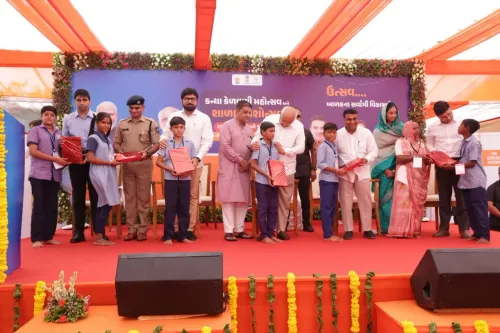
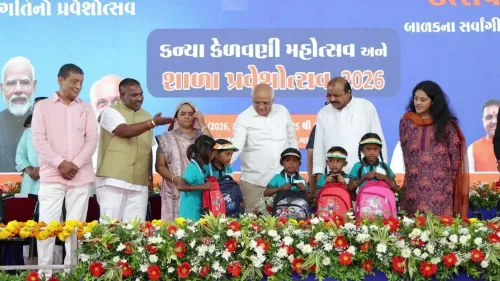
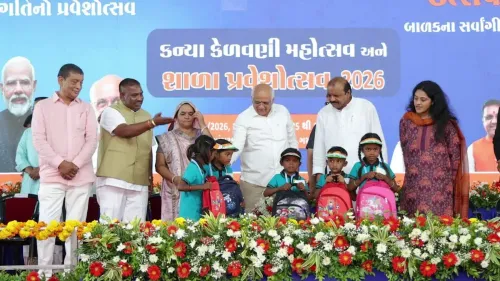
He enrolled children across multiple grades at Adarsh Pimpan Primary School and Sanand Model School .
Shala Praveshotsav and Kanya Kelavani Mahotsav are annual June drives running since the early 2000s to achieve universal primary enrolment and promote girls' education.
Sanand is a major industrial hub hosting large automotive plants and was chosen to illustrate the link between industrial growth and educational investment.
The visit was part of the Chief Minister's #CMDistrictDiary outreach programme, which deploys senior leadership to districts for direct administrative engagement.
District-wise enrolment figures for 2026–27 are expected to be published in the weeks following the festival's conclusion.
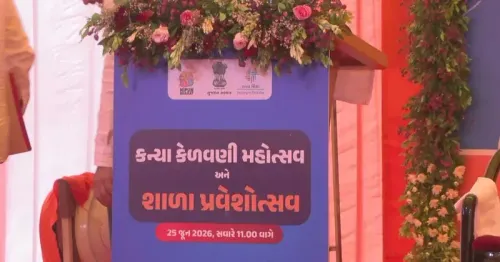
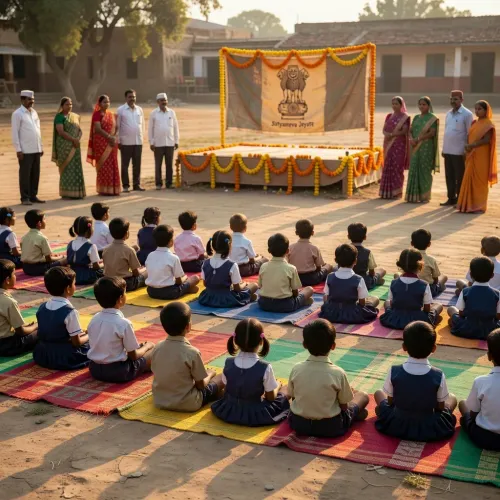
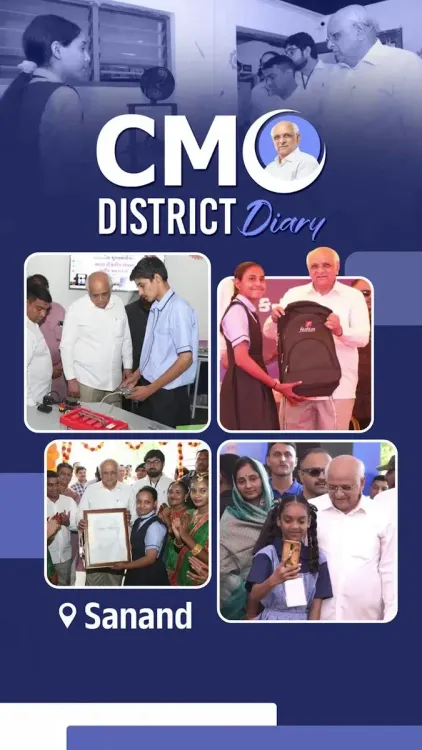
The Chief Minister's Office of Gujarat announced on Thursday, 25 June 2026 that Chief Minister Bhupendra Patel personally enrolled children across multiple classes at two schools in Sanand taluka, Ahmedabad district — Adarsh Pimpan Primary School in Pimpan village and the Sanand Model School — marking the third and final day of 'Shala Praveshotsav and Kanya Kelavani Mahotsav 2026'.
What Happened
The Chief Minister's Office shared that Patel formally admitted children of various grades to their new academic year, inaugurating what the post described as their 'shikshan yatra' (educational journey). The occasion was characterised by, in the post's words, 'nirdosh hasya thi zhalhalata baalman' — 'innocent, radiant young minds' — alongside confident presentations by girl students and what officials called a convergence of education, culture, and development in Sanand.
The event carried the hashtag #ShalaPraveshotsav2026 and formed part of the Chief Minister's #CMDistrictDiary series of district-level public outreach visits.
Context
Shala Praveshotsav is an annual Gujarat government drive held every June to enrol children in primary schools at the start of the academic year. It has run since the early 2000s and is designed to achieve universal elementary enrolment across the state. Kanya Kelavani Mahotsav — the Girls' Education Festival — runs concurrently, focusing specifically on reversing dropout rates among girl students and encouraging families in rural and semi-urban areas to send daughters to school.
Senior ministers and the Chief Minister typically visit specific districts on each of the three days, lending the drive visible political weight and direct administrative accountability at the taluka level.
Policy Backdrop
Gujarat's Model School programme, expanded from 2010 onward, upgrades secondary school infrastructure in industrial and semi-urban locations. Sanand was a deliberate choice: the taluka became a major automotive and industrial hub after Tata Motors and other manufacturers set up plants there from 2008 onward, transforming it into one of the fastest-growing industrial corridors in western India.
State policy has consistently paired this rapid industrialisation with targeted education drives, framing school enrolment festivals as a mechanism to cultivate a locally skilled workforce aligned with the demands of the surrounding industry. The Pimpan village primary school visit extended this logic to a rural pocket within the same taluka.
Stakeholders and Impact
The immediate beneficiaries are primary school children and girl students in Sanand taluka, along with their families in rural and semi-urban Ahmedabad district. For girl students in particular, the Kanya Kelavani component signals state commitment to continued enrolment support and retention beyond the first day of school.
Broader stakeholders include local industry, which depends on an educated local population for entry-level and skilled roles, and the Gujarat government's own administrative machinery, which uses district-level participation rates as a performance metric across talukas.
What's Next
With the three-day festival now concluded, attention will turn to the publication of district-wise enrolment figures for the 2026–27 academic year, which typically follow within weeks of the festival's close. Any new infrastructure commitments under the Model School scheme — particularly in high-growth industrial talukas such as Sanand — are also expected to be announced in the post-festival administrative review cycle.
Point of View
The government reinforces a 'Gujarat model' branding that ties economic corridors to human capital development. The Kanya Kelavani component adds a gender-equity layer that successive administrations have used to demonstrate inclusive growth credentials. What remains to be tested is whether enrolment momentum translates into retention and learning outcomes, particularly for girl students in rural pockets such as Pimpan.
NationPress
26 Jun 2026
Frequently Asked Questions
What is Shala Praveshotsav in Gujarat?
Shala Praveshotsav is an annual Gujarat government initiative held every June to formally enrol children in primary schools at the start of the academic year, running since the early 2000s to achieve universal elementary enrolment.
What is Kanya Kelavani Mahotsav?
Kanya Kelavani Mahotsav is a statewide Girls' Education Festival run concurrently with Shala Praveshotsav, focused on encouraging families — especially in rural areas — to enrol and retain girl students in school.
Why did CM Bhupendra Patel visit Sanand for Shala Praveshotsav 2026?
Patel visited Sanand on 25 June 2026, the third and final day of the festival, to personally enrol children at Adarsh Pimpan Primary School and Sanand Model School, underscoring the state's emphasis on pairing industrial development in Sanand with educational investment.
What is the Gujarat Model School programme?
The Gujarat Model School programme, expanded from 2010 onward, upgrades secondary school infrastructure — particularly in industrial and semi-urban locations — to provide better facilities and learning environments.
When will Gujarat's 2026-27 school enrolment figures be released?
District-wise enrolment figures for the 2026–27 academic year are typically published within weeks of the Shala Praveshotsav festival's conclusion in June.