Gujarat approves ₹1,700-crore Mahi River barrage-cum-bridge in Anand
Synopsis
Gujarat has greenlit a ₹1,700-crore barrage-cum-bridge on the Mahi River that is simultaneously a water security intervention, a salinity fix, and an industrial connectivity upgrade. With 183 million cubic metres of freshwater capture, 15 lakh beneficiaries, and a 75-km road distance reduction to the Dahej PCPIR, this single project is designed to solve three distinct regional crises at once.
Key Takeaways
The Gujarat government granted in-principle approval on 25 June for the ₹1,700-crore Badalpur-Kareli Barrage-cum-Bridge over the Mahi River in Anand district .
The structure will feature 70 gates , a 2-km bridge segment , and a freshwater storage capacity of 183 million cubic metres .
Over 15 lakh people across 80 villages in Anand , Vadodara , and Bharuch districts are expected to receive potable water.
The project aims to combat salinity intrusion that currently reaches 50 kilometres inland to the Sindhrot weir .
Road distance between Khambhat-Tarapur and the Jambusar-Dahej industrial corridor will be cut by approximately 75 kilometres .
Survey work will begin on a priority basis; construction is subject to detailed surveys and further clearances.
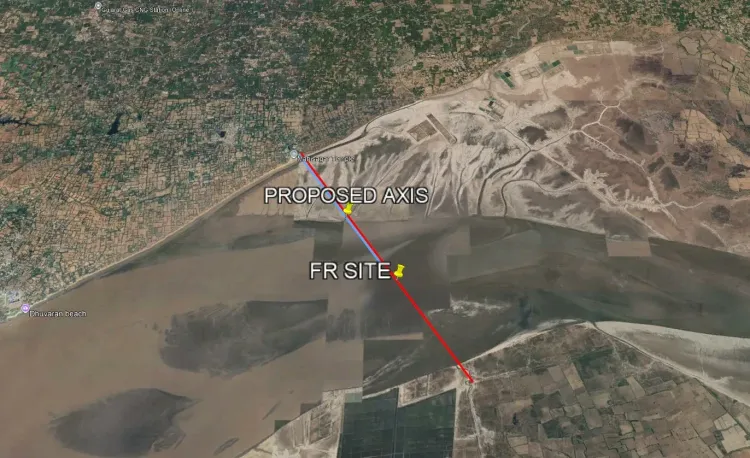
The Gujarat government on Thursday, 25 June granted in-principle approval for a ₹1,700-crore barrage-cum-bridge project over the Mahi River near Dhuvaran in Anand district, a move aimed at bolstering regional connectivity and securing freshwater supply across central and southern Gujarat. The proposed Badalpur-Kareli Barrage-cum-Bridge is among the most ambitious water infrastructure projects in the state in recent years.
Project Design and Key Features
According to Anand Irrigation Department Executive Engineer Rajat Chaudhary, the structure will incorporate a two-kilometre bridge segment spanning approximately 4.5 kilometres within the riverbed. Around 70 gates will be installed to regulate the flow of the Mahi River and maximise freshwater storage during the monsoon season.
Protection bunds will be constructed across remaining stretches, alongside flood-control systems designed to ensure safety during peak rainfall. The barrage is expected to create a storage capacity of approximately 183 million cubic metres of freshwater — water that currently flows unused into the sea every monsoon.
Tackling Salinity and Water Security
One of the project's central objectives is curbing salinity intrusion, which has long degraded agricultural land in the region due to tidal influence. Seawater reportedly reaches as far inland as the Sindhrot weir, nearly 50 kilometres from the coast, contributing to soil degradation across several areas. Regulated freshwater storage is expected to reduce salinity levels over the long term.
The region currently depends heavily on the Kadana dam for drinking water. The new barrage is designed to provide a more localised, reliable source of freshwater for domestic, agricultural, and industrial use — reducing that dependence significantly.
Scale of Beneficiaries
Officials project that the project will benefit around 16,000 hectares of agricultural land and improve groundwater quality, enabling farmers to undertake multiple cropping cycles. More than 15 lakh people across approximately 80 villages — including 42 in Anand district, 30 in Vadodara district, and 8 in Bharuch district — are expected to receive potable water. The wider impact zone encompasses 409 villages and 32 ponds across the three districts.
Connectivity and Industrial Impact
Beyond water management, the barrage-cum-bridge is designed as a major transport artery. Authorities estimate that the distance between Khambhat and Tarapur and the Jambusar-Dahej industrial corridor will be reduced by around 75 kilometres, cutting travel time and fuel consumption while improving freight movement to the Dahej Petroleum, Chemicals and Petrochemicals Investment Region (PCPIR).
Broader socio-economic benefits anticipated include increased agricultural productivity, stronger industrial connectivity, and improved rural employment — factors that officials believe could slow migration to urban centres. The large water body created by the barrage is also expected to support future tourism development in the region.
Next Steps
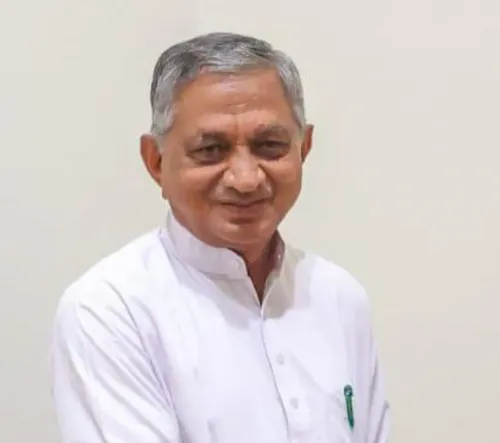
The approval, which followed efforts by State Minister for Food and Civil Supplies Raman Solanki, marks the beginning of a detailed planning phase. Survey work is to be undertaken on a priority basis, with construction contingent on the completion of further surveys and regulatory clearances.
Point of View
Salinity intrusion, and industrial logistics — into a single capital outlay. That ambition is also its risk: multi-objective infrastructure projects in India have a history of delays when survey timelines slip and inter-departmental coordination falters. The in-principle approval is the easy part; the real test will be whether detailed surveys and environmental clearances move at the pace the state is signalling. With the Dahej PCPIR's freight competitiveness partly contingent on last-mile connectivity, the industrial case for speed is strong — but Gujarat's irrigation backlog suggests execution, not intent, is the variable to watch.
NationPress
26 Jun 2026
Frequently Asked Questions
What is the Badalpur-Kareli Barrage-cum-Bridge project in Gujarat?
It is a ₹1,700-crore infrastructure project approved by the Gujarat government on 25 June, combining a barrage and a bridge over the Mahi River near Dhuvaran in Anand district. It aims to store 183 million cubic metres of freshwater, combat salinity intrusion, and reduce industrial travel distances by 75 kilometres.
How many people will benefit from the Mahi River barrage project?
More than 15 lakh people across approximately 80 villages in Anand, Vadodara, and Bharuch districts are expected to receive potable water. The wider impact zone covers 409 villages and 32 ponds across the three districts.
What is the salinity problem the project aims to solve?
Seawater reportedly intrudes as far as 50 kilometres inland to the Sindhrot weir due to tidal influence, degrading agricultural soil in the Charotar-Bharuch belt. Regulated freshwater storage from the barrage is expected to push back salinity levels over time.
How will the barrage-cum-bridge improve industrial connectivity?
The bridge component will reduce the travel distance between Khambhat-Tarapur and the Jambusar-Dahej industrial corridor by around 75 kilometres, cutting freight time and fuel costs for industries including those in the Dahej Petroleum, Chemicals and Petrochemicals Investment Region (PCPIR).
What are the next steps for the Gujarat Mahi River barrage project?
Following in-principle approval, survey work will be undertaken on a priority basis. Construction will commence only after detailed surveys and further regulatory clearances are completed, with no construction start date officially announced yet.