CM Bhupendra Patel Hails India-UK FTA as Win for Gujarat
Synopsis
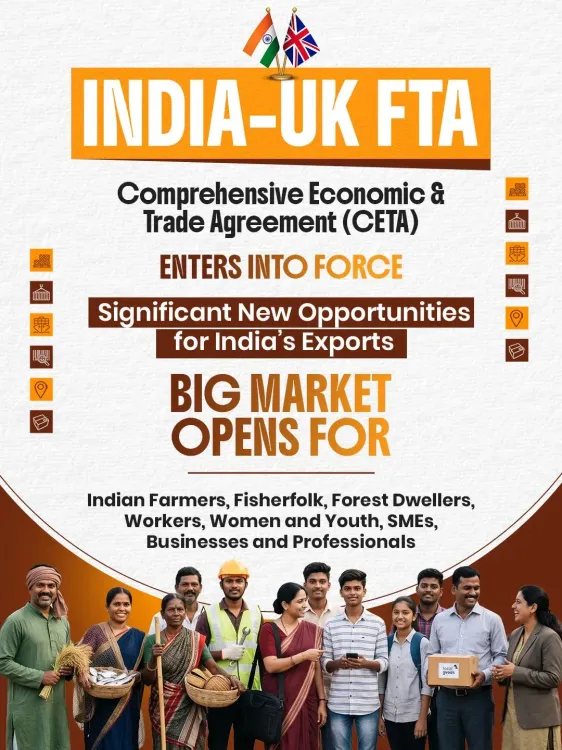
Gujarat Chief Minister Bhupendra Patel on 15 July 2026 hailed the India-UK Free Trade Agreement as a landmark step for India's global economic ambitions, saying Gujarat — as India's growth engine — is primed to benefit across pharma, textiles, MSMEs and skilled professions.
Key Takeaways
Gujarat CM Bhupendra Patel publicly welcomed the India-UK Free Trade Agreement on 15 July 2026 .
Patel credited PM Narendra Modi's leadership for the deal and linked it to the Viksit Bharat vision for a developed India by 2047 .
Gujarat is positioned as a key beneficiary given its strengths in pharmaceuticals, textiles and engineering goods .
The agreement is expected to open opportunities for farmers, MSMEs, entrepreneurs and skilled professionals .
India-UK FTA negotiations were formally launched in January 2022 , following earlier rounds post-Brexit.
Sector-specific tariff schedules and state-level export promotion responses from Gujarat remain the key items to watch.
Gujarat Chief Minister Bhupendra Patel on Wednesday, 15 July 2026, welcomed the India-UK Free Trade Agreement, calling it a landmark step towards strengthening India's global economic footprint and highlighting the state's readiness to leverage the deal's potential for farmers, MSMEs, entrepreneurs and skilled professionals.
Context
Posting on X, CM Patel said the agreement 'opens new avenues for trade, investment and innovation, while creating immense opportunities for our farmers, MSMEs, entrepreneurs and skilled professionals.' He credited the deal to the 'visionary leadership' of Prime Minister Narendra Modi and framed it as a contributor to the broader national goal of Viksit Bharat — India's vision for a developed economy by 2047.
Patel specifically positioned Gujarat as 'India's growth engine,' asserting the state is 'well-positioned to harness the immense potential of this historic agreement.'
Policy Backdrop
Formal negotiations for the India-UK FTA were launched in January 2022, following the United Kingdom's exit from the European Union. The talks have been part of a wider push by the Modi government to diversify India's trade relationships and secure preferential market access across multiple geographies.
India had already concluded a Comprehensive Economic Partnership Agreement (CEPA) with Australia in 2022 and a separate CEPA with the UAE in the same year, signalling an accelerated diplomatic and economic outreach strategy. The India-UK FTA, if ratified, would be among the most significant bilateral trade deals India has signed, given the scale of economic ties between the two nations.
The Modi government has consistently framed such agreements as instruments of tariff reduction and expanded market access — pillars that align with the domestic manufacturing and export targets embedded in the Viksit Bharat roadmap.
Stakeholders and Impact
Gujarat's industrial profile makes it a natural beneficiary of any enhanced trade framework with the United Kingdom. The state is a significant hub for pharmaceuticals, textiles and engineering goods — all sectors that stand to gain from reduced tariff barriers and streamlined rules of origin under a comprehensive trade deal.
Farmers and MSME exporters have been specifically cited by CM Patel as groups poised to benefit, reflecting concerns that trade deals deliver gains beyond large corporates. Skilled professionals — including those in services and technology — are also expected to see expanded mobility and professional recognition provisions, a recurring priority in India-UK negotiations.
What's Next
Attention will now turn to the sector-specific tariff schedules and rules-of-origin provisions once the full text of the agreement is made public. Observers will watch whether Gujarat rolls out state-level export promotion schemes to capture early gains from the deal.
For the broader Viksit Bharat agenda, the India-UK FTA represents a significant diplomatic milestone — but its real-world impact on farmers, MSMEs and professionals will depend on implementation timelines and the depth of market access concessions secured on both sides.
Point of View
Reinforcing the BJP's narrative that its governance at both the national and state levels delivers tangible trade outcomes. By naming farmers, MSMEs and skilled professionals in the same breath, Patel signals an intent to broaden the political dividend of the FTA beyond the industrial lobby. The post also serves as a reminder that Gujarat — historically positioned as India's premier investment destination — intends to be first in line when export opportunities emerge. Contextually, this fits a pattern where state BJP leaders amplify central policy milestones to reinforce party credibility ahead of any electoral cycle.
NationPress
15 Jul 2026
Frequently Asked Questions
What is the India-UK Free Trade Agreement?
The India-UK Free Trade Agreement is a bilateral trade deal between India and the United Kingdom aimed at reducing tariffs and expanding market access for goods, services and investment. Negotiations were formally launched in January 2022 after the UK's exit from the European Union.
How will the India-UK FTA benefit Gujarat?
Gujarat stands to benefit through its established base in pharmaceuticals, textiles and engineering goods, all of which could see reduced tariff barriers under the agreement. CM Bhupendra Patel has also highlighted gains for farmers, MSMEs, entrepreneurs and skilled professionals in the state.
What did CM Bhupendra Patel say about the India-UK FTA?
CM Patel called the agreement 'a landmark step towards strengthening India's global economic footprint' and said Gujarat, as India's growth engine, is 'well-positioned to harness the immense potential of this historic agreement.'
What is Viksit Bharat and how does the FTA connect to it?
Viksit Bharat is India's national vision to become a fully developed economy by 2047. CM Patel linked the India-UK FTA to this goal, saying the agreement contributes to 'the journey of Viksit Bharat' by expanding trade, investment and innovation opportunities.
When were India-UK FTA negotiations launched?
Formal negotiations for the India-UK Free Trade Agreement were launched in January 2022, building on earlier rounds of engagement that followed the United Kingdom's departure from the European Union.