CM Bhupendra Patel Highlights Valsad's Industrial and Farm Growth
Synopsis
Gujarat CM Bhupendra Patel spotlights Valsad district's dual growth story: over 55,000 industries anchored by Vapi GIDC, a Rs. 1,331-crore lift irrigation project for 46 tribal villages, and a bullet-train corridor set to accelerate connectivity.
Key Takeaways
Gujarat CM Bhupendra Patel posted on 3 November 2026 outlining Valsad district's multi-sectoral development push.
Vapi GIDC hosts more than 55,000 industries in chemicals, pharmaceuticals and textiles, employing lakhs directly.
The Damanganga Lift Irrigation Scheme , valued at Rs.
1,331 crore , will irrigate 17,000 hectares across 46 villages in Dharampur and Kaprada talukas and recharge groundwater.
The Ahmedabad–Mumbai bullet-train corridor , sanctioned in 2015 , includes stations near Vapi-Valsad that are expected to boost local connectivity.
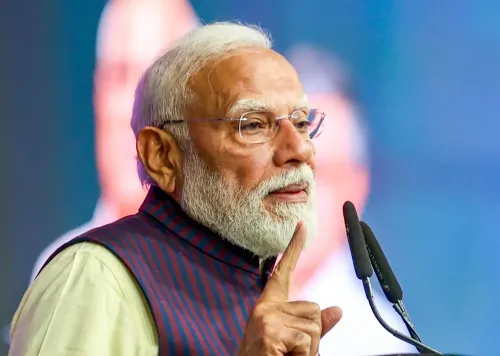
CM Patel anchored the district's growth narrative to PM Modi's 'Sabka Saath, Sabka Vikas, Sabka Vishwas, Sabka Prayas' inclusive-development framework.
Southern Gujarat's Valsad district is being positioned as a multi-sectoral growth engine — industries humming at Vapi GIDC, tribal farmlands queued for a transformational irrigation upgrade, and a bullet-train corridor arriving on the horizon. Gujarat Chief Minister Bhupendra Patel made the case for Valsad's accelerating trajectory in a post on X on Tuesday, 3 November 2026, anchoring his message to Prime Minister Narendra Modi's governing philosophy.
Vapi GIDC's global industrial footprint
Writing in Gujarati, CM Patel described how the district today hosts more than 55,000 small and large industries providing direct employment to lakhs of people — making it, in his words, 'a strong pillar of Gujarat's industrial development.' Vapi GIDC, the district's industrial nerve centre, carries world-level recognition in chemical, pharmaceutical and textile manufacturing. The estate, developed under the Gujarat Industrial Development Corporation framework, has spent decades building export-linked supply chains that now give Valsad an outsized economic weight relative to its size.
Patel framed all of this through PM Modi's four-part mantra — 'Sabka Saath, Sabka Vikas, Sabka Vishwas, Sabka Prayas' (inclusive partnership, inclusive development, inclusive trust, inclusive effort) — signalling that industrial muscle alone does not define the government's ambition for the district.
Rs. 1,331-crore lifeline for Dharampur-Kaprada's tribal belt
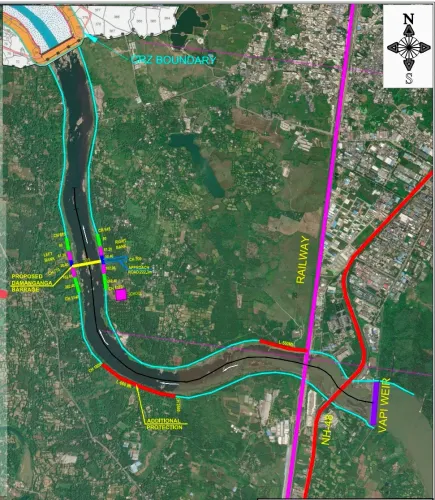
The most consequential announcement embedded in the post is the Damanganga Lift Irrigation Scheme, budgeted at Rs. 1,331 crore. The project is designed to carry water to 46 villages across Dharampur and Kaprada talukas, irrigating 17,000 hectares of agricultural land and simultaneously recharging groundwater aquifers in an area that has historically struggled with water scarcity.
The two talukas sit in Valsad's tribal interior — a geography that industrial growth in coastal Vapi has only partially touched. Gujarat governments have expanded lift irrigation into the tribal belt since the early 2000s, but a single scheme of this scale and cost would represent a step-change in coverage. Farmers and tribal communities in Dharampur-Kaprada stand to move from rain-dependent cultivation toward year-round cropping if the scheme executes on schedule.
Bullet train corridor set to reshape Vapi-Valsad's connectivity
Patel also pointed to the Ahmedabad–Mumbai High Speed Rail project — India's first bullet-train corridor, sanctioned as a flagship national infrastructure initiative in 2015 — as a coming catalyst for the district. With stations planned near Vapi-Valsad, the corridor promises to compress travel times along India's busiest economic spine, making the district's industrial clusters more accessible to buyers, suppliers, and talent pools in both metro cities.
The convergence is deliberate in the CM's framing: a world-class manufacturing zone in Vapi, revitalised farmland in the tribal hinterland, and high-speed rail stitching it all into the national economy. 'From agriculture to industries, a new vitality of development has emerged in Valsad,' Patel concluded.
The execution clock now matters most — tendering and works timelines for the Damanganga scheme, and land-acquisition progress on the bullet-train corridor through Valsad, will determine how quickly the vision converts into measurable change on the ground.
Point of View
331-crore Damanganga scheme is politically pointed: Dharampur-Kaprada is a tribal constituency where irrigation access directly translates into votes and livelihoods. Weaving in the bullet-train corridor links local delivery to a national-prestige project, making the growth narrative feel both grounded and aspirational. Ahead of any electoral cycle, the framing keeps Modi's inclusive-growth brand front and centre while attributing on-ground delivery to the state government — a dual credit claim Gujarat BJP has refined over two decades.
NationPress
3 Nov 2026
Frequently Asked Questions
What is the Damanganga Lift Irrigation Scheme in Valsad?
The Damanganga Lift Irrigation Scheme is a Rs. 1,331-crore Gujarat government project designed to irrigate 17,000 hectares of farmland across 46 villages in the Dharampur and Kaprada talukas of Valsad district, while also recharging groundwater in the tribal belt.
Will the Ahmedabad-Mumbai bullet train stop at Valsad or Vapi?
The Ahmedabad–Mumbai High Speed Rail corridor , sanctioned in 2015 , includes stations planned near Vapi-Valsad . The project is India's first bullet-train line and is expected to significantly improve connectivity for the district's industrial clusters.
Why is Vapi GIDC important for Gujarat's economy?
Vapi GIDC is one of India's largest industrial estates, globally recognised in chemical, pharmaceutical and textile manufacturing . Valsad district as a whole hosts more than 55,000 industries , making it a critical pillar of Gujarat's industrial output.
What does 'Sabka Saath Sabka Vikas' mean and why do Gujarat leaders use it?
'Sabka Saath, Sabka Vikas, Sabka Vishwas, Sabka Prayas' — meaning 'inclusive partnership, inclusive development, inclusive trust, inclusive effort' — is PM Narendra Modi's governing philosophy since 2014. Gujarat leaders cite it to frame state programmes as aligned with national inclusive-growth policy.
Which tribal areas of Valsad will benefit from the new irrigation project?
The Damanganga Lift Irrigation Scheme specifically targets Dharampur and Kaprada talukas in Valsad's tribal interior, covering 46 villages that currently depend heavily on rain-fed agriculture.