CM Bhupendra Patel Launches Shala Praveshotsav 2026 in Vadnagar
Synopsis
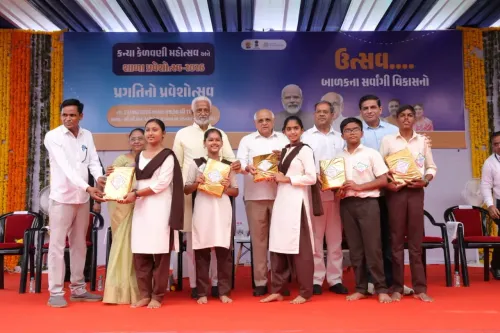
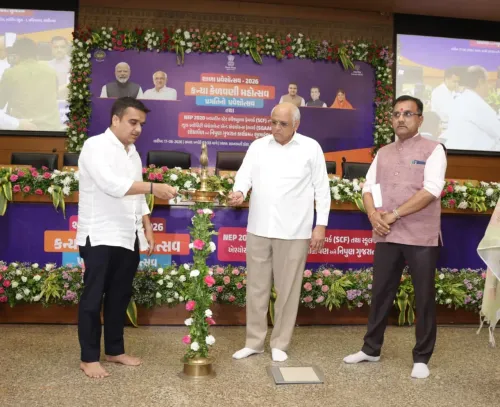
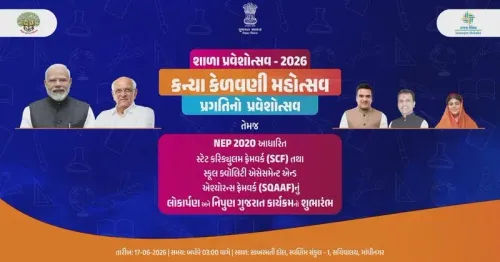
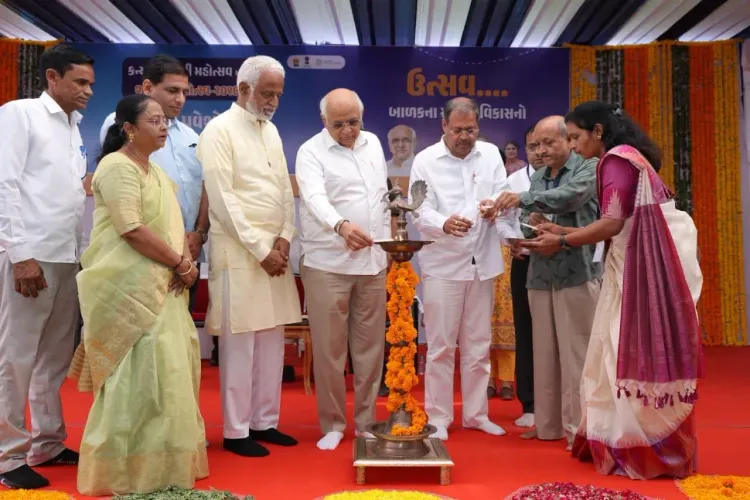
Chief Minister Bhupendra Patel launched Gujarat's annual Shala Praveshotsav and Kanya Kelavani Mahotsav 2026 at B.N. High School in Vadnagar on June 23, distributing educational kits to around 390 children from Anganwadi through higher-secondary levels, marking the statewide start of the new academic enrollment drive.
Key Takeaways
CM Bhupendra Patel personally launched Shala Praveshotsav and Kanya Kelavani Mahotsav 2026 on June 23, 2026 .
The launch venue was B.N.
High School, Vadnagar , in Mehsana district, Gujarat.
Approximately 390 children — from Anganwadi and Balvatika through higher-secondary — received educational kits.
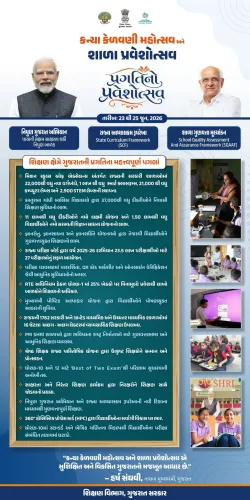
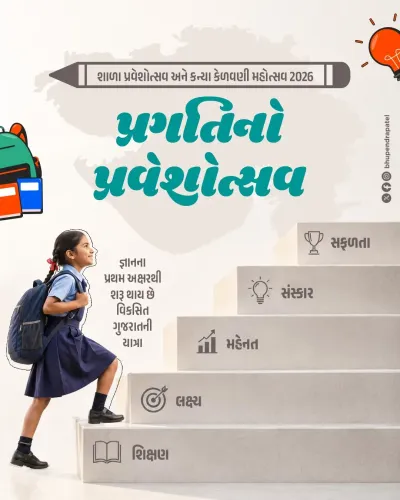
The programme has run annually in Gujarat since the early 2000s , targeting enrollment and girl-child education.
The event marks the statewide start of the 2026-27 academic year enrollment drive across all Gujarat government schools.
Statewide enrollment data for 2026-27 is expected to be released in the weeks following the drive.
Chief Minister Bhupendra Patel on Tuesday, June 23, 2026, launched the statewide 'Kanya Kelavani Mahotsav and Shala Praveshotsav-2026' from B.N. High School in Vadnagar, distributing educational kits to approximately 390 children spanning Anganwadi, Balvatika, primary, secondary, and higher-secondary levels, formally enrolling them into the new academic year.
Context
The Chief Minister's Office of Gujarat announced that CM Patel personally escorted children stepping through a school gate for the first time — those transitioning from Anganwadi and Balvatika centres — alongside students across all school levels at the Vadnagar venue. Each child received an educational kit as part of the ceremonial admission drive. The post, shared in Gujarati, described the moment as 'shala pravesh' (school admission) for 'bhulkao' (little ones) crossing school steps for the very first time.
Vadnagar, a town in Mehsana district, served as the symbolic launch point from which the programme radiates across all districts of Gujarat simultaneously, with senior officials and ministers typically replicating the event at schools in their respective jurisdictions on the same day.
Policy Backdrop
Gujarat has conducted Shala Praveshotsav and Kanya Kelavani Mahotsav annually since the early 2000s, making them among the longest-running state-level school enrollment drives in India. The twin festivals were conceived to close gaps in primary enrollment, improve retention rates, and specifically address the gender disparity in school attendance by spotlighting girl-child education.
The Kanya Kelavani Mahotsav component targets girl students from Anganwadi age through higher secondary, using the public ceremony and kit distribution to signal state commitment to keeping girls in school. Over two decades, the programme has become a fixture of Gujarat's education calendar, with the Chief Minister's direct participation reinforcing its political and administrative priority.
The linkage between Anganwadi centres — part of the Integrated Child Development Services framework — and formal schooling through Balvatika is a relatively recent structural emphasis, reflecting national policy direction under the National Education Policy to strengthen the foundational stage before Class 1.
Stakeholders and Impact
The immediate beneficiaries at B.N. High School, Vadnagar numbered around 390 children, though the statewide reach of the programme extends to hundreds of thousands of students enrolled on the same day across Gujarat's government schools. Girl students are a focal cohort, with the Kanya Kelavani component directing specific attention and resources toward female enrollment and retention.
Families of first-generation school-goers, Anganwadi workers, and primary school teachers are central stakeholders, as the festival depends on community mobilisation to bring children — particularly girls and those from marginalised households — to school on the inaugural day. Educational kit distribution lowers the immediate cost barrier for families at the point of enrollment.
What's Next
Statewide enrollment figures for the 2026-27 academic year are expected to be compiled and released by the Gujarat government in the weeks following the drive, serving as a key metric of the programme's reach. Analysts will watch whether the Anganwadi-to-Balvatika transition pipeline shows improvement in net enrollment ratios, particularly for girls in rural Mehsana and tribal districts. Any expansion in the scope of kit distribution or new Anganwadi linkages announced in subsequent months will indicate the programme's trajectory under CM Patel's administration.
Point of View
With the Chief Minister's presence at Vadnagar — a town of particular historical resonance in Gujarat politics — reinforcing the state's long-standing narrative of education as a governance priority. The inclusion of Anganwadi and Balvatika children alongside higher-secondary students signals an intent to frame the entire school pipeline, from early childhood to pre-board years, as a single continuum of state responsibility. The Kanya Kelavani component keeps gender equity visibly embedded in what could otherwise be a routine administrative exercise. How the 2026-27 enrollment numbers compare with prior years will determine whether the festival retains its policy impact or becomes purely ceremonial.
NationPress
23 Jun 2026
Frequently Asked Questions
What is Shala Praveshotsav 2026 in Gujarat?
Shala Praveshotsav 2026 is Gujarat's annual statewide school enrollment festival, launched on June 23, 2026, by Chief Minister Bhupendra Patel at B.N. High School in Vadnagar, where educational kits were distributed to around 390 children to mark the start of the new academic year.
What is Kanya Kelavani Mahotsav?
Kanya Kelavani Mahotsav is a Gujarat government festival held alongside Shala Praveshotsav that specifically promotes girl-child education and enrollment, targeting female students from Anganwadi age through higher secondary school.
Where was Shala Praveshotsav 2026 launched?
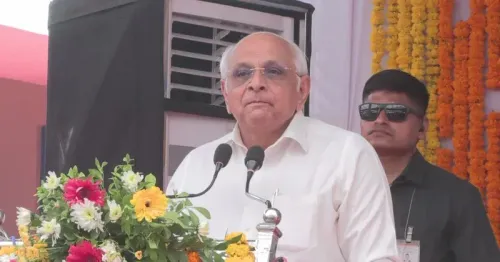
The 2026 edition was launched at B.N. High School in Vadnagar, Mehsana district, Gujarat, with Chief Minister Bhupendra Patel presiding over the ceremony.
Who distributed educational kits at Shala Praveshotsav 2026?
Chief Minister Bhupendra Patel personally distributed educational kits to approximately 390 children, including those entering school for the first time from Anganwadi and Balvatika centres.
How long has Gujarat been running Shala Praveshotsav?
Gujarat has conducted Shala Praveshotsav annually since the early 2000s, making it one of the longest-running state-level school enrollment drives in India.