CM Bhupendra Patel links Jal Jeevan Mission to women's dignity on Navratri
Synopsis
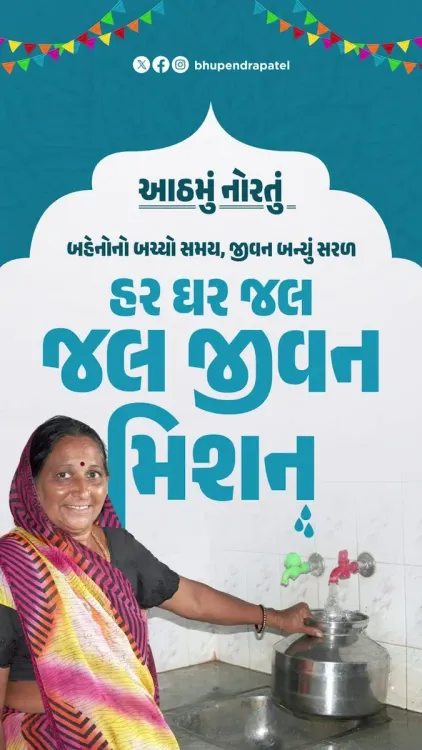
On Navratri's eighth night, Gujarat CM Bhupendra Patel invoked Maa Mahagauri to honour women's labour, crediting Jal Jeevan Mission with delivering tap water to every rural home and freeing women from the daily burden of water collection.
Key Takeaways
Gujarat Chief Minister Bhupendra Patel posted on 18 October 2026 , the eighth night of Navratri dedicated to Maa Mahagauri.
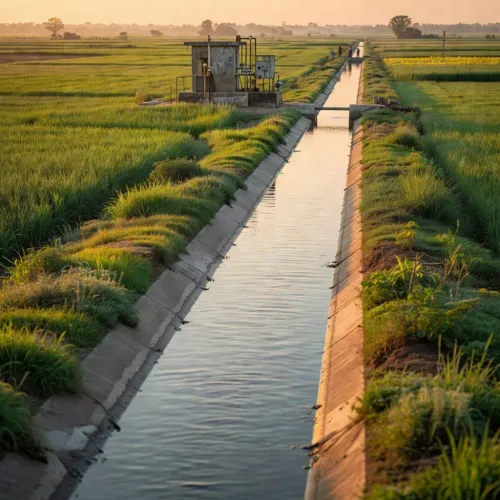
He described the Jal Jeevan Mission as a 'Herculean effort' that has delivered clean piped water to every household.
The scheme was launched by the Government of India in August 2019 to provide functional tap connections to all rural homes.
Patel framed the scheme's core benefit as saving rural women's time and labour — an explicit link between infrastructure and women's welfare.
Festival-timed messaging tying scheme outcomes to Navratri's cultural significance is a recurring pattern in Gujarat's BJP communication strategy.
On the eighth night of Navratri — dedicated to Maa Mahagauri, the goddess of peace and compassion — Gujarat Chief Minister Bhupendra Patel tied a central government water scheme directly to the lived reality of India's rural women, calling the labour of mothers and sisters 'priceless' and urging a collective commitment to their welfare.
Posting on Sunday, 18 October 2026, the Chief Minister wrote in Gujarati: 'Mata-bahenono shram ane samay banne amulya chhe' — 'The labour and time of our mothers and sisters are both priceless.' He credited the Jal Jeevan Mission with delivering piped, clean drinking water to every household, framing the scheme as a bhagirath kary — a Herculean effort — that has saved women from the daily burden of fetching water and brought peace and comfort into their lives.
What the Jal Jeevan Mission set out to do
The Jal Jeevan Mission was launched by the Government of India in August 2019 with a single, ambitious mandate: provide a functional household tap connection for safe drinking water to every rural home in the country. Before the scheme, millions of rural women — disproportionately the ones responsible for water collection — spent hours each day walking to distant water sources, a silent tax on their time and energy that rarely appeared in any policy ledger.
By anchoring the scheme's impact in women's time poverty rather than infrastructure metrics, Patel's message shifts the frame from pipes and coverage percentages to something more human: the hours returned to a woman's day, the kilometres she no longer has to walk, the dignified ease that a tap at the doorstep quietly delivers.
Navratri's eighth day — the goddess of purity as a policy backdrop
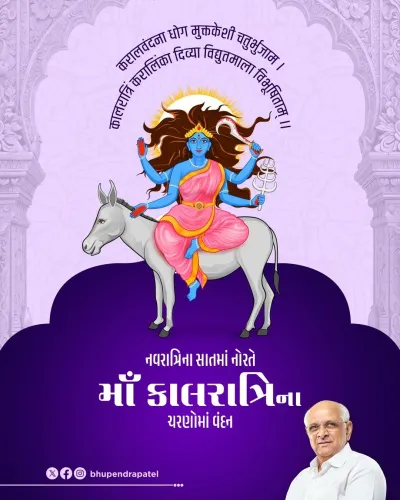
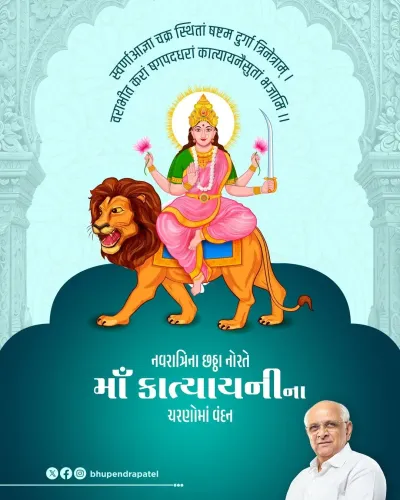
The timing is deliberate and culturally resonant. Navratri, the nine-night Hindu festival observed with particular fervour in Gujarat, dedicates each day to a different form of Goddess Durga. The eighth night honours Maa Mahagauri — associated with purity, serenity, and the removal of suffering. Invoking her alongside a scheme meant to ease women's daily hardship is a communication choice that links spiritual symbolism with policy messaging in a single stroke.
Gujarat's BJP leadership has consistently woven central infrastructure milestones into festival-season outreach, a pattern that reinforces both scheme visibility and the government's narrative of women-centric governance ahead of any electoral cycle.
Patel closed his post with a call to action: on this auspicious eighth day, let us honour the labour of women — nari shakti — and pledge ourselves to their upliftment and well-being. The kicker was not a statistic. It was a vow.
Point of View
The messaging sidesteps the harder audit of actual on-ground implementation progress. The Navratri hook is not incidental: anchoring governance claims to goddess imagery on the eighth night of the state's biggest festival maximises emotional reach and positions the party as the custodian of both tradition and development — a dual brand the BJP has cultivated in Gujarat for over two decades.
NationPress
18 Oct 2026
Frequently Asked Questions
What is the Jal Jeevan Mission?
The Jal Jeevan Mission is a Government of India scheme launched in August 2019 to provide a functional household tap connection for safe drinking water to every rural home in the country.
What did Gujarat CM Bhupendra Patel say about Jal Jeevan Mission and women?
CM Patel said the scheme has saved the labour and time of mothers and sisters by delivering piped clean water to every home, calling it a 'bhagirath kary' — a Herculean effort — that has brought peace and comfort to women's lives.
What is the significance of Navratri's eighth day?
The eighth night of Navratri is dedicated to Maa Mahagauri, a form of Goddess Durga associated with purity, serenity, and the removal of suffering.
Why does Gujarat CM link a water scheme to Navratri?
Tying the Jal Jeevan Mission's women-centric benefits to Navratri — Gujarat's biggest festival — is a deliberate communication strategy that connects policy achievements with cultural reverence for women, reinforcing the government's narrative of women's welfare.
Who is Bhupendra Patel?
Bhupendra Patel is the Chief Minister of Gujarat and a BJP leader who has held the post since September 2021.