CM Bhupendra Patel Reviews Sabarmati Riverfront Phase-2 & 3 Works
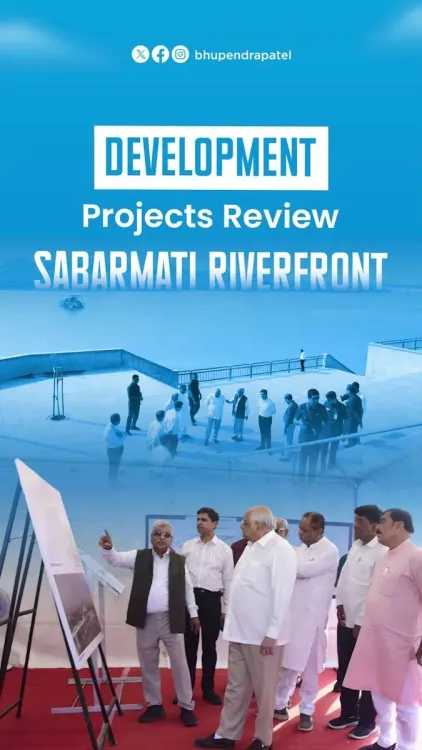
Synopsis
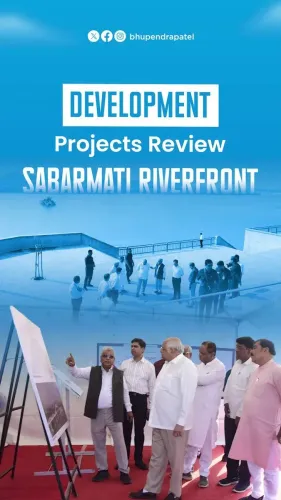
Gujarat CM Bhupendra Patel conducted a site inspection of Sabarmati Riverfront Phase-2 and Phase-3 works in Ahmedabad on November 16, reviewing a planned 40-km riverfront and Gujarat's first automatic-control six-lane barrage-cum-bridge that will sustain water levels toward Gandhinagar.
Key Takeaways
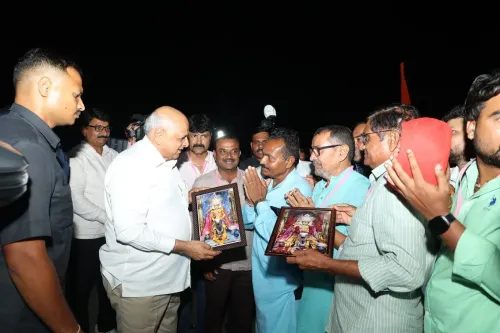
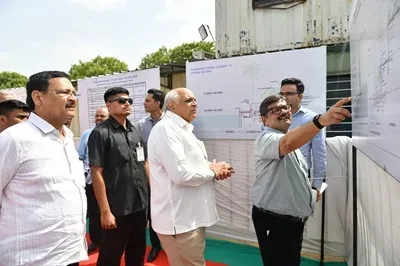
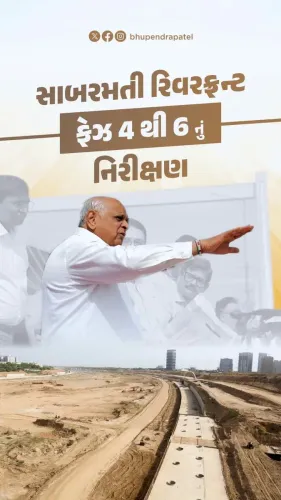
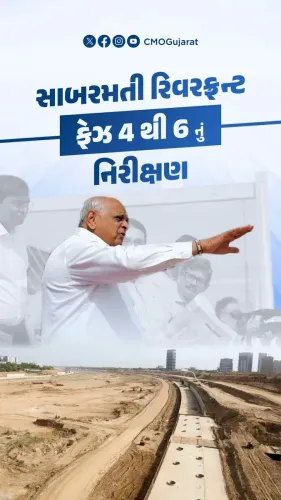
CM Bhupendra Patel personally inspected Sabarmati Riverfront Phase-2 and Phase-3 sites in Ahmedabad on 16 November 2026 .
Inspection sites included the Sardar Patel Enclave canopy structure , works near Indira Bridge , and Narmada Canal escape works near Kotarpur and Karai .
Gujarat's first automatic-control six-lane Barrage-cum-Bridge is under construction between Achhar (west bank) and Camp Sadar Bazar (east bank) , designed to maintain perennial water levels toward Gandhinagar .
Completion of Phase-2 (Dafnala to Indira Bridge) and Phase-3 (Indira Bridge to Narmada Main Canal) will bring total riverfront length on both banks to 40 kilometres .
Planned civic amenities include green zones , multi-level tree plantation, children's play areas , a food plaza , and art and culture spaces.
The project's roots date to the late 1990s ; Phase-1 construction began around 2005 under then CM Narendra Modi .
A six-lane bridge that will keep water flowing toward Gandhinagar year-round. That is the centrepiece of Gujarat Chief Minister Bhupendra Patel's site inspection Monday of the Sabarmati Riverfront Development Project's Phase-2 and Phase-3 works in Ahmedabad — a visit that signals the state is pushing its most ambitious riverfront expansion into a higher gear.
From Dafnala to the Narmada Main Canal — the 40-km ambition
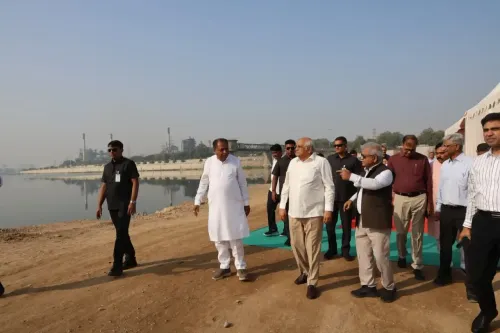
CM Patel walked the sites personally, reviewing progress with officials at three key locations: the Sardar Patel Enclave canopy structure, works near Indira Bridge, and projects at the Narmada Canal escape channel near Kotarpur and Karai. He issued specific directions to accelerate pace and tighten quality. The inspection covered Phase-2 — stretching from Dafnala to Indira Bridge — and Phase-3, running from Indira Bridge to the Narmada Main Canal.
When both phases are complete, the total riverfront length on both banks will reach 40 kilometres. That is a fourfold expansion of what most Ahmedabad residents associate with the original promenade, and it extends the river's urban footprint all the way to the city's northern outskirts.
Gujarat's first automatic-control six-lane barrage-cum-bridge
The engineering headline is a six-lane 'Barrage-cum-Bridge' under construction between Achhar on the west bank and Camp Sadar Bazar on the east bank. It will be Gujarat's first bridge of this type — fitted with an automatic control system that regulates water levels, ensuring the stretch of riverfront pointing toward Gandhinagar stays filled with water even outside the monsoon season. The barrage element solves a persistent aesthetic and ecological problem: without flow regulation, the Sabarmati shrinks to a trickle for much of the year.
Green zones, play areas, food plazas — what citizens will get
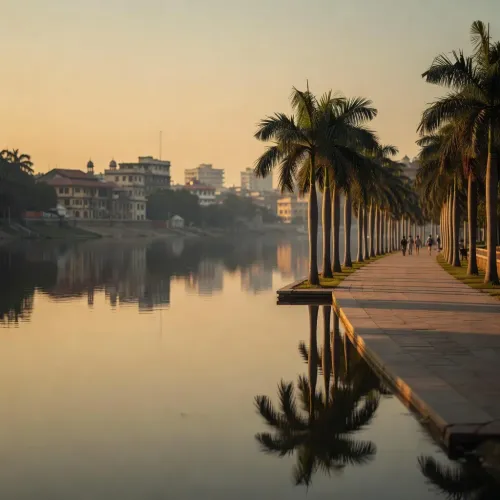
Beyond the structural engineering, the expanded riverfront is being designed as a layered public space. Plans include green zones, multi-level tree plantation and seating areas, children's play zones, a food plaza, and art and culture facilities. The intent is to transform kilometres of riverbank — previously inaccessible or underused — into a continuous civic amenity for Ahmedabad's residents.
The project's lineage stretches back to the late 1990s, when the concept was first floated, and construction of Phase-1 began around 2005 under then Chief Minister Narendra Modi. That original stretch became a model referenced by riverfront and waterfront redevelopment planners across India. Phases 2 and 3 represent a logical — if significantly more complex — continuation of that blueprint, now integrating the Narmada Canal escape infrastructure directly into the urban fabric.
When the last pile is driven and the automatic barrage gates open, Ahmedabad will have one of the longest continuous urban riverfronts in the country. The question now is whether the construction timeline can match the ambition.
Point of View
Not just city beautification. For Patel personally, owning the completion of Phases 2 and 3 would cement his administrative identity beyond the shadow of his predecessor. The 40-km target is also a credible electoral asset heading into future state cycles.
NationPress
16 Nov 2026
Frequently Asked Questions
What is the Sabarmati Riverfront Development Project Phase-2 and Phase-3?
Phase-2 covers the stretch from Dafnala to Indira Bridge, while Phase-3 extends from Indira Bridge to the Narmada Main Canal. Together they will expand the total riverfront on both banks to 40 kilometres, adding civic amenities, green zones, and water-management infrastructure to Ahmedabad's existing riverfront promenade.
What is the six-lane barrage-cum-bridge on the Sabarmati?
It is Gujarat's first bridge of this type — a six-lane road bridge integrated with an automatic-control barrage system, being built between Achhar on the west bank and Camp Sadar Bazar on the east bank. The barrage will regulate water levels so the Sabarmati stays filled toward Gandhinagar throughout the year.
When did the Sabarmati Riverfront project originally start?
The project was conceptualised in the late 1990s and Phase-1 construction began around 2005 under then Gujarat Chief Minister Narendra Modi, making it one of India's longest-running urban riverfront redevelopment initiatives.
What amenities will the expanded Sabarmati Riverfront offer?
The new riverfront sections will include green zones, multi-level tree plantation and seating areas, children's play areas, a food plaza, and art and culture facilities spread across both banks of the river.
Why is the Narmada Canal escape relevant to the Sabarmati Riverfront?
The Narmada Canal escape near Kotarpur and Karai is being integrated into the Phase-3 works, connecting a major irrigation infrastructure channel with the riverfront development and helping sustain water supply to the expanded stretch toward Gandhinagar.