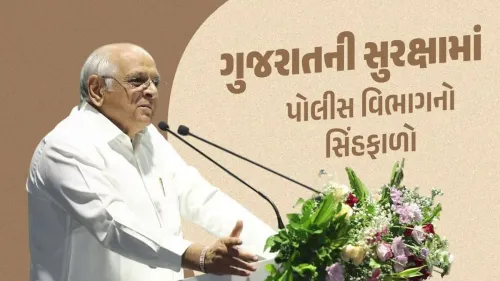
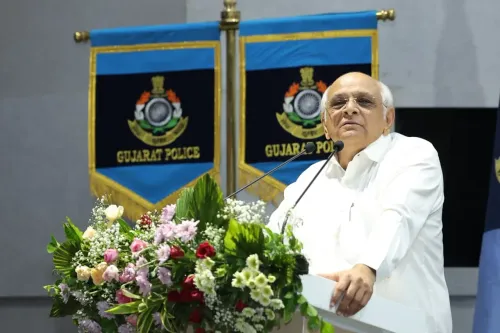
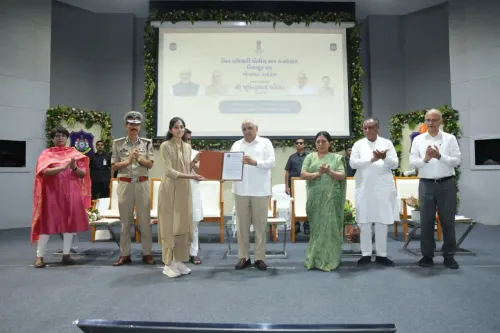
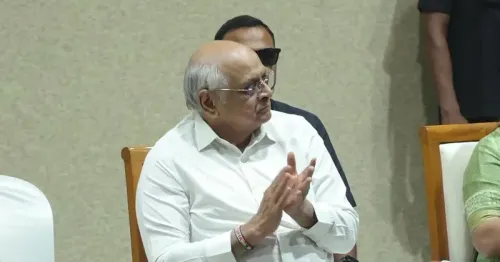
CM Bhupendra Patel Stresses Police Role in Social Security
Synopsis
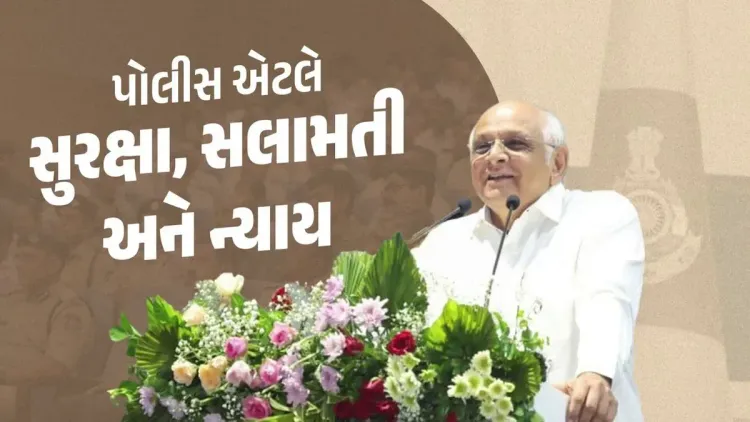
Gujarat Chief Minister Bhupendra Patel on 8 July 2026 publicly reaffirmed that the police force bears a critical responsibility in fostering security, safety, and justice within society — signalling continued political focus on law enforcement's societal role in the state.
Key Takeaways
CM Bhupendra Patel posted on 8 July 2026 emphasising that police duty must always remain connected to social life.
He stated that the police's responsibility in creating an atmosphere of security, safety, and justice is 'very important.' Policing is a state subject under India's Seventh Schedule , making the Gujarat government directly accountable for the force's direction.
Gujarat Police is the state agency responsible for law and order across the state.
No specific new scheme or event was announced alongside the statement; follow-up policy action remains to be seen.
Gujarat Chief Minister Bhupendra Patel on Wednesday, 8 July 2026, underscored the indispensable link between the police force and civil society, emphasising that law enforcement carries a vital responsibility in building an environment of security, safety, and justice for citizens.
Posting in Gujarati on X, CM Patel wrote: 'પોલીસનું દાયિત્વ સમાજજીવન સાથે હંમેશા સંકળાયેલું રહેવાનું છે' ['The duty of the police must always remain connected to social life'], adding that the responsibility of the police in creating an atmosphere of security, safety, and justice in society is 'very important.'
Context
The statement comes from a Chief Minister who has consistently positioned governance and public order as pillars of his administration since taking office in September 2021. While no specific event triggering the post has been confirmed, such messaging from state heads in India typically accompanies administrative reviews, police commemorations, or training-related engagements. Gujarat Police is the state agency entrusted with maintaining law and order across the state under the constitutional framework that designates policing as a state subject.
Policy Backdrop
Under India's Seventh Schedule, law and order is a state subject, making the Chief Minister the political head responsible for the direction and morale of the state police force. State governments across India periodically issue public statements reaffirming the societal role of police — a practice that reinforces accountability without necessarily announcing new schemes. Gujarat has in recent years undertaken several police modernisation and community policing initiatives aimed at strengthening public trust in law enforcement.
Stakeholders and Impact
Gujarat Police personnel are the most direct audience for such a statement, which serves as a public acknowledgement of their role beyond crime control — encompassing social harmony and access to justice. For Gujarat's citizens, particularly in districts with historically complex law-and-order challenges, the Chief Minister's articulation of police duty signals continued political attention to public safety. Civil society organisations working on police accountability and community relations may also read the statement as an opening for dialogue on institutional reforms.
What's Next
Observers will watch for follow-up administrative action — such as directives on police training, community outreach programmes, or announcements in upcoming Gujarat Legislative Assembly sessions — that translate this stated commitment into measurable policy. Any modernisation drive or expansion of community policing units in Gujarat would be a concrete indicator that the Chief Minister's remarks are tied to a broader governance agenda rather than routine messaging.
Point of View
Where the BJP government has long projected strong law-and-order governance as a brand differentiator, such messaging carries electoral and administrative weight. The timing, mid-2026, places it within a window when state governments often preview priorities ahead of budget or assembly cycles. The real test will be whether this articulation is followed by concrete directives on training, accountability, or community policing infrastructure.
NationPress
8 Jul 2026
Frequently Asked Questions
What did Gujarat CM Bhupendra Patel say about police on 8 July 2026?
CM Bhupendra Patel stated that the duty of the police must always remain connected to social life and that the police bear a very important responsibility in creating an atmosphere of security, safety, and justice in society.
Why did Bhupendra Patel post about Gujarat Police?
No specific triggering event has been confirmed, but such statements from Chief Ministers typically accompany administrative reviews, police commemorations, or training-related engagements.
Who is responsible for policing in Gujarat?
Policing is a state subject under India's Seventh Schedule, making the Gujarat state government — headed by Chief Minister Bhupendra Patel — politically responsible for the direction and functioning of Gujarat Police.
What is Gujarat Police's role according to CM Patel?
According to CM Patel, Gujarat Police's role extends beyond crime control to encompassing broader social security, safety, and the delivery of justice to citizens.
Will Gujarat announce new police reforms after CM Patel's statement?
No new scheme or reform has been announced yet; observers are watching for follow-up directives on police training, modernisation, or community policing in upcoming Gujarat Legislative Assembly sessions.