CM Chandrababu Reviews Cyclone Murasu Impact from RTGS Centre

Synopsis
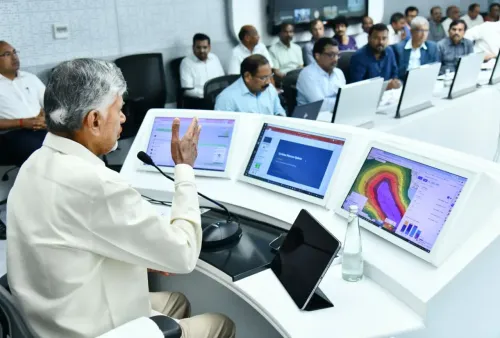
Chief Minister Chandrababu Naidu convened a real-time review of Cyclone Murasu's impact at the RTGS Centre in the Andhra Pradesh secretariat on November 3, with Chief Secretary Sai Prasad and senior officials present to assess rainfall, wind speeds, and departmental readiness.
Key Takeaways
Chief Minister Nara Chandrababu Naidu conducted a live review of Cyclone Murasu's impact on November 3, 2026 .
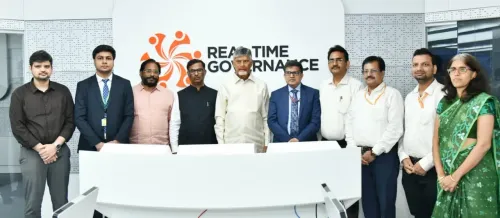
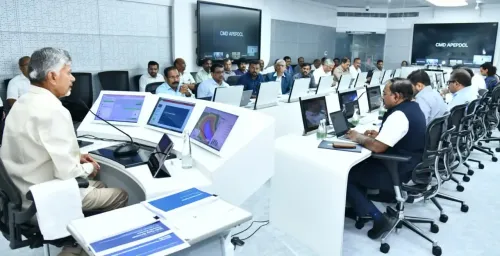
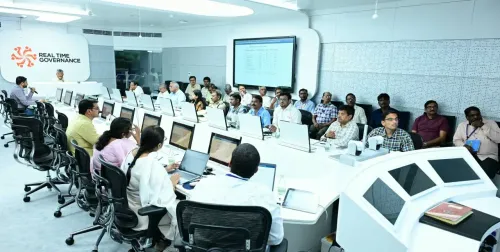
The review was held at the Real Time Governance Society (RTGS) Centre inside the Andhra Pradesh secretariat.
Officials were queried on rainfall data, wind-speed intensity, and ground conditions across multiple regions.
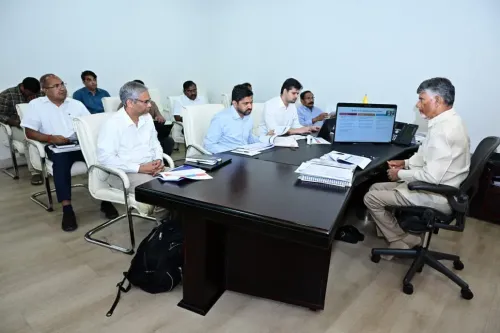
Chief Secretary Sai Prasad and senior officers from various departments attended the session.
The CM directed all systems to analyse incoming data and respond with full operational efficiency.
Andhra Pradesh has maintained enhanced cyclone-response protocols since Cyclone Hudhud in 2014 .
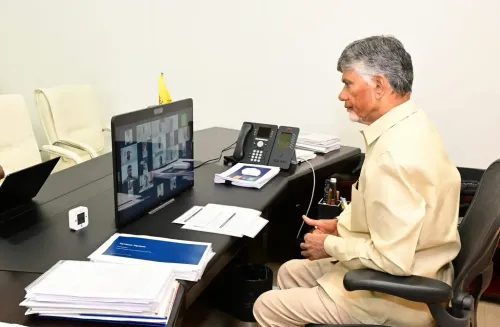
With Cyclone Murasu bearing down on Andhra Pradesh, Chief Minister Nara Chandrababu Naidu took charge on Tuesday, November 3, 2026 — convening a real-time review from the Real Time Governance Society (RTGS) Centre at the state secretariat to assess the storm's unfolding impact.
What the CM demanded from officials inside the war room
Naidu pressed department heads on recorded rainfall figures, wind-speed intensities, and ground conditions across affected regions. His directive was unambiguous: analyse incoming data and ensure all systems function at full efficiency in response. The Chief Minister's Office confirmed that Chief Secretary Sai Prasad and senior officers from multiple departments attended the review session.
The RTGS Centre — a command-and-coordination nerve centre unique to Andhra Pradesh's governance architecture — gives the state leadership a continuous feed of disaster-related metrics, allowing real-time course corrections rather than post-event damage assessments.
Andhra Pradesh's Bay of Bengal vulnerability and the lessons of Hudhud
Andhra Pradesh's long coastline on the Bay of Bengal places it squarely in the path of seasonal cyclonic systems. The state overhauled its disaster-response protocols after Cyclone Hudhud devastated parts of the coast in 2014, building out dedicated monitoring infrastructure and inter-departmental coordination drills that successive administrations have maintained. That institutional memory is now being tested by Murasu.
Naidu, who has long championed technology-enabled governance, has historically used the RTGS platform as a live decision-support tool — turning what might otherwise be a routine briefing into a command exercise with measurable accountability at every desk.
What coastal communities and relief agencies should watch next
The next critical updates from the state machinery are expected to cover evacuation numbers, district-level rainfall accumulation, and any coordination with central government disaster-response teams. Coastal communities across the affected districts remain on alert as the storm system continues to evolve.
Andhra Pradesh has activated its emergency apparatus before the worst arrives — and the CM's decision to anchor himself at the RTGS Centre signals that this government intends to be seen, and held accountable, in real time.
Point of View
Visible governance — where the CM's physical presence at a command centre doubles as a political signal of hands-on leadership. Andhra Pradesh's institutional investment in real-time disaster monitoring since Hudhud gives the state a structural edge over ad-hoc crisis responses, but the true test is always operational follow-through at the district level. With the state's long Bay of Bengal coastline making cyclone exposure a recurring political and humanitarian challenge, how quickly relief machinery translates the CM's directives into evacuation and rescue action will define this government's disaster-response record. Eyes will now be on district collectors and the pace of central coordination.
NationPress
3 Nov 2026
Frequently Asked Questions
What is Cyclone Murasu and where is it headed?
Cyclone Murasu is a cyclonic storm system impacting Andhra Pradesh as of November 3, 2026. The exact trajectory is still being tracked by state authorities; the CM has directed officials to monitor all incoming data closely.
What is the RTGS Centre in Andhra Pradesh?
The Real Time Governance Society (RTGS) Centre is a state-run command-and-monitoring hub in the Andhra Pradesh secretariat that provides live data feeds on emergencies, enabling real-time coordination across government departments.
What did CM Chandrababu Naidu say in the cyclone review meeting?
CM Naidu directed officials to analyse all incoming data on rainfall and wind speeds and ensure that every government system operates at full efficiency in response to Cyclone Murasu.
Who attended the Cyclone Murasu review meeting in Andhra Pradesh?
Chief Secretary Sai Prasad and senior officers from various state departments attended the review convened by CM Chandrababu Naidu at the RTGS Centre.
How does Andhra Pradesh prepare for cyclones from the Bay of Bengal?
Following Cyclone Hudhud in 2014, Andhra Pradesh strengthened its disaster-response protocols and established dedicated monitoring centres like the RTGS facility to track storms and coordinate departmental action in real time.