Bihar CM Samrat Choudhary Hails Pinaka's Armenia Trials
Synopsis
Bihar Chief Minister Samrat Choudhary hailed successful Pinaka rocket system firing trials in Armenia on June 7, 2026, calling them proof of India's rising indigenous defence capability under PM Modi's Atmanirbhar Bharat initiative.
Key Takeaways
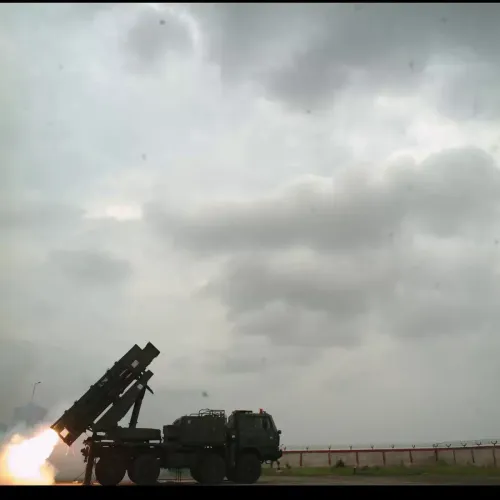
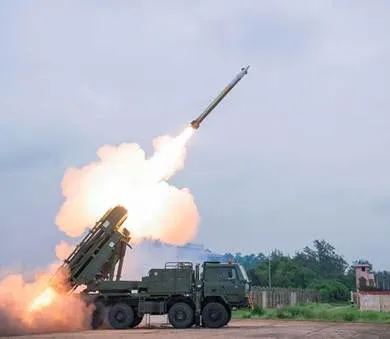
Bihar CM Samrat Choudhary praised the successful firing trials of India's Pinaka multi-barrel rocket launcher in Armenia on June 7, 2026 .
The Pinaka system was developed by DRDO from the 1980s onward and inducted into the Indian Army by 1999 .
Armenia signed defence agreements to acquire Pinaka systems from India around 2022–2023 , making it a key early export customer.
CM Choudhary linked the trials to PM Modi's Atmanirbhar Bharat initiative launched in 2020 , which aims to reduce India's dependence on defence imports.
Successful overseas trials strengthen India's pitch to other prospective buyers and support the government's goal of expanding defence exports .
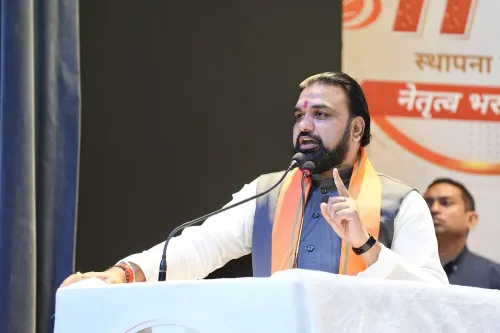
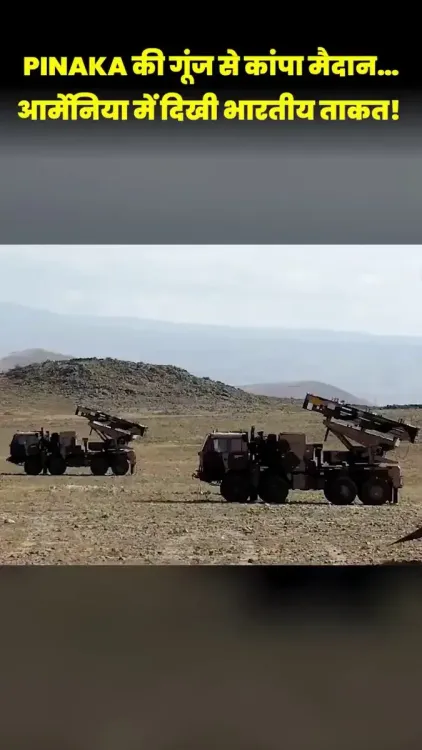
Bihar Chief Minister Samrat Choudhary on Sunday, June 7, 2026, lauded the successful firing trials of India's indigenous Pinaka multi-barrel rocket launcher system in Armenia, calling it a symbol of India's growing strategic power on the global stage.
Posting on X, the senior BJP leader wrote: 'PINAKA की गूंज आज वैश्विक मंच पर भारत की बढ़ती सामरिक शक्ति का प्रतीक बन चुकी है' ['The echo of PINAKA has today become a symbol of India's growing strategic strength on the global stage']. He credited the trials as fresh proof that India's defence production and indigenous technology are carving out a distinct identity worldwide.
Context
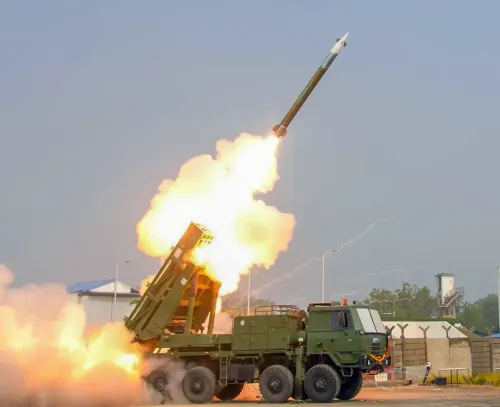
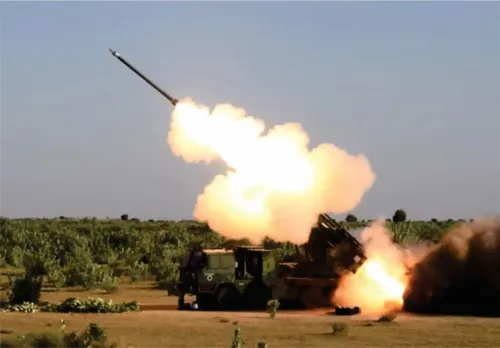
The Pinaka system is an indigenous multi-barrel rocket launcher designed and developed by the Defence Research and Development Organisation (DRDO). Its development began in the 1980s, with user trials completed by the mid-1990s and formal induction into the Indian Army by 1999. The system has since been upgraded across multiple variants, improving range and payload capacity.
Armenia entered into defence agreements with India around 2022–2023 to acquire Pinaka systems, making it one of the early export customers for the platform. The Armenia deal marked a significant milestone for India's ambition to position itself as a credible arms exporter to nations seeking alternatives to traditional suppliers.
Policy Backdrop
The trials in Armenia align directly with the Atmanirbhar Bharat ('Self-Reliant India') initiative launched in 2020 under Prime Minister Narendra Modi. The policy framework was designed to reduce India's dependence on defence imports and accelerate domestic manufacturing of weapons platforms, electronics, and ammunition.
CM Choudhary specifically invoked PM Modi's leadership, stating that the resolve of Aatmanirbhar Bharat is today 'touching new heights in the defence sector' and that it is 'a matter of pride for every Indian.' India's defence exports have grown substantially over the past decade, with DRDO-developed platforms like Pinaka, and systems produced by public and private sector firms, reaching markets across South Asia, Southeast Asia, and beyond.
Stakeholders and Impact
For the Indian defence industry — spanning DRDO, the Ordnance Factory Board, and private-sector partners — successful export trials validate the operational credibility of indigenous systems in real-world environments. A satisfied export customer like Armenia strengthens India's pitch to other prospective buyers in regions seeking to diversify their defence procurement.
For Armenian armed forces, the Pinaka system offers a high-volume, cost-effective artillery rocket capability. The successful trials reinforce the bilateral defence partnership and may pave the way for follow-on orders or expanded cooperation. Broader geopolitical observers note that India's deepening defence ties in the South Caucasus reflect a deliberate strategy to build strategic partnerships beyond its immediate neighbourhood.
What's Next
Attention will now turn to whether the Ministry of Defence formalises additional export contracts for Pinaka or announces further user trials with other partner nations. The government has set ambitious targets for defence exports, and each successful overseas trial adds weight to India's case as a reliable supplier of advanced indigenous systems.
CM Choudhary's post reflects a wider political consensus within the ruling coalition that defence indigenisation achievements are central to India's national narrative — a theme likely to feature prominently in domestic political communication ahead of future electoral cycles.
Point of View
Defence indigenisation has become a potent electoral and ideological symbol, and senior state leaders amplifying such achievements signals coordinated national-level communication. The real test will be whether successful trials translate into expanded export orders that validate India's emergence as a serious global arms supplier.
NationPress
22 Oct 2026
Frequently Asked Questions
What is the Pinaka rocket system?
Pinaka is an indigenous multi-barrel rocket launcher developed by India's DRDO. It was developed from the 1980s onward, completed user trials by the mid-1990s, and was formally inducted into the Indian Army by 1999. It has since been upgraded across several variants.
Why is India supplying Pinaka to Armenia?
India and Armenia signed bilateral defence agreements around 2022–2023 for Armenia to acquire Pinaka systems. The deal reflects India's strategy to export DRDO-developed platforms to nations seeking alternatives to traditional arms suppliers, boosting India's defence export revenue.
What is Atmanirbhar Bharat in defence?
Atmanirbhar Bharat, launched in 2020 under PM Narendra Modi, is a self-reliance initiative that aims to reduce India's dependence on defence imports by boosting domestic manufacturing of weapons, platforms, and ammunition through DRDO and public and private sector firms.
What did Bihar CM Samrat Choudhary say about Pinaka?
CM Samrat Choudhary said the successful Pinaka firing trials in Armenia prove that India's defence production and indigenous technology are gaining a distinct identity worldwide, and credited PM Modi's Atmanirbhar Bharat vision for taking the defence sector to new heights.
What is the significance of Pinaka's export success for India?
Successful overseas firing trials validate the operational credibility of Pinaka in real-world environments, strengthen India's pitch to other prospective buyers globally, and support the government's broader ambition to significantly grow India's annual defence exports.