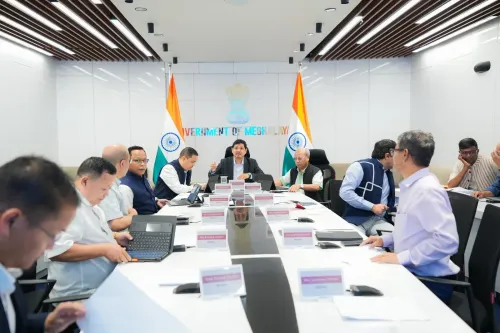
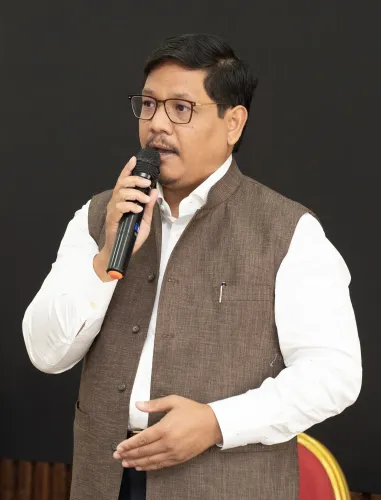
CM Conrad Sangma approves automatic appeal reform for Meghalaya services
Synopsis
Meghalaya CM Conrad Sangma announced a Cabinet-approved amendment to the Right to Public Services Act, 2020, introducing an Automatic Appeal Mechanism that triggers escalation without citizen action when online services miss prescribed deadlines — a significant e-governance step under the state's Ease of Doing Business initiative.
Key Takeaways
The Meghalaya Cabinet approved an amendment to the Right to Public Services Act, 2020 on 13 August 2026 .
The new Automatic Appeal Mechanism triggers an appeal automatically if a notified online service is not delivered within the prescribed timeframe.
Citizens are no longer required to file a separate appeal — the system escalates on their behalf.
The reform is part of Meghalaya's Ease of Doing Business (Compliance Reduction and Deregulation) Initiative .
The amendment aims to improve government accountability and ensure time-bound delivery of notified public services.
The move aligns with broader national Digital India and Ease of Doing Business reform frameworks adopted across Indian states.
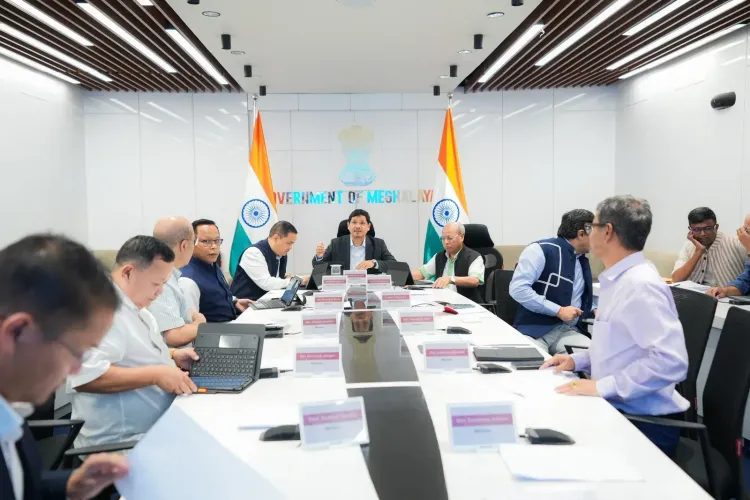
A citizen in Meghalaya no longer has to chase a delayed government application — the system will now chase the government instead. Meghalaya Chief Minister Conrad Sangma announced on Thursday, 13 August 2026 that the state Cabinet has approved an amendment to the Meghalaya Right to Public Services Act, 2020, introducing an Automatic Appeal Mechanism for online service applications under the Ease of Doing Business (Compliance Reduction and Deregulation) Initiative.
What the automatic appeal mechanism actually does
The logic is disarmingly simple. If a notified online government service is not delivered within its prescribed timeframe, an appeal is triggered automatically — no separate filing required from the citizen. The burden of follow-up shifts from the applicant to the system itself. As CM Sangma stated, the move is designed to 'strengthen the Right to Public Services framework, improve accountability and ensure that citizens receive notified government services within the stipulated time.'
This is a meaningful departure from the conventional model, where a citizen who received no response had to separately initiate an appeal — a step many either did not know about or did not bother to take, effectively letting delays go unchallenged.
The 2020 Act and the reform lineage behind this amendment
The Meghalaya Right to Public Services Act, 2020 was built on a statutory guarantee: government services must be delivered within defined timelines, and citizens have a right to appeal if they are not. Meghalaya joined a wave of Indian states that enacted such legislation through the early 2010s and beyond, each attempting to convert bureaucratic goodwill into enforceable obligation.
The new amendment layers a digital trigger onto that foundation. Rather than relying on citizen awareness of appeal rights, the system itself detects a missed deadline and escalates — a design consistent with the broader push under national Digital India and Ease of Doing Business reform programmes to reduce friction for both residents and business applicants.
Why Meghalaya's move fits the national Ease of Doing Business push
India's Ease of Doing Business reforms, which accelerated from 2014 onward, have increasingly asked states to digitise services and shed regulatory compliance burdens. Meghalaya's Cabinet decision ties this amendment explicitly to the state's Ease of Doing Business (Compliance Reduction and Deregulation) Initiative — signalling that the reform is positioned not just as a citizen-welfare measure but as part of the state's competitive reform agenda.
For business applicants in particular, automatic escalation of stalled applications removes a significant dead-weight cost: the time and effort spent tracking down approvals that should have arrived on schedule.
The real test now is in the rollout — how many services are notified under the mechanism, how fast appeals are resolved once triggered, and whether compliance data becomes publicly visible. Accountability, after all, is only as strong as the numbers that prove it.
Point of View
Closing the accountability gap that has historically allowed delayed services to go unchallenged. For CM Conrad Sangma and the NPP, the reform doubles as both a governance credential and an Ease of Doing Business signal to investors and the central government. The deeper question is whether the automatic mechanism will be backed by enforceable consequences for officials who miss deadlines — without that, the trigger exists but the deterrent may not. Watched alongside similar digital-governance moves in other northeastern states, Meghalaya's reform reflects a competitive federalism dynamic where state rankings on service delivery are increasingly a political asset.
NationPress
13 Aug 2026
Frequently Asked Questions
What is the Automatic Appeal Mechanism approved by Meghalaya Cabinet?
It is a new provision under the amended Meghalaya Right to Public Services Act, 2020, that automatically triggers an appeal when a notified online government service is not delivered within the prescribed timeframe — without the citizen having to file a separate appeal.
What is the Meghalaya Right to Public Services Act, 2020?
The Meghalaya Right to Public Services Act, 2020 is a state law that guarantees time-bound delivery of notified public services and gives citizens the right to appeal if services are delayed. The 2026 Cabinet amendment strengthens it by automating the appeal process.
How does this reform help citizens and businesses in Meghalaya?
Citizens and business applicants no longer need to track delayed applications or navigate the appeal process themselves. If a deadline is missed, the system automatically escalates the case, reducing citizen effort and increasing government accountability.
What is Meghalaya's Ease of Doing Business initiative?
It is a state-level programme focused on compliance reduction, deregulation and digitisation of government services, aligned with the central government's national Ease of Doing Business reform agenda that has been a priority since 2014.
Who announced the Meghalaya automatic appeal reform?
Chief Minister Conrad Sangma, who also serves as national president of the National People's Party, announced the Cabinet approval of the amendment on 13 August 2026.