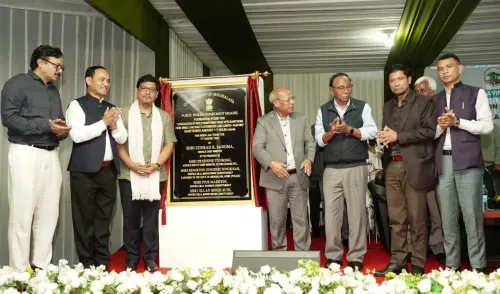
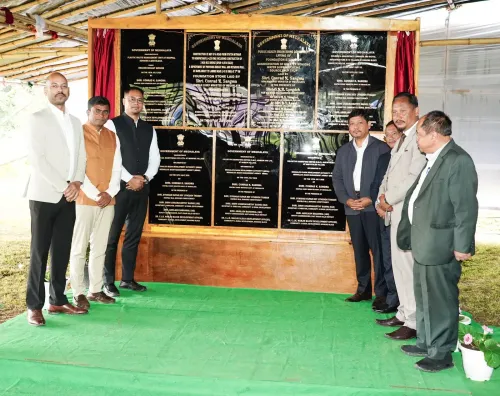
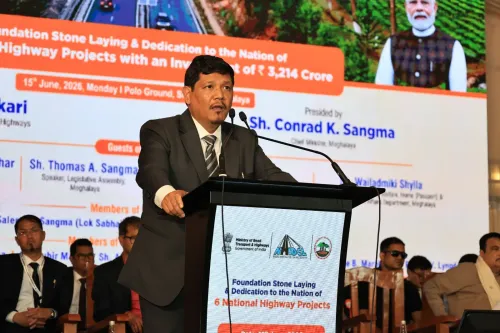
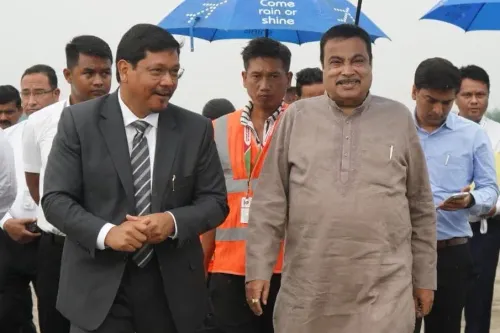
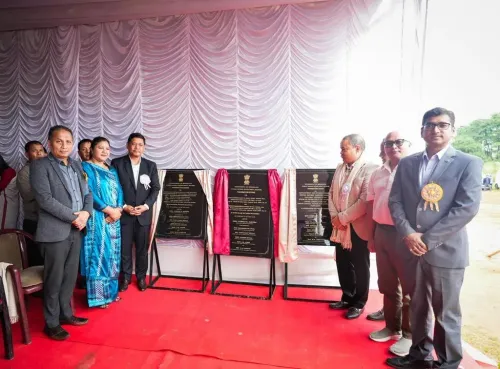
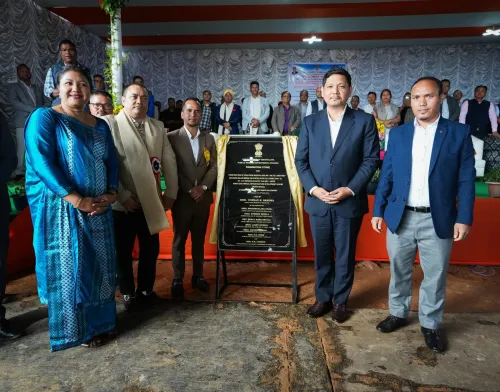
CM Conrad Sangma Lays Foundation for Sohpian–Nongstoin Road Widening
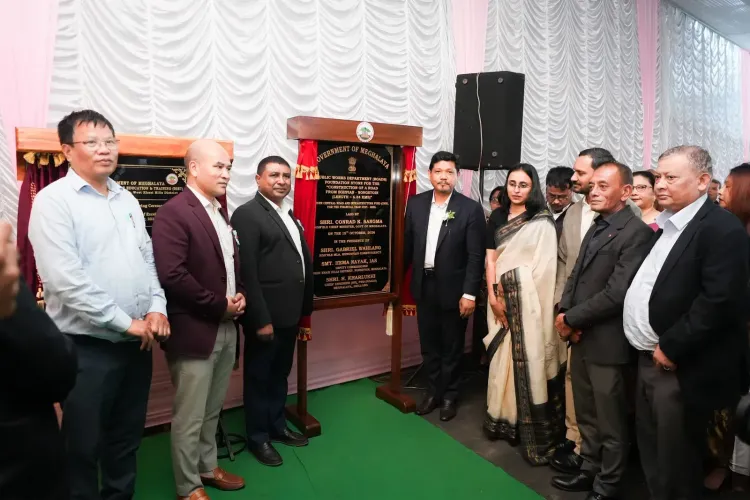
Synopsis
Meghalaya CM Conrad Sangma laid the foundation for widening the 6.84-km Sohpian–Nongstoin Road under CRIF 2025–26. The project is part of ₹498.31 crore in road investments converging on Nongstoin, aimed at improving connectivity across West Khasi Hills.
Key Takeaways
CM Conrad Sangma laid the foundation stone for widening the 6.84-km Sohpian–Nongstoin Road to intermediate-lane standard on October 15, 2026 .
The project is funded under the Central Road and Infrastructure Fund (CRIF) for 2025–26 .
The widening is part of a broader ₹498.31 crore road investment package converging on Nongstoin , headquarters of West Khasi Hills district.
The package covers the Nongstoin–Maweit–Nongjri road and village roads at Tiehsaw , Pyndengrei , and Upper New Nongstoin .
The investments aim to improve access to markets, essential services, and economic opportunities for residents of West Khasi Hills .
CRIF has supported Northeast road projects since its expansion in 2018 , with Meghalaya among the key beneficiaries.
A 6.84-kilometre stretch connecting Sohpian to Nongstoin in West Khasi Hills is about to get wider — and for the hill communities that depend on it, that distance just got a little shorter. Meghalaya Chief Minister Conrad Sangma on Thursday, October 15, 2026, laid the foundation stone for the widening of the Sohpian–Nongstoin Road to intermediate-lane standard under the Central Road and Infrastructure Fund (CRIF) for 2025–26.
₹498.31 Crore Converging on Nongstoin
The road widening is not a standalone intervention — it anchors a far larger investment push. CM Sangma confirmed that the project forms part of a ₹498.31 crore package of road investments converging on Nongstoin, the headquarters of West Khasi Hills district. The package includes the Nongstoin–Maweit–Nongjri road and village roads at Tiehsaw, Pyndengrei, and Upper New Nongstoin — a multi-pronged push to knit together communities scattered across challenging terrain.
The Central Road and Infrastructure Fund has been a consistent vehicle for central support to Northeast connectivity, channelling resources into states like Meghalaya where difficult geography raises the cost — and the stakes — of every kilometre built. Since the fund's expansion in 2018, road projects in Meghalaya have drawn on CRIF allocations to accelerate district-level connectivity that state budgets alone could not sustain.
What Better Roads Mean for West Khasi Hills
West Khasi Hills is a predominantly rural district where access to district headquarters like Nongstoin directly governs whether a farmer reaches a market, a patient reaches a hospital, or a student reaches a college. Widening the Sohpian–Nongstoin corridor to intermediate-lane standard addresses a critical bottleneck — narrow roads in this zone have long constrained vehicle movement, slowed commerce, and raised transportation costs for local traders and farmers.
The converging investment model — combining CRIF funds with state-level allocation for a cluster of roads around one district headquarters — reflects a broader pattern in Meghalaya's infrastructure planning: concentrate improvements around a hub town to maximise economic spillover across a wider hinterland.
Northeast Connectivity and the NPP's Infrastructure Pitch
The foundation-stone laying comes as the National People's Party (NPP), which has headed the Meghalaya government since 2018, continues to position infrastructure as a centrepiece of its governance record. Road projects that draw on central funds also reinforce the party's relationship with the Union government — a political dynamic that has defined much of the NPP's strategy in securing Northeast development allocations.
For the residents of West Khasi Hills, however, the politics matter less than the pavement. When the upgraded road opens, the journey from interior villages to Nongstoin — and the economic opportunities and essential services waiting there — will simply be faster, safer, and more reliable.
Nearly ₹500 crore is being written into the landscape of one district. The question now is how quickly the ground work translates into tarmac.
Point of View
Drawing on CRIF allocations also demonstrates the political dividend of maintaining a functional working relationship with the Union government, a key pillar of Conrad Sangma's strategy since 2018. At a broader level, the project fits India's sustained post-2014 push to treat Northeast connectivity as both a development imperative and a strategic asset. The real test, as with most foundation-stone moments, is in execution timelines and budget disbursement in subsequent state reviews.
NationPress
15 Oct 2026
Frequently Asked Questions
What is the Sohpian–Nongstoin Road project in Meghalaya?
It is a road widening project covering 6.84 kilometres between Sohpian and Nongstoin in West Khasi Hills, Meghalaya, being upgraded to intermediate-lane standard under the Central Road and Infrastructure Fund (CRIF) for 2025–26.
What is the total investment in roads around Nongstoin announced by CM Sangma?
CM Conrad Sangma announced a total of ₹498.31 crore in road investments converging on Nongstoin, including the Sohpian–Nongstoin widening, the Nongstoin–Maweit–Nongjri road, and village roads at Tiehsaw, Pyndengrei, and Upper New Nongstoin.
What is the Central Road and Infrastructure Fund (CRIF)?
CRIF is a central government fund that supports road and infrastructure projects across Indian states, with a particular focus on connectivity in the Northeast. It was expanded in 2018 and has since funded multiple road projects in Meghalaya.
Which district benefits from these road projects in Meghalaya?
West Khasi Hills district is the primary beneficiary. The investments are designed to improve connectivity for rural communities and ease access to the district headquarters at Nongstoin .
Why is road connectivity important in West Khasi Hills?
West Khasi Hills has predominantly rural communities in hilly terrain where road access directly determines whether residents can reach markets, hospitals, and schools. Better roads lower transportation costs for farmers and traders and integrate interior areas with the district economy.