CM Dhami backs PM Viksit Bharat Rozgar Yojana for Uttarakhand jobs
Synopsis
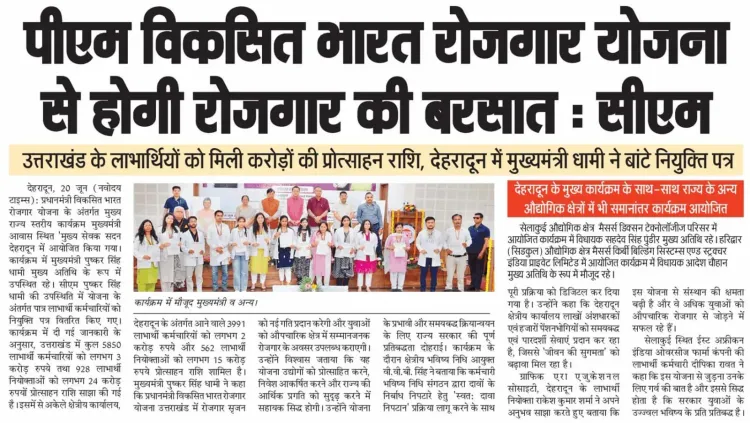
Chief Minister Pushkar Singh Dhami has thrown his weight behind the PM Viksit Bharat Rozgar Yojana, saying it will bring a 'rain of employment' to Uttarakhand. The scheme aligns with PM Modi's Viksit Bharat 2047 vision and targets the state's chronically high youth unemployment.
Key Takeaways
CM Pushkar Singh Dhami publicly endorsed the PM Viksit Bharat Rozgar Yojana on 21 June 2026 .
Dhami described the scheme as bringing rozgar ki barsat — a 'rain of employment' — to Uttarakhand .
The scheme is part of PM Narendra Modi's broader Viksit Bharat vision targeting a developed India by 2047 .
Uttarakhand has a history of youth outmigration driven by limited local employment opportunities in hill districts.
Specific state-level targets and implementation details are yet to be officially released.
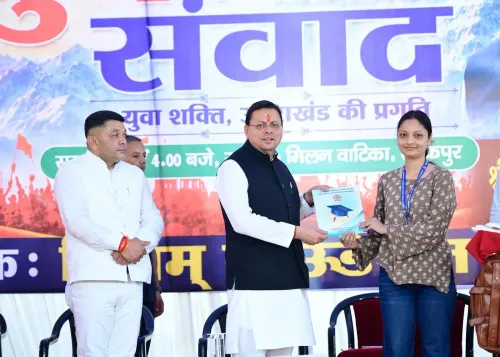
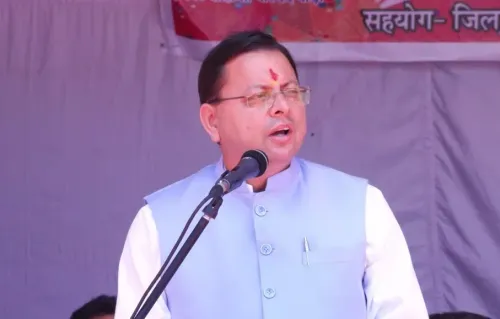
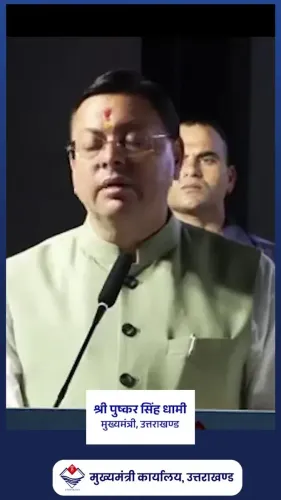
The Chief Minister's Office of Uttarakhand announced on Sunday, 21 June 2026 that Chief Minister Pushkar Singh Dhami has backed the PM Viksit Bharat Rozgar Yojana, describing it as a scheme that will bring a 'rain of employment' (rozgar ki barsat) to the state's youth.
Context
In a post shared by the official Chief Minister's Office account, CM Dhami said the scheme would generate large-scale employment across Uttarakhand. The Hindi phrase used — 'rozgar ki barsat hogi' (there will be a rain of employment) — signals the government's intent to frame the initiative as a transformative moment for the state's working-age population. The announcement comes amid longstanding concerns about youth outmigration from Uttarakhand, a hill state where limited local employment has historically pushed young people to seek work in the plains.
Policy Backdrop
The scheme sits within the broader Viksit Bharat vision articulated by Prime Minister Narendra Modi, which aims to position India as a developed nation by 2047. Since 2023, the Union government has used the Viksit Bharat framework to consolidate multiple welfare and economic initiatives under a single long-term narrative, giving state governments a shared vocabulary to communicate central programmes to local audiences. Uttarakhand has consistently aligned its messaging with flagship central schemes — a pattern visible in how the state administration publicised earlier programmes such as Make in India, launched in September 2014, and the Skill India Mission, announced in 2015.
Employment generation has been a recurrent priority in Uttarakhand's policy communication. The state government has repeatedly highlighted central employment-linked schemes to demonstrate local delivery of national programmes, particularly to an electorate sensitive to the issue of educated youth leaving hill districts for urban centres.
Stakeholders and Impact
The primary beneficiaries identified in the government's framing are unemployed youth across Uttarakhand. If the scheme delivers at scale, it could ease pressure on the state's rural and semi-urban districts, where outmigration has depopulated entire villages and strained local economies. The state administration — including district-level employment offices and skill development agencies — would be the principal implementation machinery.
Broader stakeholders include small and medium enterprises that could benefit from an incentivised or subsidised workforce, as well as training institutions that may be roped in to prepare candidates for scheme-linked placements. The scheme's ability to reach remote hill districts will be a key test of its reach.
What's Next
Detailed implementation guidelines, Uttarakhand's specific targets, and the state's allocated share under the scheme are expected to emerge through forthcoming state budget communications or official government orders. Observers will watch whether the scheme's rollout in Uttarakhand is accompanied by measurable benchmarks — such as the number of beneficiaries, sectors covered, and district-wise targets — that can be tracked against outcomes. The government's ability to translate this high-profile endorsement into on-ground employment opportunities will ultimately determine whether the 'rain of employment' promise resonates with Uttarakhand's youth.
Point of View
Being seen as an active delivery partner of a national employment scheme carries significant political value. The 'rain of employment' framing is deliberately evocative — it signals abundance and relief to a demographic that has long felt left behind by development. The real test will come when implementation details emerge and the government must demonstrate measurable outcomes rather than aspirational rhetoric.
NationPress
21 Jun 2026
Frequently Asked Questions
What is the PM Viksit Bharat Rozgar Yojana?
The PM Viksit Bharat Rozgar Yojana is a central government employment scheme linked to Prime Minister Narendra Modi's Viksit Bharat vision, which aims to make India a developed nation by 2047. CM Pushkar Singh Dhami has endorsed it as a major employment driver for Uttarakhand.
What did CM Dhami say about the employment scheme?
CM Dhami said the PM Viksit Bharat Rozgar Yojana would bring 'rozgar ki barsat' — a 'rain of employment' — to Uttarakhand, signalling his government's strong support for the scheme's rollout in the state.
Why is employment a big issue in Uttarakhand?
Uttarakhand is a Himalayan hill state where limited local job opportunities have historically driven large-scale youth outmigration to plains cities. Addressing this has been a recurring priority for successive state governments.
How does Viksit Bharat relate to employment schemes?
The Viksit Bharat framework, articulated by PM Modi since 2023, is an umbrella vision for India's development by 2047. Multiple welfare and economic schemes — including employment-linked programmes — are being communicated under this single long-term narrative by both the Union and state governments.
When will the PM Viksit Bharat Rozgar Yojana be implemented in Uttarakhand?
Specific implementation timelines, state-level targets, and Uttarakhand's allocated share under the scheme have not yet been officially announced. Details are expected to emerge through state budget communications or official government orders.