CM Dhami: Chief Minister's post is service, not power
Synopsis
Chief Minister Pushkar Singh Dhami declared on 4 July 2026 that his office is a means of public service, not power, pledging that five years of uninterrupted governance rooted in seva, sushasan, and samarpan will continue.
Key Takeaways
CM Pushkar Singh Dhami posted a public statement on 4 July 2026 reaffirming his role as a servant of the people, not a holder of power.
He described his administration as a 'government of service, good governance, and dedication' — seva, sushasan aur samarpan .
The statement claims five years of uninterrupted service , framing continuity as a core political commitment.
The message was posted by the Chief Minister's Office of Uttarakhand on the official CMO account, amplifying its institutional weight.
Uttarakhand assembly elections are expected in 2027 , lending political significance to this governance-focused messaging.
The use of the metaphor 'seva ka yajna' (a sacred fire of service) reflects the BJP's consistent national framing of governance as a moral duty.
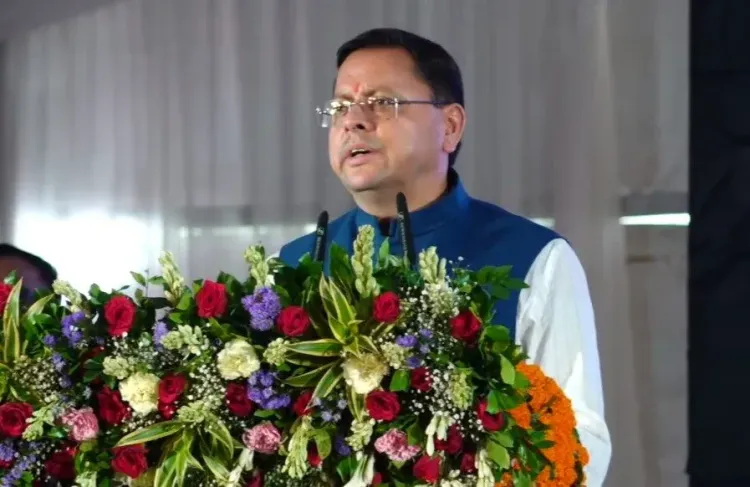
The Chief Minister's Office of Uttarakhand, on behalf of Chief Minister Pushkar Singh Dhami, posted a statement on Saturday, 4 July 2026, reaffirming that the office of the Chief Minister is a vehicle for public service rather than an exercise of authority, and that this commitment has remained unbroken over the past five years.
Context
Speaking through the official CMO account, CM Dhami stated: 'मुख्य सेवक का यह पद मेरे लिए सत्ता का नहीं, बल्कि जनसेवा का माध्यम है' ['This position of chief servant is for me not one of power, but a means of public service']. He added that the 'सेवा का यह यज्ञ' ['this yajna of service'] has been running uninterrupted for five years and will continue with the same dedication. The statement frames governance as a moral and spiritual obligation rather than a political mandate.
Pushkar Singh Dhami has served as Chief Minister of Uttarakhand since March 2021, when he was sworn in following the resignation of his predecessor. He represents the Bharatiya Janata Party and has consistently positioned his administration around the themes of development, anti-corruption, and welfare delivery.
Policy Backdrop
The framing of elected office as 'seva' ['service'] is a recurring motif in BJP-governed states, broadly consistent with the national emphasis on accountable governance that has defined the party's messaging since 2014. Chief ministers across BJP-ruled states have periodically issued similar statements, reinforcing the idea that administrative power is held in trust for citizens rather than wielded for political benefit.
Uttarakhand, a Himalayan state formed in 2000, has a governance agenda centred on pilgrimage infrastructure, tourism, sustainable development, and welfare delivery to a predominantly rural and mountainous population. The Government of Uttarakhand under the BJP has been in office since 2017, and the current administration has sought to anchor its identity in administrative reform and public accountability.
Stakeholders and Impact
The primary audience for this statement is the citizens of Uttarakhand, who are the direct beneficiaries of state welfare schemes and governance initiatives. By invoking the metaphor of a 'yajna' — a sacred fire ritual of continuous offering — CM Dhami signals continuity and resolve to his constituency ahead of what is expected to be an active political period in the state.
The statement also speaks to party workers and the broader administrative machinery, reinforcing expectations of service-oriented conduct. Such public reaffirmations are often deployed to consolidate support and signal that the government's direction will not shift.
What's Next
Uttarakhand is scheduled to hold assembly elections in 2027, making the political environment increasingly significant for any governance messaging from the Chief Minister's Office. Observers will watch whether this statement of continuity is followed by concrete administrative announcements, new welfare scheme rollouts, or anti-corruption measures that give policy substance to the rhetorical commitment. The emphasis on an 'uninterrupted five-year' record of service suggests the administration intends to campaign on its governance track record when the electoral cycle arrives.
Point of View
One that has been systematically deployed at both the national and state level to distinguish the party's brand from what it characterises as the entitlement politics of its opponents. Issuing such a statement at the midpoint between the last election and the next — with 2027 polls on the horizon — is a deliberate act of political positioning, designed to lock in a public record of intent before the campaign season intensifies. The invocation of a yajna, a ritual of continuous and selfless offering, elevates the political to the spiritual in a state where religious identity and pilgrimage culture are central to public life. Whether this rhetorical continuity translates into measurable administrative outcomes will determine how voters in Uttarakhand receive the message when it matters most.
NationPress
4 Jul 2026
Frequently Asked Questions
What did CM Pushkar Singh Dhami say about his role as Chief Minister?
CM Dhami stated that the position of Chief Minister is not a seat of power for him but a means of public service, and that this commitment has continued uninterrupted for five years.
What does 'seva ka yajna' mean in CM Dhami's statement?
'Seva ka yajna' translates to 'a sacred fire of service,' a metaphor drawn from Hindu ritual tradition implying a continuous, selfless, and spiritually motivated act of governance.
How long has Pushkar Singh Dhami been Chief Minister of Uttarakhand?
Pushkar Singh Dhami has been Chief Minister of Uttarakhand since March 2021, when he was sworn in following the resignation of his predecessor Tirath Singh Rawat.
When are the next Uttarakhand assembly elections?
Uttarakhand assembly elections are scheduled for 2027, making the current period politically significant for the state government's messaging and policy rollout.
What is the BJP's governance philosophy in Uttarakhand?
The BJP-led Government of Uttarakhand has framed its administration around the principles of seva (service), sushasan (good governance), and samarpan (dedication), consistent with the party's broader national messaging since 2014.