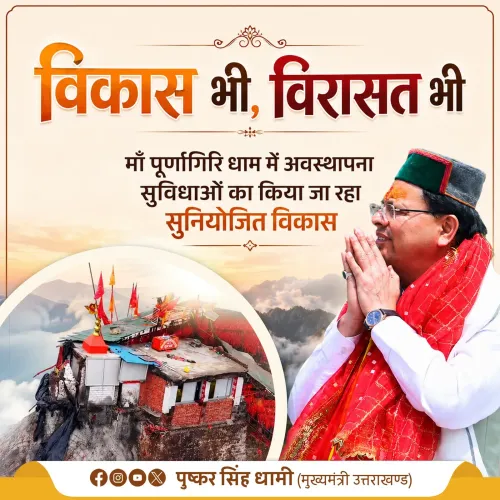
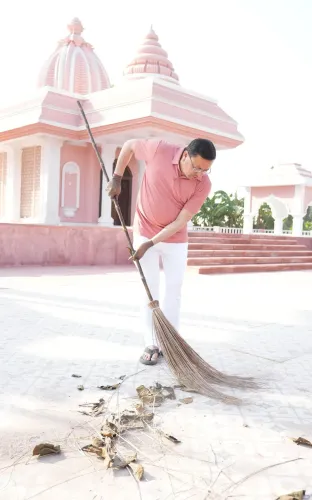
CM Dhami Leads Cleanliness Drive at Purnagiri Temple on Modi's 12-Year Mark
Synopsis
Chief Minister Pushkar Singh Dhami personally led a cleanliness and tree-plantation drive at Purnagiri Temple in Khatima on 15 June 2026, marking PM Modi's 12-year tenure. He called on all Uttarakhand residents to pledge cleanliness and plant trees for environmental protection, citing public participation as essential to making both drives a mass movement.
Key Takeaways
CM Pushkar Singh Dhami personally participated in a cleanliness drive at Purnagiri Temple complex , Khatima , on 15 June 2026 .
The event marked the completion of PM Narendra Modi's 12 years in office since May 2014 .
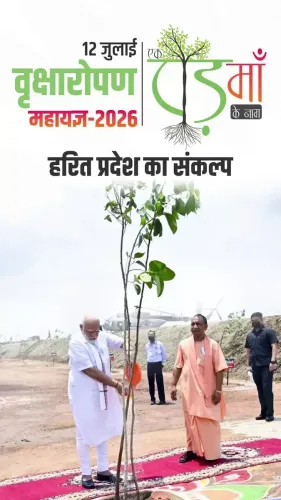
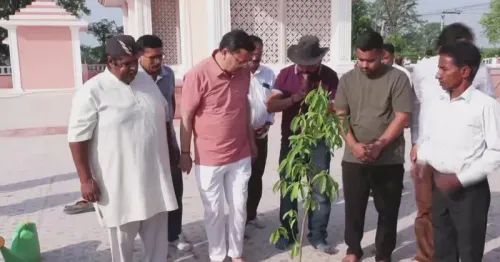
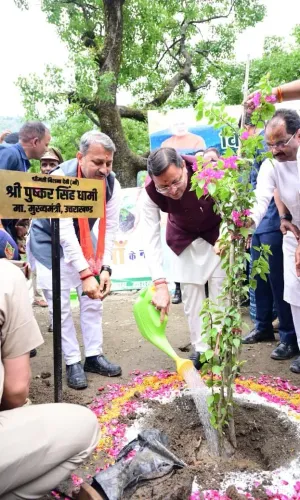
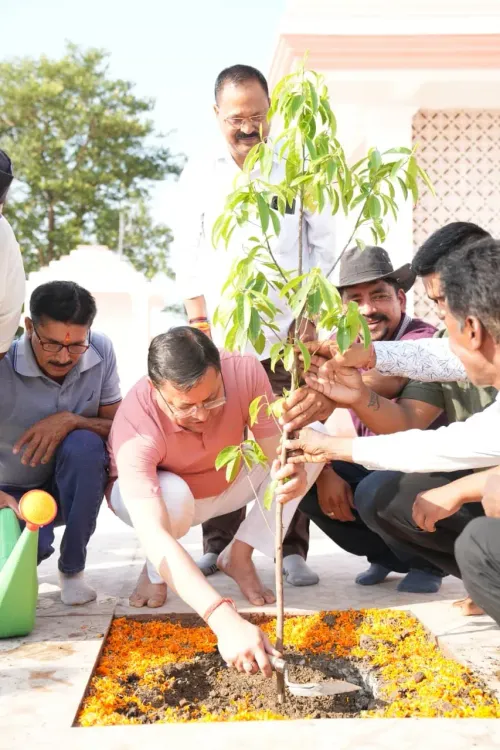
Saplings were planted under the 'Ek Ped Maa Ke Naam' (One Tree in Mother's Name) campaign, a central government afforestation initiative scaled up from 2024 .
CM Dhami called on all state residents to maintain cleanliness in homes and neighbourhoods and to plant trees as a personal environmental responsibility.
The Chief Minister stated that cleanliness and environmental protection can become a mass movement only through public participation.
Purnagiri Temple is a major Shakti Peeth in Khatima , visited by lakhs of pilgrims annually, making it a high-visibility venue for such campaigns.
Chief Minister Pushkar Singh Dhami of Uttarakhand led a cleanliness drive and tree-plantation exercise at the Purnagiri Temple complex in Khatima on Monday, 15 June 2026, marking the completion of Prime Minister Narendra Modi's 12 years in office. The Chief Minister personally participated in the sanitation campaign and planted saplings under the central government's 'Ek Ped Maa Ke Naam' (One Tree in Mother's Name) initiative.
Context
The Chief Minister's Office of Uttarakhand announced that CM Dhami carried out the cleanliness drive at the Purnagiri Temple premises, one of the prominent Shakti Peeths situated in Khatima, drawing lakhs of pilgrims every year. The occasion was framed as a tribute to the 12-year tenure of Prime Minister Modi, who assumed office in May 2014. On the occasion, CM Dhami called upon residents of the state to pledge to maintain cleanliness in their homes, neighbourhoods, and surrounding areas, and to plant as many trees as possible for environmental conservation.
In his address, the Chief Minister said — translated from Hindi — that 'cleanliness and environmental protection can take the form of a mass movement only through public participation.' He urged citizens to treat both drives as personal responsibilities rather than government-led exercises.
Policy Backdrop
The event draws directly from two central government programmes. The Swachh Bharat Mission, launched in October 2014, set national targets for solid-waste management and sanitation infrastructure across urban and rural India. The 'Ek Ped Maa Ke Naam' campaign was scaled up from 2024 as part of the LiFE (Lifestyle for Environment) movement, encouraging every citizen to plant a tree in honour of their mother to expand the country's green cover.
Himalayan states such as Uttarakhand have consistently linked these drives to high-footfall religious sites, using pilgrim gatherings as a platform to amplify awareness. The choice of Purnagiri Temple — a site visited by lakhs annually — follows that established pattern, maximising visibility for both the cleanliness and afforestation messages.
Stakeholders and Impact
The primary beneficiaries of such drives at Purnagiri are the lakhs of pilgrims who visit the temple each year, as well as the residents of Khatima and surrounding areas in the Champawat district. Improved cleanliness at a major religious site has direct implications for public health, waste management, and the local environment.
Broader Uttarakhand citizens are also stakeholders, as CM Dhami's appeal was directed at the entire state population — asking each household to take ownership of local sanitation and to contribute to plantation targets under 'Ek Ped Maa Ke Naam.' The Himalayan ecology of the state makes afforestation particularly consequential for soil conservation, water recharge, and climate resilience.
What's Next
Attention will now turn to whether district administrations across Uttarakhand report measurable progress on plantation targets under 'Ek Ped Maa Ke Naam' in the weeks ahead. Any new urban local-body waste-management rules or legislative measures tabled in the next Uttarakhand Assembly session will indicate how far the state intends to institutionalise the momentum from such public drives.
With the Char Dham pilgrimage season in full swing, the state government's emphasis on cleanliness at religious sites signals a broader push to align tourism, faith, and environmental policy — a combination that is likely to define Uttarakhand's governance narrative through the rest of 2026.
Point of View
High-visibility occasions — here, PM Modi's 12-year anniversary — to simultaneously reinforce loyalty to the central leadership and advance locally relevant policy goals around cleanliness and greening. Choosing a Shakti Peeth with mass pilgrim footfall is a deliberate amplification strategy, converting a routine civic exercise into a politically resonant public event. The dual framing of Swachh Bharat and Ek Ped Maa Ke Naam keeps Uttarakhand visibly aligned with New Delhi's flagship environmental agenda ahead of what could be a consequential assembly calendar. For CM Dhami, personally wielding a broom and planting saplings at a revered temple is also a soft-power signal to the devout electorate that governance and faith can be integrated rather than separated.
NationPress
15 Sept 2026
Frequently Asked Questions
Why did CM Dhami hold a cleanliness drive at Purnagiri Temple?
CM Pushkar Singh Dhami organised the cleanliness drive at Purnagiri Temple in Khatima on 15 June 2026 to mark the completion of PM Narendra Modi's 12 years in office, combining a civic sanitation exercise with tree plantation under the 'Ek Ped Maa Ke Naam' campaign.
What is the 'Ek Ped Maa Ke Naam' campaign?
'Ek Ped Maa Ke Naam' (One Tree in Mother's Name) is a central government-backed plantation initiative, scaled up from 2024 as part of the LiFE (Lifestyle for Environment) movement, urging every citizen to plant a tree in honour of their mother to increase India's green cover.
Where is Purnagiri Temple located?
Purnagiri Temple is a major Shakti Peeth situated in Khatima, Uttarakhand, and is visited by lakhs of pilgrims every year.
What did CM Dhami say about cleanliness and public participation?
CM Dhami said that cleanliness and environmental protection can take the form of a mass movement only through public participation, and called on all Uttarakhand residents to maintain cleanliness in their homes and neighbourhoods and to plant as many trees as possible.
How long has PM Modi been in office as of June 2026?
PM Narendra Modi completed 12 years in office as Prime Minister of India in May-June 2026, having first assumed office in May 2014.